What is Procure-to-Pay (P2P)? Steps & Benefits
ARTICLE SUMMARY
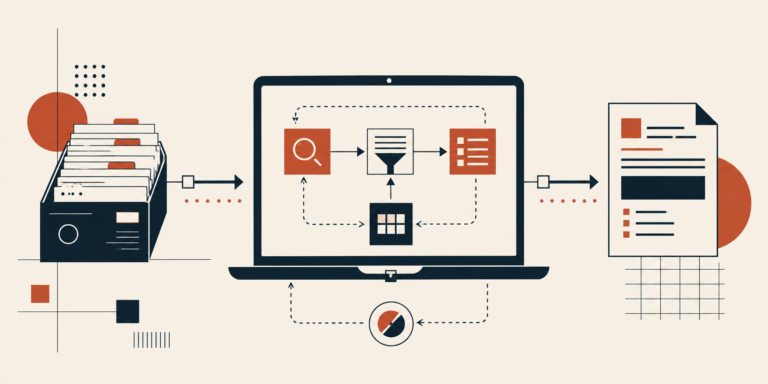
Procure-to-pay (P2P) is the end-to-end process that runs from the moment someone requests a good or service to the moment the supplier is paid. It spans intake, approval, sourcing, purchase order, receipt, three-way match, and payment, connecting procurement, finance, and operations around one flow.
Every purchase a company makes, from a laptop to a shipment of raw materials, travels through the same underlying process. Understanding procure-to-pay is the fastest way to see why some organizations buy quickly and in control, while others drown in email approvals, duplicate payments, and spreadsheets nobody trusts.
The common trap is to treat it as a simple chain of approvals. In reality, it is a cross-functional workflow that connects procurement, finance, and operations, and its value depends less on any single step than on how well those steps are orchestrated from end to end.
This guide breaks down what the process is, its core steps, who owns them, where it typically breaks, and how automation is changing it.
What procure-to-pay means and where it sits in the business
Procure-to-pay (P2P), also called purchase to pay, is the complete cycle a purchase follows from request to payment. It begins when someone identifies a need and ends when the supplier’s invoice is paid and recorded.
What makes it strategic is where it sits: at the intersection of procurement, finance, and operations. Procurement owns sourcing and suppliers, finance owns budgets and payment, and operations owns the need. P2P is the connective tissue between them.
That is also why it is best understood as a process, not a form to sign. When the handoffs between those teams are orchestrated, spend stays under control and cash flow is predictable. When they are not, the same purchase can stall for weeks.
For the bigger picture of how technology reshapes this end to end, see our guide to procurement automation.

The 7 core steps of the P2P cycle
At a concept level, the P2P process moves through seven steps. Each one is a potential point of control, or a potential bottleneck, depending on how it is managed.
- Need identification and requisition: A requester defines what is needed and submits a purchase requisition with category, budget, and cost center.
- Requisition approval: The request is reviewed and approved against budget and policy, ideally on a deterministic, logged path.
- Supplier selection and sourcing: Procurement chooses an existing supplier or runs a quote or RFQ, comparing price, terms, and compliance.
- Purchase order: The approved request becomes a purchase order (PO) that is sent to the supplier and recorded.
- Goods or services receipt: The requester or warehouse confirms what was delivered against the PO.
- Invoice and three-way match: Accounts payable matches the invoice to the PO and the receipt, flagging any discrepancy.
- Payment and record: The approved invoice is paid on agreed terms and posted to the system of record.
The detail inside each stage can get intricate. For a deeper, stage-by-stage breakdown, read our procurement cycle guide; here, the point is the shape of the whole flow.
Who owns each step: procurement, finance, and operations
One reason P2P is hard to run is that no single team owns it. Ownership shifts as the request moves, and every shift is a handoff where information can be lost.
Here is how ownership typically maps across the cycle:
| Stage of the cycle | Primary owner | Accountable for |
| Need and requisition | Operations and business requesters | Defining the need and raising a complete, correct request |
| Requisition approval | Budget owner and finance | Checking budget and policy before any commitment |
| Sourcing and purchase order | Procurement | Supplier selection, negotiation, and issuing the PO |
| Goods or services receipt | Operations or warehouse | Confirming what was actually delivered |
| Invoice, match, and payment | Finance and accounts payable | Three-way match and paying on agreed terms |
| Compliance and audit | Shared, as a governance layer | Enforcing policy and keeping an audit trail across every stage |
Notice that compliance and audit are not a single step; they are a layer that should apply at every stage, from the first request to the final payment.
This shared ownership is exactly why a procurement process built on email and spreadsheets struggles. Nobody sees the whole picture, and accountability blurs at the handoffs.
The most common P2P bottlenecks and how they cost companies money
Most P2P pain is invisible on any single transaction and expensive in aggregate. A few patterns show up again and again.
Maverick spend, when people buy outside the process, erodes negotiated discounts and hides risk. Manual approvals stall in inboxes. Invoice exceptions and duplicate or late payments create rework and real financial loss. And because data is rekeyed between tools, reporting arrives too late to act on.
The scale of the opportunity is clear. In Amazon Business’s 2024 State of Procurement Data Report, 95% of procurement decision-makers said there is still room to optimize their procurement.
Left unaddressed, these bottlenecks compound as volume grows, which is why scaling a manual operation usually means adding people rather than capacity.
How automation changes the P2P game
Automation reframes procure-to-pay from a chain of manual approvals into one orchestrated flow. Instead of moving a request by hand, the process routes itself, applies rules, and calls in AI to handle the repetitive work.
In an automated P2P, intake is a single guided form, approvals follow deterministic rules, procurement-specialized AI Agents read and validate invoices and match them to POs, and the system updates the ERP without rekeying. People step in for exceptions and decisions, not data entry.
The direction of travel is unmistakable. In the same Amazon Business report, 98% of respondents said they plan to invest in analytics, automation, and AI in the coming years. The winners are not automating tasks in isolation; they are orchestrating the whole flow.
This is where a modern P2P software platform earns its place: not as another system to log into, but as the layer that connects intake, approval, sourcing, and payment.

P2P vs S2P: what is the difference and when does it matter
Procure-to-pay is sometimes confused with source-to-pay (S2P), and the difference matters when you choose tools and design the process.
P2P covers the operational cycle from requisition to payment. Source-to-pay is broader: it adds the upstream, strategic work that comes before, such as spend analysis, strategic sourcing, and contract lifecycle management, and then folds in the P2P steps.
In practice, S2P capabilities matter most for high-value, strategic categories where sourcing and negotiation drive savings. P2P matters for the day-to-day execution that every purchase depends on. Mature operations connect both, so the strategy set upstream is actually enforced when the buying happens.
How Pipefy turns P2P into one orchestrated flow
Pipefy approaches procure-to-pay as a process to orchestrate, not a set of modules to manage. With P2P AI Studio, the flow runs from requisition to payment on no-code workflows, connected to the ERP and other systems, with AI Agents handling intake validation, quotes, compliance checks, and negotiation rounds.
Because the workflows are no-code, procurement and finance teams adjust them without an IT project, while the ERP stays the system of record.
Success Story: Dasa increases efficiency by 295% with Pipefy
The impact shows in real operations. Dasa, Latin America’s largest diagnostics network, unified a fragmented supply chain across ten teams on Pipefy and increased efficiency by 295%, cut request resolution time by 75%, shortened its service cycle from four business days to one, and reached 223% ROI in the first year, automating more than 20,000 actions a month.
Book a demo to see how Pipefy orchestrates the P2P process end to end.
FAQ — Frequently Asked Questions
What is procure-to-pay (P2P)?
Procure-to-pay is the end-to-end process that runs from identifying a need and requesting a purchase through sourcing, ordering, receipt, invoicing, and payment. It connects procurement, finance, and operations around a single flow.
Is procure-to-pay the same as purchase-to-pay?
Yes. Procure-to-pay and purchase to pay are two names for the same process, both abbreviated P2P. Some organizations prefer one term over the other, but they describe the same requisition-to-payment cycle.
What are the main steps of the P2P process?
The core steps are need identification and requisition, requisition approval, supplier selection and sourcing, purchase order, goods or services receipt, invoice and three-way match, and payment.
What is the difference between P2P and source-to-pay (S2P)?
P2P covers the operational cycle from requisition to payment. Source-to-pay adds the upstream strategic activities, such as spend analysis, sourcing, and contract management, and then includes the P2P steps.
Who is responsible for the procure-to-pay process?
Ownership is shared. Operations and requesters start it, procurement runs sourcing and the purchase order, and finance handles invoicing and payment, with compliance and audit applying across every step.
How does automation improve procure-to-pay?
Automation standardizes intake, routes approvals by rule, uses AI to read and match documents, and integrates with the ERP so data is not rekeyed. The result is faster cycles, fewer errors, better compliance, and the ability to scale without adding headcount.
Where to go from here with Pipefy’s P2P AI Studio
Understanding the procure-to-pay process is the first step. The next is deciding how to orchestrate it, from intake to payment, so it stays fast, compliant, and visible as you scale.
For the complete picture, including capabilities, AI, and how to evaluate platforms, read the full guide to procurement automation, and explore the P2P AI Studio product page.
When you are ready to act on it, two guides go deeper: how to choose the right P2P software for your enterprise, and how to orchestrate procurement workflow automation from intake to payment.