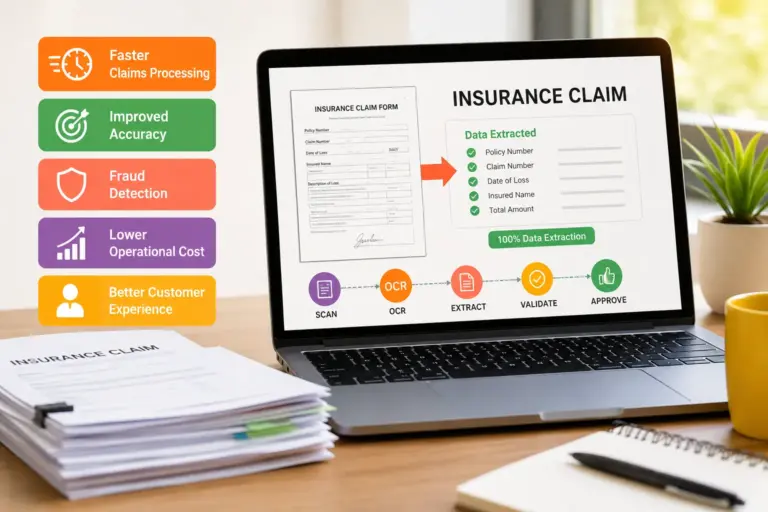
Mortgage OCR Software: How AI-Powered Document Processing Is Transforming Modern Lending Operations
Mortgage OCR Software
Mortgage lending has never been a simple business. Between borrower disclosures, income verification, compliance checks, underwriting packages, title paperwork, and closing documents, lenders handle an overwhelming amount of paperwork every single day.
The problem isn’t just document volume anymore. It’s speed.
Borrowers expect near-instant approvals. Regulators demand airtight compliance. Competition from fintech lenders keeps pressure on operational efficiency. Meanwhile, loan officers and underwriting teams are still buried in PDFs, scanned tax forms, bank statements, pay stubs, and handwritten disclosures.
That’s where mortgage OCR software enters the picture.
Modern OCR technology has evolved far beyond simple text extraction. Today’s platforms combine optical character recognition, machine learning, natural language processing, and workflow automation to transform how mortgage companies process loan documentation.
For lenders, this changes everything:
- Faster underwriting
- Reduced manual data entry
- Lower operational costs
- Improved compliance accuracy
- Better borrower experiences
- Higher loan processing capacity
In competitive mortgage markets, document automation is no longer optional infrastructure. It’s becoming a core operational advantage.
What Is Mortgage OCR Software?
Mortgage OCR software uses optical character recognition technology to extract, classify, organize, and process information from mortgage-related documents.
Instead of employees manually reviewing scanned files and entering data into loan origination systems, OCR platforms automatically identify relevant fields and convert unstructured paperwork into structured digital data.
This includes:
- Borrower names
- Income details
- Employer information
- Asset balances
- Tax return data
- Property details
- Loan numbers
- Disclosure forms
- Banking information
Modern mortgage processing AI systems can also:
- Detect document types automatically
- Validate missing fields
- Flag inconsistencies
- Identify fraud indicators
- Route files through workflows
- Integrate with underwriting engines
The technology is now widely used across:
- Mortgage lenders
- Credit unions
- Banks
- Real estate finance firms
- Wholesale lenders
- Servicing companies
- Fintech lending platforms
Why Mortgage Lenders Are Investing in OCR and AI Automation
The mortgage industry operates on razor-thin timing windows. Delays in document verification can slow approvals, frustrate borrowers, and increase fallout rates.
Manual processing creates several operational bottlenecks.
Rising Loan Processing Costs
Traditional loan fulfillment requires large operations teams handling repetitive administrative tasks. Manual indexing, document review, and data extraction consume thousands of labor hours monthly.
Mortgage OCR software reduces these repetitive workloads dramatically.
Many lenders now automate:
- Initial intake
- Borrower document classification
- Income extraction
- Asset verification
- Compliance checks
- Data synchronization
This allows staff to focus on underwriting decisions instead of document handling.
Faster Underwriting Cycles
Speed directly impacts conversion rates in mortgage lending.
A borrower comparing multiple lenders often chooses whoever delivers approvals fastest and with fewer friction points.
OCR-powered loan document automation can reduce processing timelines from days to hours by accelerating:
- File indexing
- Data capture
- Income calculation
- Exception handling
- Document validation
For high-volume lenders, even minor efficiency gains create substantial revenue impact.
Better Borrower Experience
Borrowers hate uploading the same document repeatedly.
AI-powered real estate document scanning systems improve customer experience by:
- Detecting unreadable uploads
- Automatically categorizing files
- Reducing re-submission requests
- Accelerating status updates
- Improving communication workflows
That translates into higher satisfaction and lower abandonment rates.
How OCR Works in Mortgage Document Processing
At its core, OCR converts image-based text into machine-readable data.
But mortgage OCR systems involve multiple processing layers beyond simple character recognition.
Step 1: Document Ingestion
Documents enter the system through:
- Email uploads
- Borrower portals
- Mobile apps
- Scanners
- APIs
- Third-party integrations
Supported file formats often include:
- JPEG
- PNG
- TIFF
- Multi-page scans
Step 2: Image Enhancement
The software improves document quality using preprocessing techniques such as:
- Noise reduction
- Deskewing
- Contrast enhancement
- Resolution optimization
- Edge correction
Poor-quality scans are a major issue in lending workflows, especially with mobile uploads.
Step 3: Document Classification
AI models identify the document type automatically.
Examples include:
- W-2 forms
- 1040 tax returns
- Pay stubs
- Bank statements
- Driver licenses
- Closing disclosures
- Purchase agreements
This classification layer is essential for scalable lending automation software.
Step 4: Data Extraction
OCR engines capture structured information from identified fields.
Examples:
| Document Type | Extracted Data |
|---|---|
| Pay Stub | Gross income, employer, pay frequency |
| Bank Statement | Balances, deposits, account numbers |
| Tax Return | AGI, business income, deductions |
| Driver License | Name, DOB, address |
| Loan Application | Borrower details, property information |
Step 5: Validation and Verification
Advanced mortgage processing AI validates extracted information against business rules.
The system may flag:
- Missing signatures
- Inconsistent addresses
- Suspicious income patterns
- Duplicate records
- Incomplete disclosures
Step 6: Workflow Integration
Processed data flows into:
- Loan origination systems (LOS)
- CRM platforms
- Underwriting engines
- Compliance software
- Document management systems
Core Features of Modern Mortgage OCR Platforms
Not all OCR tools are built for lending environments.
Mortgage-specific platforms typically include industry-focused capabilities.
Intelligent Document Recognition
Unlike generic OCR engines, mortgage-focused systems understand lending forms and financial terminology.
This improves extraction accuracy significantly.
AI-Based Data Validation
Modern systems don’t just extract information. They evaluate it.
Examples include:
- Matching income across documents
- Detecting altered statements
- Identifying missing pages
- Comparing borrower identity records
Automated Indexing
Files are automatically labeled and organized inside document repositories.
This reduces time spent searching through borrower packages.
Workflow Automation
Lending automation software often includes:
- Task routing
- Queue management
- Approval workflows
- Notification systems
- SLA monitoring
Compliance Monitoring
Mortgage lenders operate under heavy regulatory oversight.
OCR platforms can assist with:
- TRID compliance
- HMDA reporting
- Document retention
- Audit trails
- Fair lending documentation
API and LOS Integration
Modern banking OCR tools integrate with:
- Encompass
- Blend
- Calyx
- Black Knight
- Salesforce
- ICE Mortgage Technology
- DocuSign
- Core banking systems
Mortgage Documents Commonly Processed With OCR
Mortgage lenders handle an enormous variety of document types.
Income Verification Documents
These include:
- Pay stubs
- W-2s
- 1099s
- Tax returns
- Profit and loss statements
Income extraction automation is one of the highest-value OCR applications in lending.
Asset Verification Documents
OCR software extracts data from:
- Bank statements
- Investment accounts
- Retirement accounts
- Gift letters
Identity Verification Documents
AI-driven OCR systems process:
- Driver licenses
- Passports
- Social Security documentation
Property Documents
Examples include:
- Purchase agreements
- Appraisals
- Insurance documents
- Title records
Compliance and Disclosure Forms
Mortgage operations generate extensive compliance paperwork, including:
- Loan estimates
- Closing disclosures
- Consent forms
- Occupancy affidavits
OCR vs Traditional Manual Loan Processing
The operational differences are massive.
| Function | Manual Processing | Mortgage OCR Software |
|---|---|---|
| Data Entry | Human input | Automated extraction |
| Processing Speed | Hours or days | Minutes |
| Error Rates | Higher | Lower |
| Scalability | Labor-dependent | Software-driven |
| Compliance Tracking | Manual review | Automated validation |
| Borrower Experience | Slower | Faster |
| Operational Cost | High | Reduced |
Manual review still matters for underwriting judgment, but repetitive administrative work is increasingly automated.
The Role of AI in Mortgage Processing Automation
OCR alone extracts text.
AI turns extracted data into operational intelligence.
Machine Learning Improves Accuracy
Mortgage documents vary widely in formatting.
Machine learning models improve recognition over time by learning from:
- Historical loan files
- Document variations
- Handwriting patterns
- Layout structures
Natural Language Processing
NLP helps systems understand contextual meaning inside financial documents.
For example:
- Identifying employment gaps
- Understanding income categories
- Detecting borrower explanations
- Parsing underwriting conditions
Predictive Risk Analysis
Some mortgage processing AI platforms identify fraud risks and anomalies before underwriting review.
Potential indicators include:
- Altered PDFs
- Metadata inconsistencies
- Duplicate identities
- Income irregularities
Intelligent Decision Support
Advanced systems can recommend workflow actions automatically.
Examples:
- Request additional documents
- Route exceptions to senior underwriters
- Trigger compliance alerts
- Prioritize urgent loans
Compliance, Security, and Risk Reduction
Mortgage lending is heavily regulated, and document management failures create legal exposure quickly.
Audit Trails
OCR systems maintain detailed activity records showing:
- Who accessed files
- What changes occurred
- When data was processed
- Which validations failed
This supports audit readiness.
Data Encryption
Leading platforms use enterprise-grade encryption for:
- Data at rest
- Data in transit
- Cloud storage
- User authentication
Fraud Detection
AI-enhanced banking OCR tools can identify:
- Synthetic identities
- Forged pay stubs
- Manipulated statements
- Suspicious application patterns
Fraud prevention has become a major investment priority across mortgage operations.
Regulatory Alignment
Mortgage lenders must comply with regulations including:
- GLBA
- FCRA
- RESPA
- HMDA
- TRID
Automated workflows help reduce compliance gaps caused by manual oversight.
Integration With LOS, CRM, and Banking Systems
OCR technology delivers the most value when integrated into existing lending ecosystems.
Loan Origination Systems
Integration with LOS platforms allows extracted data to populate borrower files automatically.
This eliminates duplicate data entry.
CRM Synchronization
Sales and borrower communication teams benefit from synchronized borrower information across systems.
Underwriting Engines
Automated document extraction accelerates underwriting calculations and eligibility checks.
RPA and Workflow Automation
Some lenders combine OCR with robotic process automation to create fully automated loan processing pipelines.
This is increasingly common among enterprise lenders and fintech mortgage companies.
Real-World Use Cases for Mortgage OCR
Retail Mortgage Lending
Retail lenders use OCR to accelerate borrower onboarding and underwriting preparation.
Wholesale Lending
Wholesale lenders process high document volumes from brokers, making automation especially valuable.
Mortgage Servicing
Servicers automate document indexing, payment records, and borrower correspondence management.
HELOC and Refinance Operations
Refinance booms often create operational surges. OCR helps lenders scale without rapidly expanding staffing.
Digital Mortgage Platforms
Fintech lenders rely heavily on AI-driven document automation to support fully digital borrower journeys.
Benefits for Loan Officers and Underwriters
There’s often concern that automation replaces lending professionals.
In practice, OCR primarily removes repetitive administrative work.
Reduced Administrative Burden
Loan officers spend less time chasing paperwork and more time managing relationships.
Faster Loan Closings
Automation reduces delays between submission, underwriting, and closing.
Improved Accuracy
Automated extraction reduces manual keying errors.
Higher Loan Capacity
Teams can handle more applications without proportional staffing increases.
Challenges and Limitations of OCR in Lending
Despite major advances, OCR technology still has limitations.
Poor Scan Quality
Low-resolution mobile uploads remain problematic.
Complex Handwriting
Handwritten forms can reduce extraction accuracy.
Non-Standard Documents
Self-employed borrowers often submit irregular documentation formats.
Integration Complexity
Legacy banking infrastructure can complicate deployment.
Human Oversight Still Matters
Mortgage lending still requires human judgment for:
- Risk analysis
- Exception handling
- Regulatory interpretation
- Borrower communication
The most effective lenders combine automation with experienced underwriting teams.
How to Choose the Right Mortgage OCR Software
Not every OCR platform is suitable for mortgage operations.
Industry-Specific Training
Choose vendors with mortgage-focused AI models.
Generic OCR engines may struggle with lending documents.
Accuracy Rates
Evaluate:
- Field-level accuracy
- Exception rates
- Classification reliability
- Handwriting support
Security Standards
Look for:
- SOC 2 compliance
- ISO certifications
- Encryption standards
- Access controls
Integration Capabilities
The platform should integrate with existing LOS and CRM systems.
Scalability
High-volume lenders need enterprise-grade throughput capacity.
Vendor Support
Mortgage operations are highly time-sensitive. Responsive implementation and technical support matter.
Leading Technologies and Industry Trends
Mortgage automation is evolving rapidly.
Cloud-Based OCR
Cloud deployment improves scalability and remote access.
Generative AI Integration
Some platforms now use large language models to summarize loan files and assist underwriting workflows.
Computer Vision Enhancements
Advanced computer vision improves recognition of difficult layouts and low-quality scans.
Real-Time Borrower Verification
Identity and income verification increasingly occur in real time.
End-to-End Digital Mortgages
The industry continues moving toward fully digital lending ecosystems.
ROI of Loan Document Automation
Mortgage lenders evaluate automation investments based on measurable operational impact.
Lower Fulfillment Costs
Automation reduces manual processing expenses significantly.
Faster Revenue Realization
Shorter loan cycles improve pipeline velocity.
Reduced Repurchase Risk
Better document accuracy lowers post-close defect exposure.
Higher Employee Productivity
Teams process more loans per employee.
Improved Borrower Retention
Faster, smoother experiences increase customer satisfaction.
Common Mistakes Mortgage Companies Make
Treating OCR as Simple Scanning Software
Modern mortgage OCR platforms are workflow intelligence systems, not just digitization tools.
Ignoring Integration Planning
Disconnected automation creates operational fragmentation.
Underestimating Change Management
Staff adoption is critical for success.
Choosing Generic OCR Vendors
Mortgage lending has highly specialized document requirements.
Focusing Only on Cost Reduction
The bigger opportunity is scalability, speed, and borrower experience improvement.
Future of OCR in Real Estate Finance
The next generation of mortgage processing AI will likely move beyond document extraction into autonomous workflow orchestration.
Emerging capabilities include:
- AI underwriting assistants
- Predictive borrower risk scoring
- Automated condition clearing
- Intelligent borrower communication
- Voice-enabled loan processing
- Real-time compliance monitoring
Mortgage operations are steadily transitioning from paper-heavy administrative systems toward data-centric digital ecosystems.
OCR is becoming foundational infrastructure for that transition.
FAQ Section
What is mortgage OCR software?
Mortgage OCR software uses optical character recognition and AI technologies to extract and process information from mortgage documents automatically.
How accurate is mortgage OCR technology?
Modern mortgage-focused OCR platforms often achieve high extraction accuracy rates, especially when trained on lending-specific documents. Accuracy depends heavily on document quality and system training.
Can OCR reduce mortgage processing time?
Yes. Loan document automation significantly reduces manual review and data entry, helping lenders shorten underwriting and closing timelines.
What documents can mortgage OCR process?
Common examples include:
Pay stubs
W-2s
Tax returns
Bank statements
Loan applications
Driver licenses
Closing disclosures
Is mortgage OCR software secure?
Enterprise-grade platforms typically include encryption, access controls, audit logs, and compliance support for financial regulations.
Does OCR replace underwriters?
No. OCR automates repetitive administrative tasks, while underwriters still handle risk analysis and lending decisions.
What industries use banking OCR tools?
Industries include:
Mortgage lending
Banking
Credit unions
Insurance
Financial services
Real estate finance
Can OCR integrate with loan origination systems?
Yes. Most modern lending automation software platforms integrate with LOS, CRM, and underwriting systems through APIs.
Conclusion
Mortgage lending has become an operational speed game.
Borrowers expect digital experiences. Regulators demand precision. Competition rewards lenders that can process loans faster without sacrificing compliance or accuracy.
Mortgage OCR software sits at the center of this transformation.
The technology is no longer limited to simple text recognition. Modern platforms combine AI, workflow automation, machine learning, and intelligent validation to create scalable lending infrastructure capable of handling enormous document volumes efficiently.
For mortgage lenders, loan officers, and real estate finance companies, the question is no longer whether document automation matters.
It’s how quickly they can implement it effectively before operational inefficiencies become a competitive disadvantage.