AI OCR for Real Estate Transaction Documents: How Real Estate OCR Software Is Transforming Closings, Compliance, and Property Workflows
AI OCR for Real Estate Transaction Documents: How Real Estate OCR Software
Real estate runs on documents. Purchase agreements, title commitments, lease abstracts, disclosure packets, mortgage applications, escrow instructions, inspection reports, tax records, insurance certificates — the stack never really ends.
And for most brokerages, lenders, and title companies, that paperwork still creates operational bottlenecks.
A single residential transaction can involve hundreds of pages spread across PDFs, scanned images, emails, mobile uploads, and legacy systems. Commercial real estate transactions can stretch into thousands of pages with layered leases, amendments, estoppel certificates, zoning records, and financing documents.
That’s where AI OCR is changing the equation.
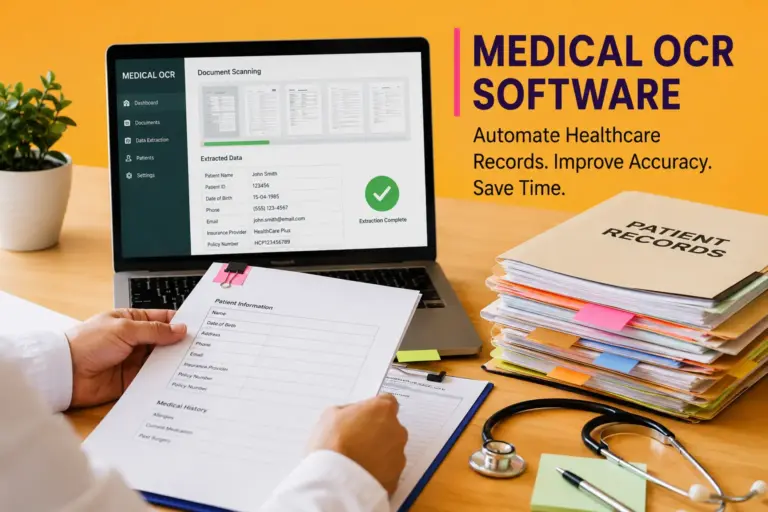
Modern real estate OCR software doesn’t just “read” scanned documents anymore. Today’s systems classify files, extract structured data, identify signatures, detect missing pages, validate fields, and feed information directly into transaction management platforms, CRM systems, title workflows, and mortgage processing software.
For brokerages, that means fewer administrative hours.
For lenders, it means faster underwriting.
For title companies, it means improved accuracy and reduced closing delays.
And for SaaS vendors serving the property industry, AI-powered document automation has become one of the highest-value categories in proptech and mortgage technology.
This shift isn’t only about efficiency. It’s about operational scalability, compliance management, customer experience, and competitive advantage in an increasingly digital real estate market.
What Is AI OCR in Real Estate?
OCR stands for Optical Character Recognition.
Traditional OCR converts scanned text into machine-readable text. AI OCR goes several layers deeper.
Modern AI-powered OCR systems use machine learning, computer vision, and natural language processing to understand document structure and context. Instead of simply recognizing words, the software interprets what those words mean within a real estate transaction.
For example, AI OCR platforms can:
- Identify a purchase agreement versus a title report
- Extract buyer and seller names
- Detect parcel numbers
- Read handwritten initials
- Pull lease commencement dates
- Flag missing signatures
- Recognize lender requirements
- Compare fields across multiple documents
- Validate data consistency
That distinction matters because real estate documents rarely arrive in perfect condition.
Agents upload phone photos. Tenants send blurry PDFs. Older county records contain faded text. Mortgage packages mix structured forms with handwritten annotations.
Basic OCR struggles in those environments.
AI-enhanced document intelligence platforms are designed specifically for messy, high-volume transactional workflows.
How Real Estate OCR Software Works
Most enterprise-grade real estate OCR systems follow a multi-step pipeline.
Document Ingestion
Files enter the system through:
- Email uploads
- CRM integrations
- Mobile apps
- Transaction management platforms
- Cloud storage systems
- Scanners
- LOS platforms
- Title production software
The software normalizes file formats and prepares them for processing.
Document Classification
AI models identify the document type automatically.
Examples include:
- HUD statements
- Loan estimates
- Closing disclosures
- Purchase agreements
- Lease agreements
- Deeds
- Tax documents
- Appraisals
- W-2 forms
- Bank statements
This classification stage dramatically reduces manual indexing work.
Data Extraction
The platform extracts key fields and converts them into structured data.
Typical extraction points include:
- Property addresses
- APN numbers
- Borrower information
- Legal descriptions
- Lease terms
- Interest rates
- Escrow values
- Seller disclosures
- Insurance information
Validation and Cross-Checking
Advanced systems compare extracted data across multiple documents.
For example:
- Buyer names match across disclosures
- Loan amounts align with underwriting documents
- Property addresses remain consistent
- Missing signatures are detected
Workflow Automation
The extracted data is pushed into downstream systems.
This can trigger:
- Underwriting reviews
- Compliance checks
- E-signature requests
- Transaction updates
- Automated notifications
- Closing workflows
The Types of Documents AI OCR Can Process
Real estate transaction ecosystems generate enormous document diversity.
Modern property document automation systems can process:
Residential Real Estate Documents
- Purchase agreements
- Seller disclosures
- Inspection reports
- Closing disclosures
- Escrow instructions
- Mortgage applications
- HOA documents
- Insurance forms
- Property tax statements
Commercial Real Estate Documents
- Lease agreements
- CAM reconciliations
- Rent rolls
- Estoppel certificates
- Amendments
- Tenant improvement agreements
- Environmental reports
- Financial statements
Mortgage and Lending Documents
Mortgage document AI platforms commonly process:
- W-2 forms
- Pay stubs
- Bank statements
- Tax returns
- Loan estimates
- Underwriting packages
- Appraisals
- Credit documents
Title and Escrow Files
Title processing software often handles:
- Deeds
- Liens
- Easements
- Encumbrances
- Chain-of-title records
- Settlement statements
- Recording documents
The breadth of document handling is one reason AI OCR has become central to modern proptech infrastructure.
Why Brokerages Are Investing in Property Document Automation
Most real estate brokerages don’t have a lead generation problem.
They have an operational efficiency problem.
Top-performing agents often spend too much time handling administrative tasks instead of revenue-generating activities.
Manual document review creates friction at every stage:
- Listing onboarding
- Compliance review
- Transaction coordination
- Client communication
- Closing preparation
AI OCR reduces those bottlenecks.
Faster Transaction Processing
Automated extraction eliminates repetitive data entry.
Agents no longer need to manually retype:
- Buyer names
- Property details
- Financing terms
- Commission data
- Contract dates
That accelerates transaction timelines significantly.
Improved Compliance
Brokerages operate under strict documentation requirements.
Missing initials, incomplete disclosures, and inconsistent records create liability exposure.
AI-driven compliance review tools can automatically identify missing fields before files move forward.
Better Client Experience
Consumers increasingly expect digital-first experiences.
Nobody wants to print, scan, re-upload, and email paperwork repeatedly during a transaction.
Real estate firms using AI-enabled workflow tools can:
- Reduce document turnaround times
- Improve communication visibility
- Streamline e-signature workflows
- Accelerate approvals
That directly impacts client satisfaction and referral rates.
AI Lease Extraction for Commercial and Residential Portfolios
Lease abstraction has historically been one of the most labor-intensive tasks in commercial real estate operations.
Property managers, REITs, investment firms, and asset managers often maintain thousands of active leases with unique clauses and amendments.
Manual abstraction takes time and introduces risk.
AI lease extraction systems automate much of that process.
What AI Lease Extraction Can Capture
Modern systems extract:
- Tenant names
- Lease commencement dates
- Expiration dates
- Renewal options
- Escalation clauses
- Rent schedules
- Security deposits
- Termination rights
- CAM obligations
- Insurance requirements
Why It Matters for Investors
Institutional real estate investors rely on accurate lease data for:
- Portfolio valuation
- NOI forecasting
- Asset management
- Due diligence
- Acquisition underwriting
Even small lease abstraction errors can materially impact investment decisions.
AI-powered extraction platforms help standardize data across large portfolios while reducing manual review hours.
Lease Auditing and Risk Management
AI models can also identify anomalies such as:
- Missing amendments
- Non-standard clauses
- Rent discrepancies
- Expired terms
- Compliance risks
That capability is becoming especially valuable in multifamily, office, and industrial portfolios where lease complexity continues increasing.
Mortgage Document AI and Loan Processing Efficiency
Mortgage lending remains heavily document-driven despite years of fintech innovation.
Borrowers still upload large volumes of financial documentation during underwriting.
AI-powered mortgage document systems are helping lenders reduce processing times while improving operational scalability.
Common Mortgage Workflow Challenges
Lenders frequently encounter:
- Incomplete applications
- Misclassified documents
- Manual indexing delays
- Verification bottlenecks
- Inconsistent borrower uploads
Traditional workflows often require human reviewers to inspect every document manually.
That creates expensive operational overhead.
How Mortgage Document AI Improves Lending Workflows
Modern mortgage AI platforms can:
- Classify borrower documents instantly
- Extract income data
- Read bank statements
- Verify employment information
- Detect document fraud indicators
- Cross-check financial consistency
This speeds up underwriting and reduces time-to-close.
Fraud Detection Benefits
AI OCR platforms increasingly incorporate fraud analytics.
Examples include:
- Metadata inconsistencies
- Altered PDFs
- Manipulated income statements
- Duplicate submissions
- Signature anomalies
As digital mortgage fraud grows more sophisticated, automated document intelligence has become critical for risk mitigation.
Title Processing Software and Closing Operations
Title and escrow companies sit at the center of transactional complexity.
They coordinate lenders, buyers, sellers, attorneys, county offices, insurers, and agents — all while managing strict timelines.
Document-heavy processes create operational strain.
AI-powered title processing software helps reduce that burden.
Automated Title Review
AI systems can analyze:
- Chain-of-title documents
- Liens
- Easements
- Encroachments
- Judgments
- Tax records
Some platforms even assist with title curative workflows by identifying missing or problematic records.
Faster Closing Preparation
OCR-driven automation accelerates:
- Settlement statement preparation
- Recording package assembly
- Wire instruction verification
- Closing disclosure reviews
Reducing closing delays has major financial implications for lenders, agents, and title companies alike.
Reduced Human Error
Manual title review remains vulnerable to:
- Missed liens
- Typographical errors
- Filing inconsistencies
- Duplicate records
AI-assisted review adds another layer of operational quality control.
Key Features to Look for in Real Estate OCR Software
Not all OCR systems are built for real estate.
Generic document scanners often struggle with transactional complexity.
When evaluating platforms, brokerages and title firms should prioritize industry-specific capabilities.
Industry-Specific Document Models
Real estate workflows require specialized extraction models trained on:
- Mortgage forms
- Lease agreements
- Closing packages
- Property disclosures
- Escrow documentation
General OCR engines usually lack contextual understanding.
Handwriting Recognition
Many transaction documents still include handwritten annotations and initials.
High-performing systems should support intelligent handwriting extraction.
Workflow Integrations
The platform should integrate with:
- CRM software
- LOS systems
- Title production platforms
- E-signature tools
- Document management systems
- Accounting platforms
Disconnected workflows create operational fragmentation.
Audit Trails and Compliance Logging
Every extraction and workflow action should be traceable.
This is especially important for:
- RESPA compliance
- Lending regulations
- Brokerage supervision
- Legal defensibility
API Accessibility
Enterprise brokerages and proptech vendors increasingly require API-first architecture.
Flexible APIs enable:
- Custom automation
- Embedded workflows
- SaaS integrations
- Analytics dashboards
Workflow Automation Across the Real Estate Lifecycle
AI OCR affects nearly every stage of the property transaction process.
Lead-to-Listing
Automation can streamline:
- Seller intake forms
- Property documentation
- Listing agreements
- Compliance checks
Contract-to-Close
This stage benefits heavily from document intelligence.
Systems can automate:
- File reviews
- Missing document detection
- Signature validation
- Deadline monitoring
- Disclosure tracking
Post-Closing Operations
OCR automation also supports:
- Archiving
- Audit preparation
- Reporting
- Data analytics
- Investor servicing
Real estate firms increasingly view document intelligence as operational infrastructure rather than a standalone tool.
AI OCR vs Traditional OCR: What Actually Changed
A lot of vendors market “AI OCR” without explaining the distinction clearly.
The difference is substantial.
Traditional OCR
Older OCR systems primarily perform:
- Text recognition
- Basic scanning
- PDF conversion
They often fail when documents are:
- Low quality
- Unstructured
- Multi-format
- Handwritten
- Complex
AI OCR
AI-enhanced systems add:
- Contextual understanding
- Classification
- Semantic interpretation
- Data validation
- Layout detection
- Predictive extraction
That dramatically improves usability in real-world real estate workflows.
Compliance, Audit Trails, and Risk Reduction
Real estate transactions involve significant legal exposure.
Errors in documentation can trigger:
- Delayed closings
- Regulatory penalties
- Lawsuits
- Lending disputes
- Brokerage liability
AI-driven compliance workflows help reduce those risks.
Automated Compliance Checks
Platforms can validate:
- Required disclosures
- Signature completion
- Date consistency
- Form completeness
- Jurisdiction-specific requirements
Secure Document Retention
Enterprise OCR platforms typically include:
- Encryption
- Access controls
- Retention policies
- Immutable audit logs
These features are increasingly important for regulated financial workflows.
Integration With CRMs, LOS Platforms, and Transaction Management Systems
Real estate technology stacks are fragmented.
Brokerages often use:
- CRM systems
- Transaction management software
- E-signature platforms
- Accounting tools
- Marketing automation
- MLS integrations
AI OCR becomes more valuable when integrated into the broader workflow ecosystem.
Common Integration Targets
Popular integrations include:
- Salesforce
- HubSpot
- DocuSign
- Dotloop
- Qualia
- Encompass
- AppFolio
- Yardi
Integrated workflows reduce duplicate data entry and improve operational visibility.
Common OCR Accuracy Challenges in Real Estate
Even advanced AI systems encounter challenges.
Understanding these limitations matters during implementation.
Poor Scan Quality
Low-resolution uploads still affect extraction performance.
Mobile photo distortions, shadows, and skewed pages remain common issues.
Non-Standard Documents
Older county records and customized lease agreements may contain unusual formatting.
AI models sometimes require additional training for niche document types.
Handwritten Notes
Handwriting recognition has improved dramatically, but cursive annotations and messy signatures can still create extraction gaps.
Human Review Requirements
Most enterprise implementations use “human-in-the-loop” workflows.
AI handles the bulk of extraction while staff validate edge cases and exceptions.
That hybrid model generally produces the best operational outcomes.
How Leading Firms Are Using AI OCR Today
The adoption curve has accelerated across multiple sectors of the real estate industry.
Large Brokerages
National brokerages use OCR automation for:
- Compliance review
- Agent onboarding
- Transaction auditing
- Commission processing
Mortgage Lenders
Lenders deploy AI document systems to:
- Reduce underwriting timelines
- Improve borrower experience
- Automate verification workflows
Title Companies
Title firms leverage OCR to:
- Process recording packages
- Review title documents
- Accelerate closings
Property Managers
Multifamily operators use lease extraction platforms for:
- Portfolio analysis
- Tenant tracking
- Lease compliance
- Renewal forecasting
The common theme is operational scalability.
As transaction volumes increase, firms need systems capable of handling documentation without proportionally increasing staffing costs.
ROI: Cost Savings, Throughput, and Operational Efficiency
The business case for AI OCR usually centers on labor efficiency, turnaround time, and error reduction.
Reduced Manual Labor
Document indexing and extraction consume enormous administrative hours.
Automation significantly reduces repetitive tasks.
Faster Closings
Improved workflow speed creates downstream benefits for:
- Agents
- Buyers
- Sellers
- Lenders
- Escrow officers
Shorter closing cycles improve customer satisfaction and operational throughput.
Better Data Accessibility
Structured document data enables:
- Reporting
- Analytics
- Forecasting
- Operational optimization
This becomes especially valuable for enterprise brokerages and institutional investors.
Mistakes to Avoid When Choosing OCR Platforms
Many organizations underestimate implementation complexity.
Choosing Generic OCR Vendors
Real estate documentation is highly specialized.
Industry-trained models matter.
Ignoring Workflow Integration
Standalone OCR tools often create more operational friction than value.
Integration capability should be evaluated early.
Focusing Only on Accuracy Metrics
OCR accuracy percentages can be misleading.
Operational usability matters more than benchmark demos.
Underestimating Change Management
Staff adoption matters.
Even strong technology deployments can fail without proper onboarding and workflow alignment.
The Future of AI in Real Estate Documentation
The next generation of document intelligence platforms is moving beyond extraction into decision support.
Emerging capabilities include:
- Automated transaction summaries
- AI-generated compliance recommendations
- Predictive risk scoring
- Smart contract analysis
- Conversational document search
- Portfolio intelligence analytics
Large language models are also beginning to reshape document interaction.
Instead of searching through folders manually, users can query transaction data conversationally.
For example:
- “Show all leases expiring within 90 days.”
- “Identify files missing seller disclosures.”
- “Compare rent escalations across this portfolio.”
That shift turns static documentation into operational intelligence.
FAQ Section
What is real estate OCR software?
Real estate OCR software uses optical character recognition and AI to extract structured data from property transaction documents such as contracts, leases, mortgage forms, title reports, and disclosures.
How accurate is AI OCR for mortgage documents?
Modern mortgage document AI platforms can achieve very high accuracy rates, especially when trained on lending-specific document sets. Accuracy depends on scan quality, document consistency, and workflow validation processes.
Can AI OCR extract lease data automatically?
Yes. AI lease extraction systems can automatically identify lease clauses, dates, rent schedules, tenant information, escalation terms, and renewal options from commercial and residential lease agreements.
Is OCR useful for title companies?
Absolutely. Title processing software uses OCR and AI to automate title review, document classification, lien analysis, recording preparation, and closing workflows.
Does AI OCR replace transaction coordinators?
Not entirely. Most firms use AI to reduce repetitive administrative work while allowing coordinators to focus on exception handling, communication, and customer service.
What integrations should real estate OCR software support?
Important integrations include CRM platforms, loan origination systems, transaction management software, e-signature tools, cloud storage systems, and title production platforms.
Can OCR systems detect missing signatures?
Many modern AI OCR platforms include signature detection and document completeness validation features.
Is AI OCR secure for sensitive financial documents?
Enterprise-grade platforms typically support encryption, role-based access controls, audit logging, and compliance frameworks suitable for handling financial and real estate records.
Conclusion
Real estate transactions are becoming increasingly digital, but documentation complexity hasn’t disappeared. If anything, it’s expanding.
AI OCR is emerging as foundational infrastructure for modern brokerages, lenders, title companies, and property operators because it addresses one of the industry’s most persistent operational challenges: document overload.
The value goes well beyond scanning paperwork.
Today’s real estate OCR software enables workflow automation, compliance oversight, portfolio intelligence, faster closings, improved underwriting efficiency, and scalable transaction operations.
For firms competing in high-volume markets, document intelligence is quickly shifting from a productivity enhancement into a strategic operational requirement.