AI OCR APIs for SaaS Developers: How to Choose the Right OCR API for Scalable Document Automation
AI OCR APIs for SaaS Developers
Modern SaaS products run on data. The problem is that a huge percentage of business data still lives inside PDFs, invoices, receipts, contracts, screenshots, forms, scanned documents, and image-based workflows.
That’s where an OCR API becomes mission-critical.
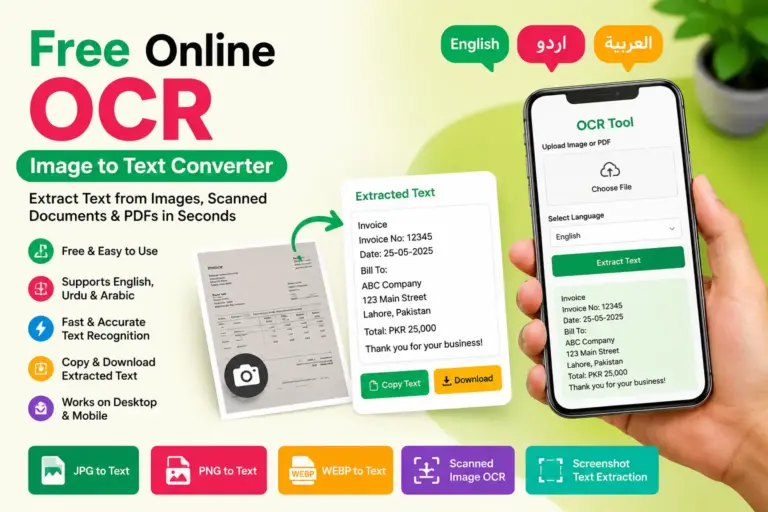
For SaaS founders and engineering teams, the real value of an AI OCR API isn’t simply turning images into text. It’s transforming unstructured documents into usable business intelligence that can automate operations, reduce manual processing costs, and unlock entirely new product capabilities.
A well-implemented document recognition API can power:
- Automated invoice ingestion
- KYC onboarding
- Insurance claim workflows
- Contract indexing
- Financial reconciliation
- Healthcare documentation
- Identity verification
- Receipt scanning
- Legal document analysis
- HR automation
And increasingly, OCR is no longer just OCR.
Modern intelligent document processing APIs combine computer vision, natural language processing, layout analysis, machine learning, entity extraction, and workflow automation into a single developer-friendly service layer.
For SaaS businesses competing in crowded verticals, that changes the economics of software delivery.
What an OCR API Actually Does in Modern SaaS
Traditional OCR systems were relatively simple. They converted printed characters into machine-readable text.
Modern AI OCR APIs go much further.
Today’s systems can:
- Detect document structure
- Understand tables
- Extract key-value pairs
- Recognize handwriting
- Identify signatures
- Parse receipts
- Detect document types
- Separate multi-page forms
- Understand layouts
- Classify content semantically
Instead of merely returning raw text, modern APIs often return structured JSON outputs designed for downstream automation.
For example, an invoice OCR workflow might extract:
{
  "vendor": "Acme Logistics",
  "invoice_number": "INV-20491",
  "date": "2026-05-01",
  "subtotal": 1290.00,
  "tax": 120.00,
  "total": 1410.00
}
That’s the difference between digitization and automation.
Why AI OCR APIs Matter More Than Traditional OCR
Older OCR engines struggled with:
- Low-quality scans
- Rotated images
- Complex layouts
- Multi-column text
- Handwriting
- Mixed languages
- Stamps and annotations
- Mobile camera distortion
AI-driven OCR changed the game because machine learning models now understand context, visual hierarchy, and document semantics.
Instead of reading characters one-by-one, modern systems analyze entire document structures.
This dramatically improves:
- Extraction accuracy
- Table parsing
- Form recognition
- Semantic understanding
- Document classification
- Automation reliability
For SaaS platforms, this translates directly into lower operational friction.
A finance automation platform with weak OCR becomes a support nightmare. A high-accuracy intelligent document processing API reduces human review overhead and increases customer trust.
That operational difference compounds at scale.
Core Features Developers Should Evaluate
Not all OCR APIs are built for production SaaS environments.
Some are lightweight text extraction services. Others are enterprise-grade AI document platforms.
Here’s what actually matters during evaluation.
Text Recognition Accuracy
Accuracy remains the baseline metric.
But developers should test accuracy using real production documents — not idealized demo PDFs.
Critical variables include:
- Image quality
- Compression artifacts
- Lighting conditions
- Mobile uploads
- Fax scans
- Skewed pages
- Handwritten fields
- Industry-specific formatting
Vendors often advertise high benchmark scores that don’t reflect messy real-world data.
Structured Data Extraction
Plain OCR output is rarely enough for SaaS workflows.
Look for APIs that support:
- Tables
- Line items
- Form fields
- Key-value extraction
- Named entity recognition
- Document schemas
This is especially important in fintech, HR tech, legal tech, and healthcare SaaS products.
Multi-Language Support
Global SaaS platforms need multilingual OCR capabilities.
Important considerations include:
- Latin vs non-Latin scripts
- RTL languages
- Mixed-language documents
- Localization support
- Regional date/currency formats
Real-Time Processing
Some SaaS applications require synchronous OCR responses.
Examples include:
- Identity verification
- Expense capture
- Mobile receipt scanning
- POS integrations
Latency directly impacts UX in these workflows.
Batch Processing
Enterprise customers often upload thousands of documents simultaneously.
Your OCR infrastructure should support:
- Queues
- Async processing
- Webhooks
- Retry systems
- Parallelization
Common SaaS Use Cases for OCR APIs
OCR adoption is exploding because document-heavy workflows exist everywhere.
Fintech and Accounting SaaS
Financial platforms heavily rely on OCR automation.
Common workflows include:
- Invoice capture
- Expense management
- Bank statement extraction
- Tax form processing
- Accounts payable automation
AI OCR APIs reduce manual bookkeeping costs while improving reconciliation speed.
HR and Recruiting Platforms
HR systems increasingly automate:
- Resume parsing
- Employee onboarding
- ID verification
- Payroll documentation
- Compliance forms
Document recognition APIs accelerate hiring workflows significantly.
Healthcare SaaS
Healthcare systems process enormous volumes of paperwork.
OCR enables:
- Medical record digitization
- Insurance claim extraction
- Prescription recognition
- Patient intake automation
Accuracy and HIPAA compliance become critical here.
Legal Technology
Legal documents are notoriously difficult to parse.
AI-powered OCR can extract:
- Clauses
- Contract metadata
- Signature locations
- Filing dates
- Legal entities
This dramatically reduces review time for law firms and compliance teams.
Logistics and Supply Chain
Shipping workflows generate massive document loads:
- Bills of lading
- Customs declarations
- Delivery receipts
- Warehouse forms
OCR APIs streamline operational throughput and reduce delays.
AI OCR API Architecture Explained
Most developers underestimate the complexity behind modern OCR infrastructure.
A production-grade OCR pipeline often includes:
- Image preprocessing
- Noise reduction
- Orientation correction
- Layout detection
- Character recognition
- Semantic parsing
- Entity extraction
- Confidence scoring
- Validation rules
- Structured output formatting
Some APIs expose only the final result.
Others provide granular control over each stage.
Advanced SaaS products often combine OCR with:
- NLP pipelines
- Vector embeddings
- LLM workflows
- Search indexing
- RAG systems
- Workflow orchestration engines
That’s where intelligent document processing becomes strategically valuable.
OCR Accuracy: What Impacts Real-World Performance
Developers often assume OCR quality depends entirely on the vendor.
It doesn’t.
Document quality heavily influences extraction reliability.
Factors That Affect OCR Performance
Resolution
Low-resolution scans destroy character clarity.
Compression
Aggressive JPEG compression introduces artifacts.
Fonts
Stylized fonts reduce recognition accuracy.
Handwriting
Cursive handwriting remains difficult even for advanced models.
Document Layout
Multi-column documents increase parsing complexity.
Mobile Camera Images
Perspective distortion and shadows create recognition issues.
Structured Data Extraction vs Plain Text Recognition
There’s a massive difference between extracting text and understanding documents.
Traditional OCR output:
Invoice
Acme Corp
$1250
Due Date 05/15
AI document processing output:
{
  "document_type": "invoice",
  "vendor": "Acme Corp",
  "amount_due": 1250,
  "due_date": "2026-05-15"
}
That second output enables automation.
This distinction matters because SaaS buyers increasingly expect workflow-ready integrations rather than raw OCR results.
Comparing Cloud OCR APIs vs Self-Hosted OCR Systems
Many CTOs eventually compare managed APIs against self-hosted OCR infrastructure.
Cloud OCR APIs
Advantages:
- Faster deployment
- Lower infrastructure overhead
- Managed scaling
- Continuous model improvements
- Enterprise support
- Easier integrations
Disadvantages:
- Usage-based pricing
- Vendor lock-in
- Data residency concerns
- Less customization
Self-Hosted OCR
Advantages:
- Full control
- On-prem compliance
- Predictable infrastructure costs
- Custom model training
Disadvantages:
- Maintenance burden
- GPU infrastructure costs
- ML expertise requirements
- Slower iteration
For most SaaS startups, managed APIs provide a significantly better speed-to-market profile.
Leading OCR API Providers and Ecosystems
The OCR ecosystem has evolved rapidly over the last few years.
Several providers dominate enterprise adoption.
Google Cloud Vision AI
Strong ecosystem integration with Google Cloud services.
Best known for:
- Scalability
- Image analysis
- Multi-language support
- Enterprise infrastructure
Amazon Textract
Widely adopted in enterprise document workflows.
Particularly strong in:
- Forms
- Tables
- Structured extraction
- AWS-native workflows
Microsoft Azure AI Document Intelligence
Popular among Microsoft-centric organizations.
Strong features include:
- Enterprise compliance
- Form recognizers
- Business workflow integration
OpenAI Vision Models
Increasingly relevant for contextual document understanding.
Especially useful for:
- Complex semantic extraction
- Flexible prompts
- Unstructured document interpretation
Specialized OCR Vendors
Vertical-focused providers often outperform general-purpose APIs in niche domains such as:
- Healthcare
- Banking
- Legal tech
- Insurance
Security, Compliance, and Enterprise Requirements
Enterprise SaaS buyers scrutinize document processing vendors aggressively.
Especially when sensitive data is involved.
Critical Security Requirements
Encryption
Data should be encrypted both in transit and at rest.
Data Retention Controls
Some vendors retain uploaded documents for model training unless explicitly disabled.
Access Logging
Audit trails matter for regulated industries.
Regional Data Residency
EU customers may require GDPR-compliant processing locations.
Compliance Standards
Important certifications include:
- SOC 2
- ISO 27001
- HIPAA
- GDPR
- PCI DSS
Ignoring compliance during vendor selection becomes extremely expensive later.
Pricing Models and Cost Optimization
OCR API pricing structures vary significantly.
Common models include:
- Per-page pricing
- Per-document pricing
- Per-request pricing
- Character-based billing
- Tiered enterprise licensing
Hidden Cost Factors
Developers frequently underestimate:
- Retry volume
- Human review workflows
- Storage costs
- Async queue infrastructure
- Data transfer charges
Cost Optimization Strategies
Preprocessing Documents
Improving image quality reduces failed extraction attempts.
Selective OCR
Avoid running OCR on unnecessary pages.
Confidence Thresholding
Only route uncertain outputs to human review.
Caching
Avoid repeated OCR on identical files.
Developer Experience and Integration Workflow
API quality matters, but developer experience often determines adoption speed.
Strong developer OCR tools usually provide:
- REST APIs
- SDKs
- Webhooks
- Sandbox environments
- OpenAPI specs
- Typed responses
- Sample payloads
- Rate limit transparency
Bad documentation kills implementation velocity.
Fast-moving SaaS teams prioritize APIs that reduce engineering friction.
Scaling OCR Infrastructure in Production
OCR workloads behave differently from traditional SaaS traffic.
Document uploads create bursty, compute-heavy workloads.
Production Scaling Challenges
Queue Management
Large uploads can overwhelm synchronous systems.
Parallel Processing
Multi-page PDFs require efficient concurrency handling.
Error Recovery
Corrupted files must fail gracefully.
Storage Lifecycle Management
Document retention policies affect infrastructure costs.
Human-in-the-Loop Validation
High-value workflows often require fallback review systems.
At enterprise scale, observability becomes essential.
Teams need metrics around:
- Extraction accuracy
- Failure rates
- Queue latency
- Confidence scores
- Human correction rates
Common OCR Implementation Mistakes
Even strong engineering teams make avoidable mistakes.
Treating OCR as “Solved”
OCR accuracy varies dramatically by document type.
Always benchmark against real customer data.
Ignoring Edge Cases
Production documents are messy.
Expect:
- Cropped uploads
- Partial scans
- Blurry photos
- Rotated pages
- Handwritten notes
No Confidence Thresholds
Every OCR system makes mistakes.
Confidence scoring prevents silent failures.
Overlooking Human Review
Some workflows require verification layers.
Especially in:
- Finance
- Healthcare
- Legal
- Compliance-heavy industries
Advanced AI Document Processing Capabilities
OCR is increasingly merging with broader AI automation systems.
Modern intelligent document processing APIs now support:
- Semantic search
- Classification
- Contextual extraction
- AI summarization
- Workflow routing
- Natural language querying
For example:
“Find all contracts expiring within 90 days.”
That’s no longer just OCR.
It’s document intelligence.
Contextual AI, NLP, and Intelligent Document Understanding
The future of document automation isn’t character recognition alone.
It’s contextual understanding.
Modern AI systems combine:
- OCR
- Computer vision
- NLP
- LLM reasoning
- Embeddings
- Entity extraction
- Semantic indexing
This enables SaaS products to build intelligent workflows around previously inaccessible data.
Examples include:
- Automated compliance monitoring
- Contract risk scoring
- Invoice fraud detection
- Knowledge base indexing
- Enterprise search
This shift is attracting enormous investment from cloud vendors and enterprise software providers.
How OCR APIs Improve SaaS Product Monetization
OCR isn’t just an infrastructure feature.
It often becomes a monetizable product layer.
Premium Automation Features
SaaS companies frequently upsell:
- Automated document ingestion
- AI workflows
- Smart extraction
- Searchable archives
- Analytics dashboards
Reduced Operational Costs
Automation lowers manual processing requirements.
Margins improve as support workloads decrease.
Higher Switching Costs
Once customers automate document workflows inside your platform, migration becomes painful.
That improves retention.
Enterprise Expansion
OCR-powered automation often unlocks enterprise procurement opportunities.
Especially in operations-heavy industries.
Choosing the Right OCR API for Your SaaS Stack
The “best” OCR API depends heavily on workload characteristics.
Choose Based on Document Complexity
Simple receipts require different tooling than legal contracts.
Prioritize Structured Outputs
Raw text rarely creates business value alone.
Benchmark Real Documents
Never rely solely on vendor demos.
Evaluate Total Cost of Ownership
Infrastructure, retries, validation, and support all matter.
Think Beyond OCR
The market is shifting toward full document intelligence platforms.
Choose vendors aligned with long-term AI automation roadmaps.
FAQ
What is the difference between OCR and AI OCR?
Traditional OCR converts images into text. AI OCR adds machine learning, contextual understanding, layout detection, and structured data extraction.
Which OCR API is best for SaaS startups?
For most startups, cloud-based APIs provide the best balance of scalability, speed, and operational simplicity.
Are OCR APIs accurate enough for financial documents?
Modern AI OCR systems can achieve very high accuracy, but production reliability depends heavily on document quality and validation workflows.
Can OCR APIs process handwritten text?
Some advanced AI OCR APIs support handwriting recognition, though performance varies significantly depending on handwriting style and image quality.
How do OCR APIs handle tables and invoices?
Many intelligent document processing APIs include table extraction and key-value parsing specifically optimized for invoices, receipts, and forms.
Is OCR expensive at scale?
Costs depend on page volume, document complexity, and processing frequency. Enterprise-scale OCR workloads require careful cost optimization.
Can OCR APIs integrate with LLMs?
Yes. Many modern SaaS architectures combine OCR with large language models for summarization, classification, and semantic document analysis.
Are self-hosted OCR systems better for enterprise security?
In highly regulated industries, self-hosted solutions may offer stronger compliance control, though they require significantly more infrastructure management.
Conclusion
OCR technology has evolved from simple text recognition into a foundational layer for intelligent business automation.
For SaaS founders and CTOs, the opportunity is much bigger than digitizing paperwork. Modern AI OCR APIs enable scalable workflows, operational efficiency, enterprise-grade automation, and entirely new product capabilities.
The strongest implementations combine OCR with contextual AI, structured extraction, workflow orchestration, and semantic understanding.
That’s where the competitive advantage emerges.
As cloud AI platforms continue advancing, document processing is rapidly becoming one of the most commercially valuable infrastructure layers in modern SaaS architecture.