AI Document Automation Software for Enterprise Workflows: How Modern Enterprises Are Redesigning Operations with Intelligent Automation
AI Document Automation Software for Enterprise Workflows
Enterprise operations teams are drowning in documents.
Invoices, purchase orders, onboarding forms, compliance records, contracts, claims, audit trails, shipping manifests, HR packets, customer requests — the volume keeps growing while operational expectations get tighter every quarter.
At the same time, CIOs face mounting pressure to modernize legacy systems without disrupting business continuity. Executives want faster workflows, lower operational costs, cleaner data, stronger compliance controls, and measurable digital transformation outcomes. Most organizations still rely on fragmented manual processes held together by email chains, spreadsheets, and aging workflow systems.
That’s where AI document automation changes the equation.
Modern document automation software is no longer just about scanning PDFs or routing forms. Today’s platforms combine enterprise OCR AI, intelligent process automation, machine learning, workflow orchestration, and decision intelligence into unified operational systems capable of handling complex enterprise workloads at scale.
The result is a shift from reactive operations to intelligent workflow ecosystems.
For enterprise leaders, this isn’t merely an efficiency initiative anymore. It’s becoming foundational infrastructure for digital operations.
What Is AI Document Automation?
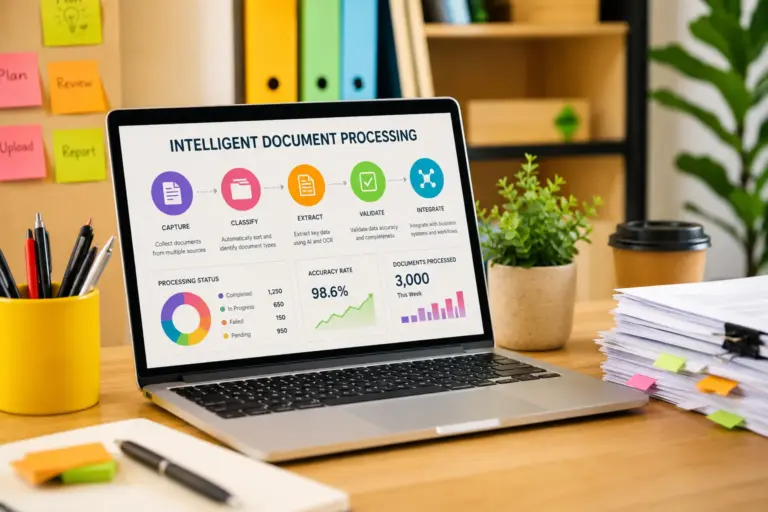
AI document automation refers to the use of artificial intelligence technologies to capture, classify, process, validate, route, and manage business documents with minimal human intervention.
Unlike traditional document management systems, modern AI workflow automation platforms can:
- Understand document context
- Extract structured and unstructured data
- Detect anomalies
- Trigger workflow actions automatically
- Integrate with ERP and CRM environments
- Apply business rules dynamically
- Learn from operational feedback
This evolution matters because enterprise documents are rarely standardized.
A procurement invoice from one supplier may look entirely different from another. Insurance claims arrive in multiple formats. Contracts contain variable clauses. Healthcare records combine handwritten notes, scanned forms, and digital data.
Traditional automation tools struggle in these environments because they depend heavily on rigid templates and static rule engines.
AI-driven systems introduce adaptability.
Using enterprise OCR AI and natural language processing, these platforms can interpret documents more like humans do — but at enterprise scale.
Why Traditional Workflow Systems No Longer Scale
Legacy workflow engines were designed for predictable, structured processes.
Modern enterprises are not predictable.
Organizations now operate across:
- Hybrid cloud environments
- Distributed teams
- Global compliance frameworks
- Multi-system architectures
- API-driven ecosystems
- Rapidly changing operational models
Static workflow systems often create operational bottlenecks because they require excessive manual intervention whenever process variation appears.
A few common enterprise pain points include:
Manual Data Entry
Employees spend thousands of hours retyping information from invoices, forms, contracts, and PDFs into ERP systems.
Process Fragmentation
Documents move across disconnected applications without centralized orchestration.
Approval Delays
Routing dependencies slow down procurement, onboarding, and financial operations.
Compliance Risk
Manual handling increases the likelihood of missing audit requirements or violating data governance policies.
Poor Visibility
Executives lack operational intelligence into workflow bottlenecks, exceptions, and processing performance.
AI document automation addresses these challenges through intelligent process orchestration rather than simple task automation.
Core Components of Modern Document Automation Software
Enterprise-grade automation platforms typically combine several technologies into a single operational layer.
Enterprise OCR AI
Optical Character Recognition has evolved dramatically.
Traditional OCR simply converted images into text. Enterprise OCR AI now combines:
- Computer vision
- Deep learning
- Natural language understanding
- Layout recognition
- Contextual interpretation
This allows systems to extract data from:
- Scanned documents
- Emails
- Contracts
- Receipts
- Handwritten forms
- Multi-language files
- Semi-structured PDFs
Advanced enterprise OCR AI platforms can identify relationships between fields rather than merely reading characters.
For example, invoice processing systems can associate payment terms, supplier IDs, tax values, and line items even when document layouts vary significantly.
Intelligent Process Automation
Intelligent process automation (IPA) combines:
- Robotic Process Automation (RPA)
- AI decisioning
- Workflow orchestration
- Business rules engines
- Machine learning models
Traditional RPA bots automate repetitive tasks but struggle when variability appears.
IPA systems adapt dynamically.
Instead of breaking when a document changes format, intelligent automation platforms interpret context and adjust workflow execution accordingly.
This becomes especially valuable in enterprise environments where operational exceptions are common.
Workflow Orchestration
Modern workflow automation platforms act as centralized orchestration layers across enterprise systems.
These platforms coordinate:
- ERP workflows
- CRM systems
- HR systems
- Financial platforms
- Procurement applications
- Compliance systems
- Customer service tools
Rather than replacing enterprise infrastructure, AI workflow automation extends and connects it.
This orchestration capability is one reason large organizations increasingly prioritize automation platforms with strong API ecosystems and integration frameworks.
AI Classification and Data Extraction
One of the biggest enterprise challenges is document variability.
AI-driven classification engines can automatically determine:
- Document type
- Department ownership
- Priority level
- Compliance category
- Required approvals
- Risk level
Once classified, extraction models identify relevant information and push it into downstream systems automatically.
For example:
- Insurance claims trigger adjudication workflows
- Contracts route for legal review
- Purchase orders sync with ERP procurement systems
- HR onboarding documents populate employee records
The reduction in manual touchpoints creates substantial operational leverage.
Compliance and Governance Layers
Enterprise automation is never purely operational.
Governance matters.
Leading document automation software platforms now include:
- Audit logging
- Role-based access controls
- Retention policies
- Encryption frameworks
- Regulatory reporting
- Workflow traceability
- Data lineage tracking
This is particularly critical in regulated industries like healthcare, banking, pharmaceuticals, and insurance.
How AI Workflow Automation Changes Enterprise Operations
The operational impact goes far beyond labor savings.
AI document automation fundamentally changes how enterprises manage information flow.
Faster Decision Cycles
When documents move automatically between systems and stakeholders, approval timelines shrink dramatically.
Procurement cycles that once took weeks can move in hours.
Better Data Quality
Manual entry errors decline significantly when extraction models validate information automatically.
Operational Scalability
Organizations can process higher transaction volumes without proportional headcount increases.
Stronger Compliance
Automated audit trails reduce governance gaps.
Improved Employee Productivity
Knowledge workers spend less time on repetitive administrative tasks and more time on strategic work.
Enhanced Customer Experience
Faster processing improves onboarding, support resolution, claims handling, and service delivery.
These improvements directly support broader digital transformation initiatives.
Enterprise Use Cases Across Industries
AI document automation is not limited to one operational area. Adoption spans nearly every enterprise function.
Finance and Accounts Payable
Finance departments remain one of the largest adopters of document automation software.
Common use cases include:
- Invoice processing
- Expense management
- Purchase order matching
- Vendor onboarding
- Financial reconciliation
- Audit preparation
Enterprise OCR AI dramatically improves invoice capture accuracy while intelligent process automation handles approvals and exception routing.
This reduces processing costs while improving financial visibility.
Healthcare Operations
Healthcare organizations process enormous volumes of documentation.
Examples include:
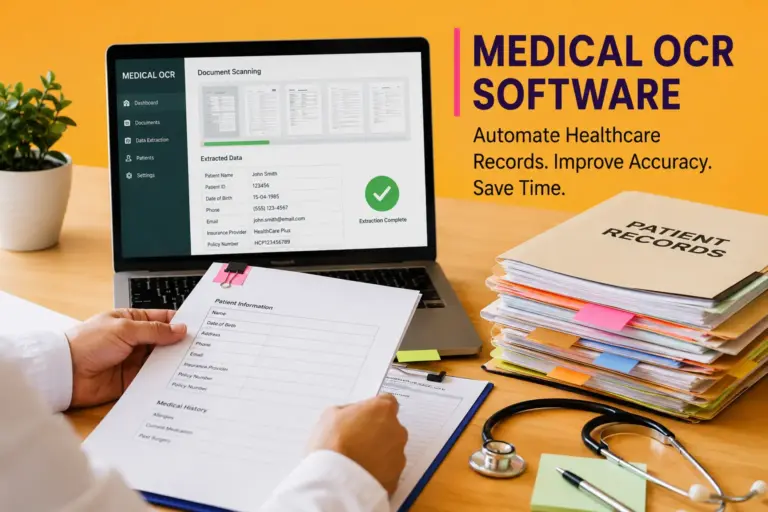
- Patient intake forms
- Insurance claims
- Clinical records
- Prior authorization requests
- Compliance reporting
AI workflow automation helps healthcare systems reduce administrative overhead while improving patient service efficiency.
Because healthcare data is highly sensitive, governance and compliance features become especially important.
Insurance Claims Processing
Insurance workflows involve significant document complexity.
Claims processing often includes:
- Images
- Handwritten forms
- Medical documentation
- Legal records
- Repair estimates
AI-powered intelligent document processing platforms can classify, extract, validate, and route claims automatically.
This accelerates settlement timelines and improves operational consistency.
Manufacturing and Supply Chain
Manufacturers increasingly automate:
- Bills of lading
- Shipping manifests
- Procurement records
- Supplier documentation
- Compliance certifications
- Inventory reconciliation
Supply chain disruptions have pushed many enterprises toward greater operational visibility and process resilience.
AI workflow automation helps organizations create more adaptive operational environments.
Legal Operations
Legal departments manage highly unstructured documents.
Contract lifecycle management platforms increasingly incorporate AI-driven automation capabilities for:
- Clause extraction
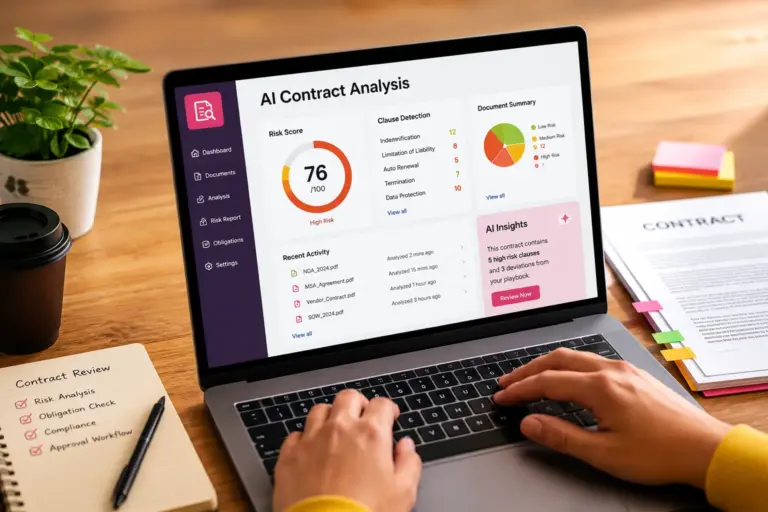
- Risk detection
- Contract classification
- Obligation tracking
- Approval routing
This reduces review bottlenecks and improves governance consistency.
Procurement and Vendor Management
Procurement teams frequently struggle with fragmented workflows.
AI document automation streamlines:
- Supplier onboarding
- Contract approvals
- Purchase requests
- Invoice validation
- Spend analysis
Integrated workflow automation platforms also improve spend visibility and procurement analytics.
Document Automation vs Traditional BPM Systems
Many enterprises already have BPM (Business Process Management) systems in place.
So why invest in AI-driven automation?
Because traditional BPM systems are rule-dependent.
AI document automation introduces adaptability.
| Capability | Traditional BPM | AI Document Automation |
|---|---|---|
| Static workflows | Yes | Partial |
| AI classification | No | Yes |
| Unstructured document handling | Limited | Advanced |
| Self-learning capabilities | Minimal | High |
| Enterprise OCR AI | Basic | Advanced |
| Context-aware routing | Limited | Yes |
| Predictive insights | Rare | Common |
| Dynamic exception handling | Weak | Strong |
Modern enterprises increasingly combine BPM orchestration with intelligent automation layers.
Key Features Enterprises Should Evaluate
Not all automation platforms are equal.
CIOs evaluating document automation software should assess several core capabilities.
Scalability
Can the platform support enterprise transaction volumes?
Integration Depth
Does it connect with:
- SAP
- Oracle
- Salesforce
- Microsoft Dynamics
- ServiceNow
- Workday
- Custom APIs
AI Accuracy
How well does the system perform on real-world documents?
Human-in-the-Loop Controls
Can employees review exceptions efficiently?
Analytics and Reporting
Operational visibility is essential for enterprise adoption.
Governance and Security
Look for:
- SOC 2
- ISO 27001
- GDPR readiness
- HIPAA support
- Role-based controls
Low-Code Workflow Design
Business teams increasingly expect workflow flexibility without deep engineering dependencies.
Integration Strategy for CIOs and IT Leaders
One major misconception is that AI workflow automation requires replacing existing enterprise systems.
In practice, most successful implementations follow an augmentation model.
The automation layer sits across existing infrastructure.
Typical architecture includes:
- Document ingestion layer
- AI extraction engine
- Workflow orchestration platform
- ERP/CRM integration layer
- Analytics and monitoring systems
This modular approach reduces implementation risk.
It also allows organizations to prioritize high-value workflows first before scaling broader automation initiatives.
Security, Compliance, and Governance Considerations
Enterprise automation introduces governance responsibilities that cannot be ignored.
Key concerns include:
Data Privacy
Sensitive documents may contain regulated information.
Model Governance
AI systems require monitoring for drift and accuracy degradation.
Access Controls
Role-based permissions remain essential.
Auditability
Organizations need traceable workflow histories.
Data Residency
Global enterprises often face regional compliance obligations.
Leading enterprise SaaS providers increasingly differentiate themselves through governance maturity rather than automation features alone.
ROI and Operational Impact
Executives evaluating digital transformation software typically focus on measurable business outcomes.
Common performance improvements include:
- Reduced document processing costs
- Faster turnaround times
- Lower manual error rates
- Increased throughput
- Improved compliance scores
- Reduced operational headcount dependency
- Better customer response times
The largest ROI driver is usually not labor reduction alone.
It’s operational acceleration.
Faster workflows create downstream business value across finance, procurement, customer service, and compliance operations.
Common Implementation Mistakes
Even strong automation platforms fail when implementation strategy is weak.
Automating Broken Processes
Poor workflows should be redesigned before automation.
Ignoring Change Management
Employees need training and operational clarity.
Underestimating Data Quality Problems
AI systems still depend on clean operational inputs.
Focusing Only on Cost Reduction
Strategic automation initiatives should prioritize operational resilience and scalability.
Lack of Executive Sponsorship
Enterprise automation requires cross-functional alignment.
Future Trends in Intelligent Document Processing
The next generation of AI workflow automation is moving beyond extraction and routing.
Several major trends are emerging.
Generative AI Integration
Large language models are beginning to assist with:
- Contract summarization
- Workflow recommendations
- Exception explanations
- Operational insights
Autonomous Workflow Systems
Future platforms will increasingly make low-risk operational decisions automatically.
Hyperautomation
Enterprises are combining:
- AI
- RPA
- process mining
- analytics
- orchestration
- event-driven automation
into unified automation ecosystems.
Predictive Operations
AI systems will increasingly anticipate workflow bottlenecks before they occur.
Conversational Enterprise Interfaces
Executives and employees may eventually interact with workflow systems using natural language rather than dashboards.
FAQ
What is document automation software?
Document automation software uses AI and workflow technologies to process, classify, extract, route, and manage enterprise documents automatically.
How does enterprise OCR AI work?
Enterprise OCR AI combines optical character recognition with machine learning and natural language processing to understand document structure and extract relevant information accurately.
What is intelligent process automation?
Intelligent process automation combines AI, workflow orchestration, and robotic automation to handle complex business processes with minimal human intervention.
What industries benefit most from AI workflow automation?
Industries with high document volumes and operational complexity benefit significantly, including healthcare, finance, insurance, legal services, manufacturing, and logistics.
Is AI document automation secure?
Enterprise-grade platforms include encryption, access controls, audit logging, compliance frameworks, and governance tools designed for regulated operational environments.
What’s the difference between RPA and AI workflow automation?
RPA automates repetitive tasks using fixed rules. AI workflow automation adds contextual understanding, adaptive decision-making, and intelligent document processing capabilities.
How long does enterprise implementation usually take?
Implementation timelines vary depending on workflow complexity, integrations, governance requirements, and organizational readiness. Pilot deployments may launch within weeks, while enterprise-wide rollouts can take several months.
Can document automation integrate with existing ERP systems?
Yes. Most enterprise platforms integrate with systems like SAP, Oracle, Salesforce, Microsoft Dynamics, and Workday through APIs and workflow connectors.
Conclusion
AI document automation is rapidly becoming core enterprise infrastructure rather than a niche operational tool.
Organizations that modernize document workflows gain more than efficiency improvements. They create scalable operational systems capable of adapting to increasing complexity, regulatory demands, and digital business expectations.
For CIOs and operations executives, the strategic question is no longer whether automation belongs in enterprise workflows.
It’s how quickly intelligent automation can become embedded across the organization before operational friction turns into competitive disadvantage.