AI OCR for Ecommerce Invoice Automation: How Smart Document Processing Is Transforming Ecommerce Finance Operations
AI OCR for Ecommerce Invoice Automation
Running an ecommerce business looks simple from the outside. Orders come in, products ship out, revenue grows. But behind the scenes, finance teams often deal with a mountain of invoices, supplier bills, shipping receipts, purchase orders, tax documents, and reconciliation headaches.
That operational chaos becomes expensive fast.
Many online stores still process invoices manually using spreadsheets, email attachments, PDF downloads, and repetitive bookkeeping tasks. Finance teams spend hours copying invoice numbers, matching purchase orders, verifying tax amounts, and correcting data entry errors. As order volume increases, those workflows become fragile.
This is where AI OCR for ecommerce invoice automation changes the game.
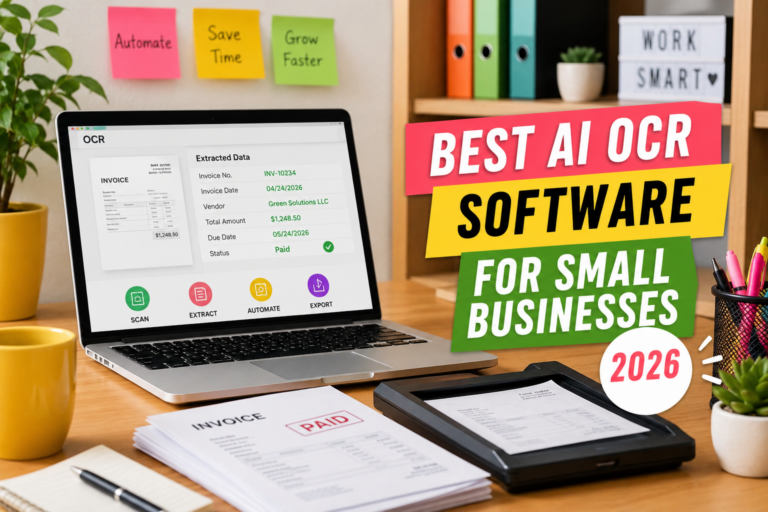
Modern invoice OCR software combines optical character recognition, machine learning, document intelligence, and workflow automation to process invoices automatically. Instead of manually entering data, AI systems can extract supplier details, totals, tax information, SKU references, payment terms, and order metadata directly from documents.
For ecommerce brands, marketplaces, wholesalers, dropshipping businesses, and omnichannel retailers, the impact is significant:
- Faster accounts payable processing
- Better bookkeeping accuracy
- Reduced finance overhead
- Improved cash flow visibility
- Cleaner ERP and accounting data
- Lower operational risk
More importantly, ecommerce finance automation creates a scalable foundation for growth. When order volume doubles, finance operations no longer need to double with it.
Why Ecommerce Invoice Management Becomes a Bottleneck
Ecommerce businesses operate in a document-heavy environment.
A typical online retailer may handle:
- Supplier invoices
- Freight invoices
- Warehouse billing
- Marketplace fee statements
- Refund documentation
- Customs paperwork
- Purchase orders
- Packing slips
- Vendor contracts
- Tax compliance records
The complexity increases further when businesses sell across multiple platforms like:
- Shopify
- Amazon
- WooCommerce
- Walmart Marketplace
- eBay
- TikTok Shop
- Etsy
Each platform generates different reporting formats and financial documents.
Manual processing creates several operational problems:
Human Data Entry Errors
Even experienced finance teams make mistakes when entering invoice totals, VAT amounts, payment dates, or supplier references manually.
Small errors compound over time and affect:
- reconciliation
- inventory valuation
- tax reporting
- profit margins
- financial forecasting
Delayed Approvals
Invoices often sit inside inboxes waiting for approvals from procurement, warehouse managers, or finance departments.
This leads to:
- late payment penalties
- strained vendor relationships
- poor cash management
Scaling Challenges
A store processing 50 invoices monthly may survive with manual bookkeeping. A store processing 5,000 invoices monthly cannot.
Without automation:
- headcount grows rapidly
- operational costs rise
- finance bottlenecks slow growth
Poor Financial Visibility
Manual systems create fragmented financial data.
When invoice information lives across:
- spreadsheets
- PDFs
- accounting systems
- email threads
- cloud drives
…it becomes difficult to maintain accurate real-time reporting.
What Is AI OCR for Ecommerce Invoice Automation?
AI OCR combines optical character recognition with machine learning and natural language processing to interpret financial documents automatically.
Traditional OCR simply converts scanned text into machine-readable text.
AI-powered OCR goes much further.
Modern systems can:
- identify invoice fields automatically
- understand vendor-specific layouts
- classify document types
- detect duplicate invoices
- validate totals
- flag anomalies
- match invoices with purchase orders
- route approvals intelligently
For ecommerce invoice automation, this technology becomes part of a larger workflow automation ecosystem.
Instead of manually processing invoices, businesses can automate:
- Invoice intake
- Data extraction
- Validation
- Approval routing
- Accounting synchronization
- Payment scheduling
- Audit logging
The result is a streamlined finance operation that scales efficiently.
How Modern Invoice OCR Software Actually Works
Most ecommerce operators hear terms like “AI OCR” or “intelligent document processing” without understanding what happens under the hood.
Here’s a simplified breakdown.
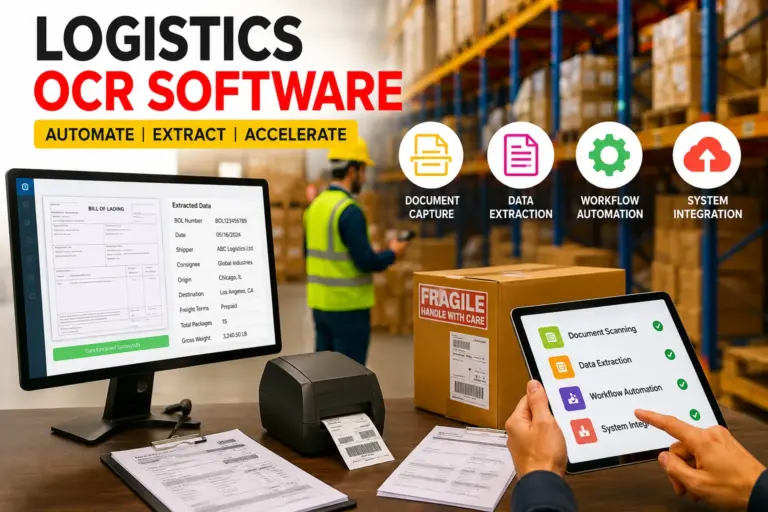
Step 1: Document Capture
Invoices enter the system through:
- email attachments
- scanned uploads
- mobile captures
- supplier portals
- EDI feeds
- API integrations
The software ingests multiple file types including:
- PDFs
- PNG
- JPG
- CSV
- XML
Step 2: Optical Character Recognition
OCR engines convert images and scanned text into digital text.
Advanced OCR systems handle:
- skewed scans
- low-resolution documents
- handwritten notes
- multilingual invoices
Step 3: AI Field Extraction
Machine learning models identify:
- invoice numbers
- supplier names
- line items
- due dates
- tax rates
- shipping costs
- currency values
This is where AI ecommerce accounting becomes far more powerful than legacy OCR systems.
Step 4: Validation Rules
The platform checks extracted data against:
- purchase orders
- ERP records
- inventory systems
- vendor databases
Discrepancies trigger alerts automatically.
Step 5: Workflow Automation
Invoices route through approval workflows based on:
- department
- amount thresholds
- vendor categories
- geographic rules
Step 6: Accounting Sync
Approved invoices sync directly with:
- QuickBooks
- NetSuite
- Xero
- SAP
- Microsoft Dynamics
- Oracle Financials
Key Components of an Ecommerce Invoice Automation Stack
Strong ecommerce finance automation usually combines multiple technologies.
OCR Engine
Handles document recognition and data extraction.
AI Classification Models
Identify document types automatically.
Workflow Automation
Routes approvals and exceptions.
ERP Integration
Synchronizes accounting and inventory systems.
Audit Trail Logging
Maintains compliance and traceability.
Fraud Detection Layer
Flags suspicious invoices and duplicate submissions.
Analytics Dashboard
Provides operational visibility into:
- invoice cycle times
- payment status
- vendor performance
- outstanding liabilities
AI Ecommerce Accounting vs Traditional Bookkeeping
Traditional bookkeeping depends heavily on manual processes.
AI ecommerce accounting shifts repetitive financial operations into automated systems.
| Traditional Workflow | AI-Driven Workflow |
|---|---|
| Manual invoice entry | Automated extraction |
| Spreadsheet reconciliation | Real-time syncing |
| Human approvals via email | Workflow automation |
| Reactive reporting | Live dashboards |
| Error-prone matching | AI validation |
| Delayed processing | Near-instant processing |
The operational difference becomes dramatic at scale.
A growing ecommerce brand handling thousands of monthly orders cannot maintain efficient finance operations using purely manual bookkeeping systems.
Real-World Ecommerce Invoice Processing Workflow
Let’s look at a realistic scenario.
An ecommerce brand imports consumer electronics from multiple overseas suppliers.
Every week, the company receives:
- supplier invoices
- freight invoices
- customs documentation
- warehouse billing
- packaging invoices
Without automation:
- AP staff manually download invoices
- data gets entered into accounting software
- approvals move through email
- finance teams reconcile records manually
With AI invoice automation:
- Supplier invoices arrive via email
- AI OCR extracts invoice fields automatically
- The system validates PO matching
- Freight charges reconcile against shipment records
- Exceptions route to finance managers
- Approved invoices sync into ERP software
- Payment workflows trigger automatically
Processing time drops dramatically.
Finance teams spend more time on:
- forecasting
- vendor negotiations
- margin analysis
- cash flow planning
…and less time copying invoice numbers between systems.
Benefits of Ecommerce Finance Automation
Faster Accounts Payable Cycles
Automation shortens invoice processing from days to minutes.
This improves:
- vendor relationships
- payment timing
- discount eligibility
Reduced Operational Costs
Manual AP processing is expensive.
Automation reduces:
- labor costs
- correction costs
- exception handling overhead
Better Financial Accuracy
AI systems reduce common bookkeeping mistakes.
Accurate invoice data improves:
- reporting
- tax compliance
- inventory accounting
Scalability
Finance operations scale without proportional hiring.
Improved Cash Flow Visibility
Real-time invoice tracking improves:
- forecasting
- liquidity planning
- working capital management
Stronger Compliance
Audit logs and automated recordkeeping simplify:
- tax audits
- financial reviews
- regulatory reporting
Common Invoice Problems Ecommerce Businesses Face
Duplicate Invoices
Suppliers sometimes resubmit invoices accidentally.
AI systems can identify duplicates using:
- invoice numbers
- totals
- supplier patterns
- metadata analysis
Mismatched Purchase Orders
Shipping quantities often differ from ordered quantities.
Automation platforms detect mismatches instantly.
Multi-Currency Complexity
Global ecommerce operations handle:
- exchange rates
- regional tax structures
- international vendor terms
AI systems simplify cross-border invoice processing.
Marketplace Fee Reconciliation
Amazon, Shopify, and Walmart generate complex fee structures.
Automation tools help reconcile:
- commissions
- refunds
- ad spend
- fulfillment charges
AI OCR Use Cases Across Ecommerce Operations
Invoice automation extends beyond accounts payable.
Inventory Procurement
AI processes supplier purchase invoices and updates inventory systems automatically.
Logistics and Freight
Freight invoices reconcile against shipment records and carrier agreements.
Returns Processing
Refund documentation syncs with accounting workflows.
Vendor Management
Finance teams gain visibility into:
- supplier performance
- payment history
- invoice discrepancies
Tax Compliance
AI systems help organize VAT, GST, and sales tax records.
Integration With Ecommerce Platforms and Accounting Systems
The most effective invoice OCR software integrates directly into the ecommerce technology stack.
Common integrations include:
Ecommerce Platforms
- Shopify
- Magento
- BigCommerce
- WooCommerce
Accounting Platforms
- QuickBooks
- Xero
- Sage
- NetSuite
ERP Systems
- SAP
- Oracle
- Microsoft Dynamics
Payment Systems
- Stripe
- PayPal
- Adyen
Warehouse Management Systems
- ShipBob
- Cin7
- Fishbowl
The deeper the integration ecosystem, the more operational value businesses unlock.
How AI Improves Order Document Processing
Order document processing involves far more than invoices.
AI systems can process:
- order confirmations
- shipping labels
- customs forms
- supplier statements
- receiving documents
- returns paperwork
Modern AI models understand document context, not just text extraction.
That means the system can:
- classify documents automatically
- detect missing fields
- cross-reference orders
- identify anomalies
This creates cleaner operational data across the entire ecommerce supply chain.
Fraud Detection and Compliance Advantages
Financial fraud risks increase as ecommerce businesses scale.
AI invoice systems help reduce exposure through:
- duplicate invoice detection
- anomaly scoring
- supplier verification
- approval tracking
- audit logging
Suspicious patterns can trigger alerts automatically.
For example:
- unusual invoice amounts
- changed banking details
- duplicate line items
- suspicious vendor behavior
Compliance teams also benefit from centralized documentation and searchable audit trails.
Comparing Manual AP Workflows vs AI Automation
Manual Accounts Payable
Pros
- Low initial technology investment
- Familiar processes
- Human oversight
Cons
- Slow processing
- High labor costs
- Scaling limitations
- Error-prone workflows
- Limited visibility
AI-Powered AP Automation
Pros
- Faster processing
- Lower operational costs
- Improved accuracy
- Real-time visibility
- Better scalability
Cons
- Initial implementation effort
- Integration complexity
- Training requirements
Long term, automation almost always delivers stronger operational efficiency for growing ecommerce businesses.
Choosing the Right Invoice OCR Software
Not all invoice automation platforms are equal.
Here’s what ecommerce businesses should evaluate carefully.
Extraction Accuracy
High OCR accuracy matters more than flashy dashboards.
Ecommerce-Specific Integrations
Look for native integrations with:
- marketplaces
- accounting systems
- ERP platforms
Multi-Currency Support
Critical for international ecommerce operations.
Workflow Flexibility
Approval routing should support:
- departments
- spending limits
- exception handling
AI Learning Capabilities
The platform should improve over time using historical invoice patterns.
Security and Compliance
Evaluate:
- SOC 2 compliance
- GDPR support
- encryption standards
- role-based permissions
Common Implementation Mistakes
Automating Broken Processes
Automation amplifies operational structure.
If workflows are chaotic before implementation, AI alone will not fix them.
Ignoring Exception Handling
No OCR system achieves perfect extraction.
Strong exception management workflows are essential.
Poor Vendor Standardization
Inconsistent invoice formats reduce extraction efficiency.
Weak Integration Planning
Disconnected systems create data silos.
Integration architecture matters enormously.
Advanced Automation Strategies for Scaling Stores
Large ecommerce businesses often move beyond basic invoice capture.
Predictive Cash Flow Analysis
AI models forecast liabilities using invoice patterns and vendor cycles.
Dynamic Approval Routing
Approval chains adjust automatically based on:
- invoice risk
- supplier reputation
- historical anomalies
Autonomous Reconciliation
Advanced bookkeeping AI can reconcile:
- invoices
- bank transactions
- purchase orders
- inventory receipts
AI-Powered Spend Analytics
Finance leaders gain visibility into:
- vendor concentration
- category spend
- operational inefficiencies
Cost Considerations and ROI Analysis
Many ecommerce operators hesitate because of implementation costs.
But manual finance operations carry hidden costs:
- overtime
- delayed payments
- reconciliation errors
- staffing growth
- missed discounts
ROI often appears through:
- reduced AP labor
- fewer accounting errors
- improved processing speed
- lower compliance risk
For high-volume ecommerce operations, automation frequently becomes financially justified much earlier than expected.
Future Trends in Bookkeeping AI
The next generation of ecommerce finance automation is moving toward autonomous finance operations.
Emerging trends include:
- conversational finance assistants
- AI-driven audit preparation
- predictive fraud detection
- autonomous invoice approvals
- multimodal document intelligence
- generative financial reporting
As large language models improve, document understanding becomes increasingly contextual.
Future systems will likely interpret entire financial workflows instead of isolated documents.
FAQ
What is ecommerce invoice automation?
Ecommerce invoice automation uses AI, OCR, and workflow software to process invoices automatically instead of relying on manual bookkeeping and data entry.
How does invoice OCR software work?
Invoice OCR software scans documents, extracts financial data, validates information, and routes invoices through automated workflows.
Is AI ecommerce accounting accurate?
Modern AI accounting systems can achieve very high extraction accuracy, especially when trained on large invoice datasets and integrated with ERP validation workflows.
Can invoice automation integrate with Shopify and Amazon?
Yes. Many ecommerce finance automation platforms integrate directly with Shopify, Amazon, Walmart Marketplace, and accounting software like QuickBooks or NetSuite.
Does AI bookkeeping reduce accounting staff?
Usually, automation shifts accounting teams toward higher-value analytical work rather than repetitive data entry.
What documents can AI process besides invoices?
AI document systems can process:
purchase orders
receipts
freight bills
customs forms
supplier statements
returns documentation
Is ecommerce finance automation suitable for small businesses?
Yes. Smaller ecommerce brands often benefit significantly because automation reduces administrative overhead early in the growth cycle.
What’s the biggest advantage of AI invoice processing?
Speed and accuracy together create the largest operational advantage.
Conclusion
Ecommerce businesses generate enormous amounts of financial and operational documentation. Manual invoice management simply does not scale efficiently in modern multichannel commerce environments.
AI OCR and intelligent document processing are changing how finance teams operate.
Instead of spending hours on repetitive bookkeeping tasks, ecommerce organizations can automate invoice extraction, approvals, reconciliation, and reporting across their entire financial workflow.
The operational benefits extend far beyond efficiency:
- cleaner financial data
- faster reporting
- stronger compliance
- improved vendor management
- better cash flow visibility
- scalable finance infrastructure
For growing ecommerce brands, invoice automation is quickly becoming less of a competitive advantage and more of an operational necessity.