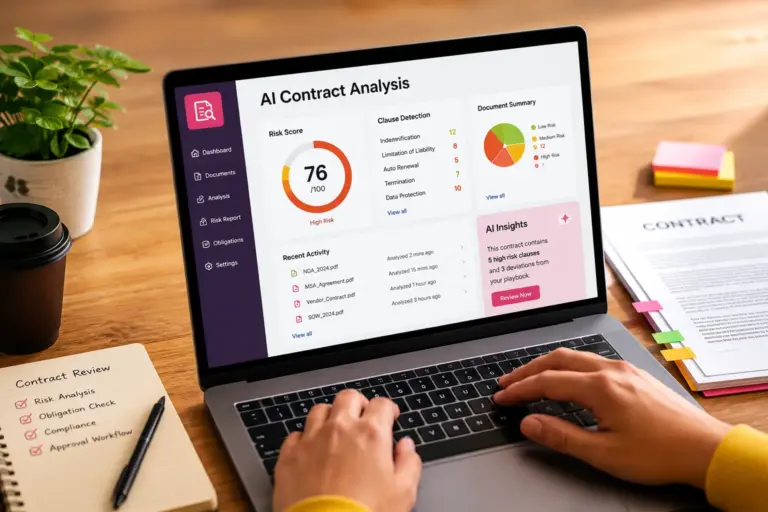
AI OCR in Cybersecurity Compliance Software Workflows: How Modern Compliance Teams Scale Audits, Evidence Collection, and Risk Governance
AI OCR in Cybersecurity Compliance Workflows
Cybersecurity compliance used to be mostly procedural. Teams gathered screenshots, exported logs, reviewed spreadsheets, uploaded PDFs into audit portals, and manually mapped controls against frameworks like SOC 2, ISO 27001, HIPAA, PCI DSS, and NIST.
That model is collapsing under modern enterprise scale.
Cloud infrastructure changes constantly. Security tools generate massive amounts of evidence. Vendor ecosystems expand every quarter. Regulatory pressure keeps increasing. Meanwhile, auditors still expect organized, traceable documentation with clear control mapping and defensible governance processes.
This is where AI OCR is changing the game.
Modern cybersecurity compliance software now uses AI-powered optical character recognition to automate document ingestion, classify evidence, extract control-relevant data, detect inconsistencies, and accelerate governance workflows that once consumed hundreds of analyst hours.
For enterprise IT teams, this is no longer just operational convenience. It has become a strategic requirement.
The organizations gaining an advantage in compliance operations today are not simply hiring more analysts. They are deploying AI compliance automation systems that reduce friction across audits, governance reviews, vendor assessments, policy management, and continuous compliance monitoring.
And increasingly, AI OCR sits at the center of that architecture.
Why Cybersecurity Compliance Workflows Are Breaking at Scale
Most compliance programs were designed for slower infrastructure environments.
A decade ago, organizations maintained fewer cloud assets, fewer SaaS vendors, and less distributed infrastructure. Documentation volumes were manageable. Audit evidence changed less frequently. Security teams had longer review cycles.
Modern enterprise environments look very different.
Today’s compliance teams must manage:
- Multi-cloud environments
- Hybrid infrastructure
- Third-party vendor ecosystems
- Continuous software deployment pipelines
- Remote workforce systems
- Large volumes of unstructured documents
- Rapid policy revisions
- Continuous monitoring requirements
The operational problem is not merely collecting evidence anymore. It is organizing, interpreting, validating, and contextualizing that evidence fast enough to support governance decisions.
Traditional OCR tools helped digitize scanned documents, but they lacked contextual understanding. They could convert images into text, but they could not determine whether a firewall configuration screenshot actually satisfied a SOC 2 access control requirement.
AI OCR changes that dynamic.
Instead of simple character recognition, modern OCR security tools combine:
- Machine learning
- Natural language processing
- Semantic classification
- Document intelligence
- Risk analysis models
- Context-aware extraction
- Workflow automation
That combination transforms static document processing into intelligent compliance automation.
What AI OCR Actually Means in Compliance Operations
A lot of enterprise buyers misunderstand AI OCR because vendors oversimplify the term.
Traditional OCR focuses on text extraction.
AI OCR focuses on document understanding.
That distinction matters enormously in cybersecurity governance workflows.
A modern AI OCR system can:
- Recognize screenshots
- Extract metadata
- Identify security controls
- Understand policy language
- Detect missing fields
- Classify evidence types
- Associate documents with frameworks
- Flag anomalies
- Route evidence to auditors
- Automate retention policies
For example, consider a SOC 2 audit workflow.
A traditional process may require analysts to manually:
- Collect IAM screenshots
- Export access logs
- Upload evidence into folders
- Rename files
- Match evidence to controls
- Verify timestamps
- Validate completeness
- Prepare auditor packages
With AI compliance automation, the platform can automatically:
- Ingest screenshots
- Extract configuration details
- Map evidence to SOC 2 controls
- Detect missing artifacts
- Flag stale evidence
- Create audit-ready repositories
- Generate traceability records
That operational shift dramatically reduces audit preparation time.
How AI OCR Fits Into Modern Cybersecurity Compliance Software
The most advanced cybersecurity compliance software platforms are evolving into centralized governance intelligence systems.
AI OCR acts as the ingestion and interpretation layer.
Think of it as the bridge between unstructured enterprise documentation and structured compliance workflows.
Typical architecture includes:
Data Ingestion Layer
This includes:
- PDFs
- Emails
- Screenshots
- Cloud exports
- Vendor reports
- Security logs
- Policy documents
- Contracts
- Incident reports
AI OCR Processing Layer
This stage performs:
- Text extraction
- Layout recognition
- Semantic parsing
- Entity identification
- Classification
- Confidence scoring
Compliance Mapping Engine
The system then maps extracted information against:
- SOC 2 controls
- ISO 27001 clauses
- NIST requirements
- HIPAA safeguards
- PCI DSS standards
- Internal governance frameworks
Workflow Automation Layer
The final stage handles:
- Notifications
- Approval routing
- Audit evidence packaging
- Retention management
- Risk escalation
- Reporting dashboards
This architecture is becoming foundational inside enterprise governance software ecosystems.
Core AI OCR Use Cases in Enterprise Compliance
Audit Evidence Collection
Evidence collection remains one of the biggest operational bottlenecks in compliance programs.
Auditors request:
- Access reviews
- Change management records
- Vulnerability scans
- MFA screenshots
- Endpoint reports
- Policy acknowledgments
- Security awareness records
Most of these artifacts arrive in inconsistent formats.
AI OCR dramatically reduces normalization effort.
Instead of manually sorting files, the platform can:
- Detect evidence categories
- Extract timestamps
- Identify relevant controls
- Tag supporting systems
- Validate document freshness
This is especially valuable during compressed audit windows.
SOC 2 Document Management
SOC 2 audits generate enormous documentation volumes.
Organizations often struggle with:
- Version control
- Evidence sprawl
- Duplicate records
- Missing audit trails
- Inconsistent naming conventions
AI-powered SOC 2 document management systems solve these issues by introducing intelligent organization.
The platform can automatically:
- Associate evidence with Trust Services Criteria
- Track expiration dates
- Identify outdated policies
- Detect incomplete submissions
- Create centralized evidence repositories
This improves both operational efficiency and auditor confidence.
Vendor Risk Assessments
Third-party risk management produces highly unstructured data.
Vendors submit:
- Security questionnaires
- Penetration test reports
- Compliance certifications
- Insurance documents
- Privacy policies
AI OCR systems can parse these documents and extract relevant risk indicators automatically.
For example:
- Encryption standards
- Incident history
- Expired certifications
- Missing controls
- Security maturity indicators
This accelerates vendor onboarding and ongoing monitoring workflows.
Policy Verification
Compliance teams constantly verify whether internal policies align with external frameworks.
AI OCR platforms can compare policy language against regulatory requirements and flag inconsistencies.
Examples include:
- Missing retention clauses
- Weak password standards
- Outdated encryption references
- Incomplete access control language
That reduces manual policy review overhead significantly.
Incident Response Documentation
Incident response processes generate fragmented evidence:
- Chat logs
- Ticket exports
- SIEM screenshots
- Timeline notes
- Forensic reports
AI OCR tools help normalize and organize that information into defensible incident documentation.
This becomes particularly valuable for:
- Regulatory investigations
- Cyber insurance claims
- Post-incident audits
- Litigation readiness
AI Compliance Automation and Governance Platforms
The enterprise market is shifting toward continuous compliance rather than periodic audits.
That transition requires automation.
AI compliance automation platforms now integrate with:
- Identity providers
- Cloud infrastructure
- Endpoint management systems
- SIEM platforms
- Ticketing systems
- HR systems
- GRC platforms
AI OCR expands the visibility of these platforms by processing non-structured evidence sources.
Without OCR intelligence, large portions of compliance data remain trapped in static documents.
This creates blind spots.
Modern risk compliance AI platforms aim to eliminate those blind spots through continuous ingestion and analysis.
The result is more proactive governance.
Instead of discovering missing evidence during audits, organizations can identify compliance gaps continuously.
OCR Security Tools vs Traditional OCR Systems
Not all OCR platforms are suitable for cybersecurity workflows.
Basic OCR systems focus on readability.
Enterprise OCR security tools focus on governance intelligence.
That distinction becomes obvious in real-world deployment.
Traditional OCR Limitations
Legacy OCR systems often struggle with:
- Low-quality screenshots
- Complex layouts
- Security dashboards
- Tables and charts
- Context interpretation
- Multi-document relationships
They also lack compliance-specific classification logic.
Modern OCR Security Tool Capabilities
Advanced platforms provide:
- AI classification
- Context-aware extraction
- Framework mapping
- Confidence scoring
- Security metadata parsing
- Automated retention workflows
- Chain-of-custody support
- Audit traceability
These capabilities matter because cybersecurity evidence is rarely clean or standardized.
A vulnerability scan export looks very different from a cloud access screenshot or an HR policy PDF.
AI OCR systems must understand those differences contextually.
AI OCR in SOC 2, ISO 27001, HIPAA, PCI DSS, and NIST Workflows
Different frameworks create different document management challenges.
SOC 2
SOC 2 environments generate:
- Access reviews
- Change management evidence
- Vendor assessments
- Endpoint monitoring reports
- Employee onboarding records
AI OCR simplifies evidence mapping against Trust Services Criteria.
ISO 27001
ISO workflows involve:
- Risk registers
- Asset inventories
- Statement of Applicability documentation
- Internal audits
- Corrective action reports
AI systems help maintain traceability across document relationships.
HIPAA
Healthcare environments rely heavily on document-heavy governance.
Examples include:
- Patient access logs
- Security training records
- Incident documentation
- Vendor BAAs
- Risk analyses
OCR automation helps reduce administrative overhead while improving audit readiness.
PCI DSS
Payment security workflows involve:
- Firewall reviews
- Penetration testing reports
- Encryption documentation
- Access restrictions
- Log retention evidence
AI OCR helps normalize highly technical evidence sets.
NIST Frameworks
NIST environments often require:
- Security maturity assessments
- Gap analyses
- Control narratives
- Continuous monitoring evidence
AI-powered governance platforms improve control alignment visibility.
Real Enterprise Workflow Examples
Example 1: SaaS Company Preparing for SOC 2 Type II
A SaaS company with 400 employees needed quarterly evidence collection across multiple cloud platforms.
Their previous process required:
- 3 analysts
- 6 weeks of preparation
- Manual screenshot management
- Spreadsheet-based evidence tracking
After implementing AI OCR workflows:
- Evidence collection time dropped by 65%
- Duplicate documentation decreased substantially
- Missing evidence alerts became automated
- Auditor requests were resolved faster
The biggest gain was not speed alone. It was consistency.
Example 2: Financial Institution Vendor Risk Automation
A financial services company processed over 2,000 vendor assessments annually.
Most vendor submissions arrived as PDFs.
The organization implemented OCR security tools capable of:
- Extracting certification data
- Identifying expired compliance reports
- Detecting missing controls
- Scoring vendor maturity indicators
This reduced manual review workload dramatically.
Example 3: Healthcare Governance Modernization
A healthcare provider needed better HIPAA documentation traceability.
AI OCR enabled automated classification of:
- Incident reports
- Training acknowledgments
- Vendor contracts
- Security assessments
The organization improved audit response speed while reducing governance fragmentation.
Benefits of AI OCR for Compliance Teams
Reduced Manual Work
Compliance analysts spend less time organizing evidence manually.
Faster Audit Readiness
Continuous evidence ingestion improves preparedness.
Better Governance Visibility
AI systems surface hidden compliance gaps earlier.
Improved Accuracy
Automated classification reduces human labeling errors.
Stronger Traceability
Organizations maintain better audit defensibility.
Scalable Compliance Operations
AI automation allows smaller teams to manage larger compliance environments.
Higher Operational Efficiency
Compliance workflows become less dependent on repetitive administrative work.
Risks, Limitations, and Security Concerns
AI OCR is powerful, but it introduces operational risks.
False Positives
AI classification systems are not perfect.
Incorrect evidence mapping can create compliance inaccuracies.
Human review remains important.
Sensitive Data Exposure
OCR systems often process:
- Credentials
- Internal screenshots
- Customer records
- Infrastructure details
Security architecture matters enormously.
Organizations should evaluate:
- Encryption standards
- Data retention policies
- Access controls
- Processing isolation
- Audit logging
Model Drift
AI classification accuracy may decline over time as document formats evolve.
Continuous tuning becomes necessary.
Over-Automation
Some organizations attempt to automate governance decisions entirely.
That creates risk.
Compliance still requires human judgment, especially for:
- Risk acceptance
- Control interpretation
- Regulatory nuance
- Exception management
Selecting Enterprise Governance Software With AI OCR
Enterprise buyers should evaluate platforms carefully.
Important criteria include:
Framework Coverage
Does the platform support:
- SOC 2
- ISO 27001
- HIPAA
- PCI DSS
- NIST
- Internal frameworks
Integration Ecosystem
Look for integrations with:
- Okta
- Microsoft Entra ID
- AWS
- Google Cloud
- Microsoft Azure
- Jira
- ServiceNow
- SIEM platforms
AI Classification Accuracy
Request real-world testing with your own documents.
Security Architecture
Assess:
- Encryption
- Access controls
- Tenant isolation
- Compliance certifications
Workflow Flexibility
Enterprise governance processes vary significantly across organizations.
Rigid systems create operational friction.
Reporting and Traceability
Auditors increasingly expect strong evidence lineage.
Implementation Strategy for Enterprise IT Teams
Start With High-Volume Workflows
Good initial targets include:
- SOC 2 evidence collection
- Vendor questionnaires
- Policy management
- Incident documentation
Build Human-in-the-Loop Validation
Compliance automation works best with reviewer checkpoints.
Standardize Evidence Taxonomy
Consistent naming and classification improve AI accuracy.
Integrate Gradually
Avoid massive governance migrations all at once.
Monitor Accuracy Metrics
Track:
- Extraction confidence
- Misclassification rates
- Missing evidence frequency
- Review correction rates
Common Mistakes Organizations Make
Treating OCR as Simple Scanning
Modern AI OCR is an intelligence layer, not just document digitization.
Ignoring Governance Design
Automation without process clarity creates chaos faster.
Choosing Generic OCR Platforms
Cybersecurity workflows require specialized classification capabilities.
Underestimating Data Sensitivity
Compliance evidence often contains highly sensitive operational information.
Expecting Fully Autonomous Compliance
Human oversight remains critical.
Future Trends in Risk Compliance AI
The next generation of compliance platforms will likely include:
Continuous Evidence Validation
Systems will verify evidence freshness automatically.
AI-Powered Control Recommendations
Platforms will suggest remediation strategies dynamically.
Cross-Framework Mapping
AI models will align evidence across multiple compliance standards simultaneously.
Predictive Compliance Analytics
Organizations will identify likely audit failures before audits begin.
Autonomous Documentation Workflows
AI agents may eventually coordinate evidence collection end-to-end.
Multimodal Governance Intelligence
Future systems will analyze:
- Video evidence
- Voice transcripts
- Infrastructure diagrams
- Real-time dashboards
- Collaboration data
This moves compliance from static administration toward operational intelligence.
FAQ
What is AI OCR in cybersecurity compliance?
AI OCR combines optical character recognition with artificial intelligence to automate document extraction, classification, and compliance mapping in governance workflows.
How does AI OCR help SOC 2 audits?
It automates evidence collection, identifies missing documentation, maps files to controls, and improves audit traceability.
Are OCR security tools secure enough for enterprise environments?
Enterprise-grade platforms typically include encryption, access controls, audit logging, and compliance certifications. Organizations should still evaluate architecture carefully.
Can AI compliance automation replace compliance analysts?
No. Automation reduces repetitive administrative work, but analysts still provide judgment, interpretation, and governance oversight.
What types of documents can AI OCR process?
Common examples include:
PDFs
Screenshots
Security logs
Vendor reports
Policies
Contracts
Audit evidence
Incident reports
Which industries benefit most from AI OCR compliance workflows?
Highly regulated industries benefit significantly, including:
Healthcare
Financial services
SaaS
Government contractors
E-commerce
Critical infrastructure
Conclusion
Cybersecurity compliance is becoming too complex for heavily manual operations.
The volume of evidence, the speed of infrastructure change, and the pressure of continuous governance require a different operational model.
AI OCR is emerging as a foundational layer inside modern cybersecurity compliance software because it transforms unstructured documentation into actionable governance intelligence.
For enterprise IT teams, compliance managers, and security analysts, the value extends far beyond faster audits.
The real advantage is operational scalability.
Organizations that successfully combine AI compliance automation with strong governance design gain:
- Better visibility
- Faster audit readiness
- Reduced administrative overhead
- Improved traceability
- More resilient compliance operations
As risk environments continue evolving, AI-powered governance platforms will increasingly become part of core enterprise security architecture rather than optional tooling.