AI OCR for Loan Application Processing: The Future of Loan Processing Automation in Banking
AI OCR for Loan Application Processing: The Future of Loan Processing Automation in Banking
Loan origination has always been document-heavy. Income statements, tax returns, bank statements, identity verification records, credit reports, mortgage disclosures, payroll files — the average lending workflow touches dozens of documents before a loan decision is ever made.
For banks and fintech lenders, that creates a serious operational problem.
Manual review slows approvals. Human errors introduce compliance risk. Underwriters spend hours extracting repetitive data. Borrowers abandon applications when turnaround times stretch too long. And operating costs climb fast when loan volume spikes.
That’s exactly why AI OCR for loan application processing has become one of the fastest-growing investments across banking and fintech infrastructure.
Modern lenders are no longer using basic optical character recognition tools that simply convert scanned PDFs into text. They’re deploying intelligent document processing systems powered by machine learning, natural language processing, and computer vision to automate entire lending workflows.
The result is a major shift in how financial institutions handle:
- loan intake
- mortgage underwriting
- borrower verification
- document classification
- fraud detection
- financial data extraction
- compliance review
- decision automation
For organizations competing in digital lending, loan processing automation is becoming less of an optimization strategy and more of a survival requirement.
What Is AI OCR in Loan Processing?
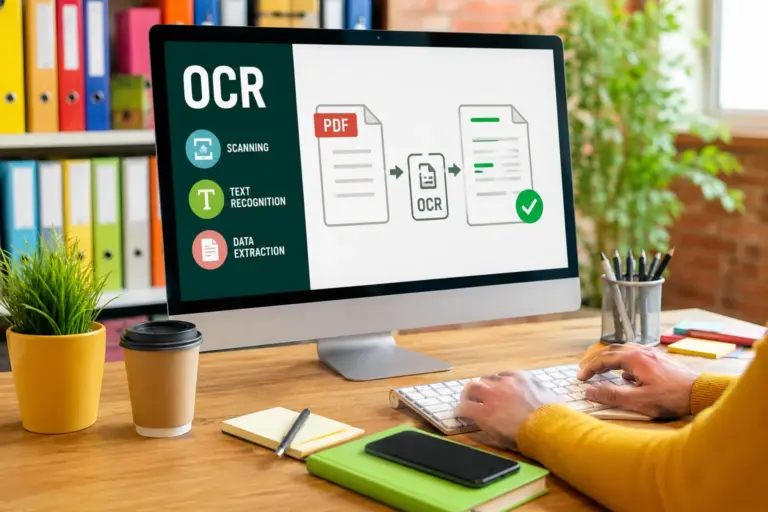
AI OCR combines traditional optical character recognition with artificial intelligence models capable of understanding financial documents contextually.
Instead of simply reading text from a document, AI-powered banking OCR software can:
- identify document types automatically
- detect relevant financial fields
- validate extracted information
- classify borrower records
- flag inconsistencies
- route applications through workflows
- integrate directly into underwriting systems
Traditional OCR reads characters.
AI OCR understands documents.
That distinction matters enormously in lending operations where accuracy directly affects risk exposure and regulatory compliance.
For example, a standard OCR engine might extract:
“Monthly Income: 7,500”
An AI lendingautomation platform can determine:
- whether the value belongs to gross or net income
- whether the document is a pay stub or tax return
- whether the number conflicts with other submitted records
- whether the formatting suggests document tampering
- whether the value meets underwriting thresholds
That contextual intelligence is what transforms OCR from a scanning utility into a core lending infrastructure layer.
How Traditional OCR Falls Short in Financial Services
Banks experimented with OCR decades ago, but early systems created as many operational headaches as they solved.
Traditional OCR platforms struggle with:
Inconsistent Document Formats
Borrowers upload:
- scanned images
- mobile photos
- handwritten forms
- low-resolution PDFs
- compressed screenshots
- multi-page statements
Conventional OCR engines break easily when formatting changes.
Financial Terminology Complexity
Lending documents contain:
- industry abbreviations
- complex tables
- varying tax formats
- institution-specific layouts
- nested data structures
Generic OCR software often misclassifies financial fields.
Error Rates in Critical Data
Even minor extraction errors can cause:
- underwriting mistakes
- incorrect debt-to-income calculations
- compliance violations
- inaccurate risk scoring
In financial services, a single decimal point error matters.
Lack of Workflow Intelligence
Older OCR systems don’t understand lending workflows. They extract text but don’t:
- validate borrower data
- identify missing documentation
- prioritize exceptions
- automate decision routing
That creates bottlenecks requiring manual intervention.
Core Components of Modern Loan Processing Automation
Modern loan processing automation platforms typically combine several technologies into one intelligent workflow ecosystem.
AI OCR Engine
Handles document ingestion and text extraction.
Intelligent Document Processing (IDP)
Classifies documents and identifies relevant financial fields automatically.
Machine Learning Models
Continuously improve extraction accuracy using historical lending data.
Natural Language Processing (NLP)
Understands contextual meaning inside financial records.
Workflow Automation
Routes applications between:
- underwriting
- compliance
- fraud review
- verification
- servicing teams
API Integrations
Connects with:
- loan origination systems (LOS)
- CRM platforms
- credit bureaus
- banking infrastructure
- fraud detection services
Decision Intelligence
Supports automated approval recommendations and risk analysis.
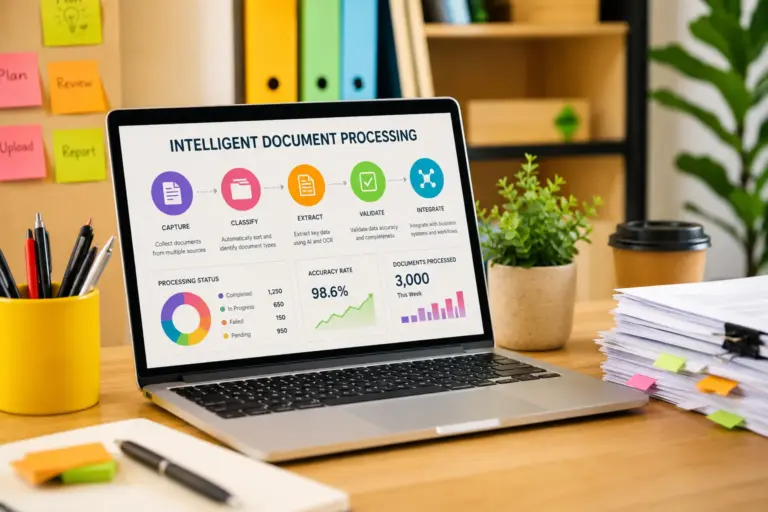
Together, these components create an end-to-end AI lending automation pipeline.
How AI OCR Works in Lending Workflows
The workflow usually begins when a borrower uploads documents through a digital lending portal.
The AI OCR platform then performs several operations within seconds.
Step 1: Document Ingestion
The system captures:
- PDFs
- images
- scanned forms
- email attachments
- mobile uploads
Step 2: Document Classification
AI identifies document categories such as:
- W-2 forms
- tax returns
- pay stubs
- bank statements
- driver’s licenses
- mortgage disclosures
Step 3: Data Extraction
Relevant fields are extracted automatically:
- income
- employer details
- account balances
- transaction histories
- liabilities
- asset information
Step 4: Validation
The platform cross-checks extracted data against:
- application forms
- external databases
- fraud signals
- compliance rules
Step 5: Workflow Routing
Applications move automatically into:
- underwriting queues
- exception review
- fraud investigation
- approval pipelines
Step 6: Continuous Learning
Machine learning models improve extraction performance over time.
This dramatically reduces manual review requirements.
Document Types Commonly Processed in Banking OCR Systems
Financial institutions process a surprisingly broad range of document formats.
Consumer Lending Documents
- pay stubs
- employment verification
- tax filings
- utility bills
- identity documents
Mortgage Documents
Mortgage workflow AI systems handle:
- loan estimates
- closing disclosures
- appraisal reports
- title documents
- escrow records
- income verification files
Small Business Lending
Fintech document processing platforms often analyze:
- profit and loss statements
- business bank statements
- invoices
- cash flow reports
- merchant processing records
Commercial Lending
Enterprise banking OCR software supports:
- audited financial statements
- corporate tax filings
- balance sheets
- legal contracts
- collateral documentation
Each lending segment requires different extraction logic and compliance controls.
Mortgage Workflow AI: Why Mortgage Lending Needs Intelligent Automation
Mortgage lending may be the single strongest use case for AI OCR in financial services.
Mortgage applications involve:
- extremely high document volume
- strict compliance obligations
- lengthy underwriting cycles
- complex borrower profiles
A conventional mortgage file can easily exceed 500 pages.
Manual processing introduces delays that frustrate borrowers and increase operational costs.
Mortgage workflow AI addresses this by automating repetitive underwriting tasks.
Income Calculation Automation
AI systems can:
- identify multiple income sources
- calculate averages
- detect irregular payroll patterns
- verify employment consistency
Asset Verification
Platforms automatically extract:
- account balances
- recurring deposits
- reserve funds
- investment holdings
Fraud Detection
AI OCR models identify:
- altered PDFs
- manipulated bank statements
- inconsistent fonts
- metadata anomalies
Compliance Tracking
Mortgage workflows require strict adherence to:
- TRID
- RESPA
- AML requirements
- KYC standards
Automation helps maintain audit-ready documentation trails.
Key Benefits of AI OCR for Banks and Fintech Companies
Faster Loan Approvals
One of the biggest competitive advantages is speed.
Applications that once required days of manual review can now move through underwriting in minutes.
Faster approvals improve:
- borrower satisfaction
- conversion rates
- operational efficiency
Lower Processing Costs
Manual document handling is expensive.
Loan processing automation reduces:
- staffing overhead
- repetitive administrative tasks
- document handling costs
- error remediation expenses
Improved Accuracy
AI extraction systems often outperform manual review for repetitive tasks.
That reduces:
- data entry mistakes
- compliance issues
- underwriting inconsistencies
Better Scalability
During peak lending periods, banks can process higher volumes without proportionally increasing headcount.
Enhanced Borrower Experience
Borrowers increasingly expect:
- instant uploads
- digital verification
- rapid approvals
- minimal paperwork
AI lending automation supports these expectations directly.
Financial Data Extraction and Intelligent Underwriting
Financial data extraction is one of the most commercially valuable components of modern lending AI.
Instead of relying solely on structured application forms, lenders can analyze raw financial documents directly.
This creates richer underwriting models.
Income Intelligence
AI systems identify:
- salary consistency
- seasonal fluctuations
- gig economy earnings
- secondary income sources
Cash Flow Analysis
Advanced fintech document processing platforms can:
- categorize transactions
- detect recurring obligations
- estimate disposable income
- analyze liquidity trends
Debt Assessment
AI models can identify:
- undisclosed liabilities
- hidden repayment obligations
- high-risk spending behavior
Risk Scoring Enhancements
Extracted financial signals improve:
- default prediction
- affordability analysis
- fraud detection
- portfolio segmentation
This is particularly important for alternative lending models serving underbanked consumers.
AI Lending Automation vs Manual Loan Operations
The operational gap between automated and manual lending is growing rapidly.
| Process Area | Manual Workflow | AI Lending Automation |
|---|---|---|
| Document Review | Hours | Seconds |
| Data Entry | Manual | Automated |
| Verification | Staff-intensive | AI-assisted |
| Fraud Detection | Reactive | Real-time |
| Compliance Audits | Manual sampling | Continuous monitoring |
| Scalability | Labor-dependent | Elastic infrastructure |
| Error Rates | High variability | Consistent validation |
Manual operations increasingly struggle to compete with digital-first lenders using AI-driven infrastructure.
Compliance, Auditability, and Risk Management
Financial institutions cannot prioritize speed at the expense of compliance.
That’s why enterprise-grade banking OCR software includes governance capabilities.
Audit Trails
Every extracted field can be traced back to:
- source documents
- timestamps
- user actions
- validation logic
Regulatory Compliance
AI lending systems help support:
- KYC compliance
- AML workflows
- fair lending requirements
- data retention standards
Permission Controls
Sensitive borrower information requires:
- role-based access
- encryption
- secure storage
- controlled sharing
Explainability
Regulators increasingly expect explainable AI systems.
Leading platforms provide:
- confidence scores
- extraction rationale
- validation histories
This is especially important for automated underwriting environments.
Real-World Use Cases Across Lending Segments
Retail Banking
Banks automate:
- personal loans
- credit applications
- auto financing
- refinancing workflows
Mortgage Lending
Mortgage lenders use AI OCR for:
- borrower verification
- underwriting acceleration
- closing document review
Buy Now Pay Later (BNPL)
Fintech providers use document automation to:
- reduce onboarding friction
- accelerate approval decisions
- support instant lending models
Small Business Lending
SMB lenders analyze:
- transaction histories
- revenue trends
- operational cash flow
Embedded Finance
Platforms integrate lending directly into:
- ecommerce systems
- SaaS applications
- payment ecosystems
AI-powered fintech document processing enables these experiences at scale.
Challenges and Limitations of Banking OCR Software
Despite major advances, implementation challenges still exist.
Poor Document Quality
Low-resolution uploads remain problematic.
Handwritten Forms
Some handwriting styles still reduce extraction accuracy.
Edge Case Variability
Rare financial document layouts can confuse models.
Legacy Banking Infrastructure
Older core systems may lack modern API support.
Regulatory Constraints
Financial institutions often require:
- human review checkpoints
- model validation
- extensive governance procedures
Bias Concerns
AI underwriting systems must avoid discriminatory outcomes.
Responsible AI governance is essential.
Choosing the Right AI OCR Platform for Loan Processing
Not all OCR platforms are designed for financial services.
Banks evaluating vendors should focus on:
Financial Document Specialization
Generic OCR tools may struggle with:
- tax forms
- bank statements
- mortgage documents
Extraction Accuracy
Look for:
- benchmark testing
- confidence scoring
- human-in-the-loop workflows
Security Standards
Critical certifications include:
- SOC 2
- ISO 27001
- PCI DSS
- GDPR readiness
API Flexibility
Integration capabilities matter enormously.
Scalability
The system should support:
- volume spikes
- multi-region operations
- enterprise workloads
Model Training Capabilities
Custom learning models improve long-term performance.
Integration with Core Banking and LOS Systems
AI OCR delivers the most value when integrated deeply into lending infrastructure.
Common integration points include:
Loan Origination Systems (LOS)
Examples include:
- Encompass
- Blend
- ICE Mortgage Technology
CRM Platforms
Integration with:
- Salesforce
- HubSpot
- Microsoft Dynamics
Fraud Detection Systems
AI OCR feeds verified financial data into fraud engines.
Core Banking Platforms
This enables:
- real-time account verification
- customer history analysis
- servicing integration
Modern API-first architecture significantly simplifies deployment.
Advanced Features Driving Next-Generation Lending
The market is moving beyond simple document automation.
Conversational AI Integration
Borrowers increasingly interact with:
- AI chatbots
- virtual assistants
- automated onboarding systems
Real-Time Decision Engines
Some lenders now offer near-instant approvals.
Predictive Analytics
AI models forecast:
- default risk
- churn likelihood
- refinance opportunities
Generative AI Assistance
Large language models are beginning to assist with:
- underwriting summaries
- document explanations
- exception handling
Continuous Monitoring
AI systems can monitor borrower financial health post-origination.
This creates opportunities for:
- dynamic credit models
- proactive servicing
- risk mitigation
Common Implementation Mistakes
Treating OCR as a Standalone Tool
OCR should integrate into broader workflow automation.
Ignoring Change Management
Operations teams require training and process redesign.
Underestimating Data Governance
Poor governance creates compliance exposure.
Over-Automating Sensitive Decisions
Human oversight remains important for:
- high-risk loans
- edge cases
- compliance reviews
Choosing Generic Vendors
Financial services require domain-specific AI models.
Future Trends in AI Lending Infrastructure
Several trends are shaping the next generation of lending technology.
Hyperautomation
Banks are automating entire credit lifecycles.
Open Banking Integration
Real-time financial data access reduces document dependency.
Embedded AI Underwriting
Decision intelligence is becoming integrated directly into lending APIs.
Multimodal AI
Future systems will analyze:
- text
- images
- signatures
- voice verification
- behavioral signals
Autonomous Lending Operations
Long term, many lending workflows may operate with minimal human intervention.
That doesn’t eliminate human expertise — it shifts it toward exception management and strategic oversight.
Frequently Asked Questions
What is AI OCR in banking?
AI OCR in banking refers to artificial intelligence-powered optical character recognition systems that extract, classify, and validate data from financial documents automatically.
How does loan processing automation improve underwriting?
Loan processing automation reduces manual document review, accelerates data extraction, improves accuracy, and helps underwriters focus on complex risk analysis instead of repetitive administrative tasks.
Is banking OCR software secure?
Enterprise banking OCR platforms typically support encryption, audit logging, access controls, and compliance certifications such as SOC 2 and ISO 27001.
Can AI OCR detect fraud in loan applications?
Yes. Advanced AI OCR systems can identify altered documents, inconsistent formatting, metadata anomalies, and suspicious financial discrepancies.
What documents can AI lending automation process?
Common document types include:
tax returns
pay stubs
bank statements
identity documents
mortgage disclosures
financial statements
business records
How accurate is financial data extraction?
Modern AI-powered financial data extraction systems often achieve extremely high accuracy rates, especially when trained on banking-specific datasets.
Does AI OCR replace underwriters?
No. AI OCR automates repetitive administrative work, while underwriters continue handling complex risk decisions, policy interpretation, and exception cases.
Conclusion
The lending industry is moving toward intelligent automation faster than many financial institutions expected.
AI OCR is no longer just a back-office efficiency tool. It has become foundational infrastructure for modern digital lending.
Banks, mortgage providers, and fintech companies are under pressure to deliver:
- faster approvals
- lower operational costs
- stronger compliance
- better borrower experiences
- scalable lending operations
Loan processing automation addresses all of these pressures simultaneously.
The institutions gaining the most competitive advantage are not simply digitizing paperwork. They’re redesigning lending workflows around AI-native infrastructure capable of understanding financial data in real time.
That shift is transforming underwriting, compliance, servicing, and customer acquisition across the entire financial ecosystem.