Digital ID and payments turn to your face
Smile – your face is becoming a path for payments.
Apple and Android digital wallets are common tools for consumer payments, but they’re also increasingly intertwined with identification in an era where identities are digital and tied to biometric data.
“Essentially, your face becomes your wallet,” said Prashant Sharma, JPMorgan Chase’s global head of product, overseeing biometric payments and digital identity. “The best checkout is where the consumers don’t have to think about payment, and that’s what biometrics actually enables.”
Apple and Google, two of the largest technology companies, have leaned heavily into digital IDs within their respective phone-based wallets. Meanwhile, 22 states and Puerto Rico have authorized mobile driver’s licenses that can be carried on a digital wallet or state-issued app, according to IDScan.net, a New Orleans-based identity verification software provider.
These trends are converging to increase the use of biometrics in digital wallets, heralding a time in which consumers will make retail purchases, access loyalty programs and board flights with identification and payment data linked to their bodies. A face scan or fingerprint can also potentially reduce payments fraud.
Consumer biometrics date largely to the arrival of sophisticated smartphones and digital wallets over the past decade. They have been tied to passkeys – an authentication method based on a digital credential that isn’t a password – and have enabled biometric payments.
The use of passkeys has reached “global scale” with 5 billion in active use, the FIDO Alliance said in a May report on passkey growth. About 90% of consumers are aware of passkeys and three-quarters have enabled their use on some of their accounts, according to the report, which was based on a survey of 11,000 adults in the U.S. and nine other nations.
“Biometric authenticated payments, once considered emerging, have become mainstream,” card network Visa said in a payments trends report last year. Consumer demand for such payments is growing and “merchants are starting to incorporate them at increasing rates,” the report added.
Consumers have embraced biometric-based IDs through their devices, said a payments executive for Alphabet’s Google, which makes the Android operating system for smartphones.
“We believe security shouldn’t come at the cost of convenience – and as a result have seen consumers welcome biometric ID verification,” P.J. Linarducci, Google’s vice president of consumer payments, said by email last month. “This method relies on the familiar, on-device tools people already use dozens of times a day, like a fingerprint or face unlock.”
Air travelers have seen this shift to facial identification as the TSA seeks to make airport security quicker by taking a photograph it matches against a traveler’s records. The TSA expanded its PreCheck Touchless ID program to 65 U.S. large airports this year so that people enrolled in the PreCheck known traveler program can opt to have their photograph represent both ID and travel documentation.
Google Wallet is the first digital wallet to integrate touchless ID, the TSA said June 24. A digital wallet isn’t required to use the touchless program, which is presented to PreCheck members during flight check if they’re traveling on one of the six largest U.S. airlines involved with the program at one of the 65 airports.
“When your face is all you need to verify your identity, there’s no fumbling with physical documents,” the TSA says on its website. Photos aren’t used for law enforcement or surveillance, or shared with other agencies, the TSA says on its website, with the image and personal data deleted within 24 hours of the traveler’s scheduled flight departure.
Culture affects biometrics adoption
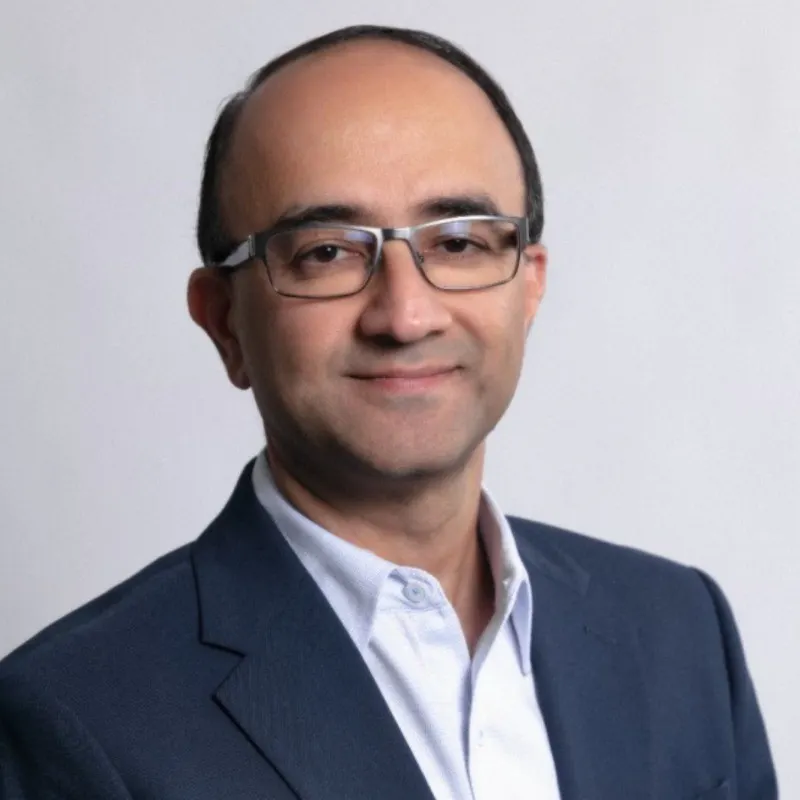
Nishant Kaushik
Permission granted by FIDO Alliance
Biometric data carries an important cultural component, said Nishant Kaushik, chief technology officer for the FIDO Alliance, an industry association that helps create standards for secure digital authentication.
Countries such as China, India and Singapore weave biometrics use into a variety of places, from government-issued national IDs to retail payments. Other jurisdictions – notably Europe and the United States – have adopted a far more guarded approach in terms of government collection and oversight of personal data, fearing invasion of privacy criticisms and civil rights violations.
“Different localities treat biometrics very differently, based on the nature of the culture that has been established there,” Kaushik said.
“Usage of biometrics in many cases has been ingrained from the very beginning in some parts, and in other places it’s being sort of battled over,” he added. He also noted “a very strong, important division” between people controlling their own device and payments with their biometrics compared to “service-line biometric models” such as retail kiosks that take payment via a face scan.
“Those all point to adapting solutions that are in line with the cultural norms of those environments,” requiring sensitivity in how biometric systems are designed, Kaushik said.
In 2023, the Federal Trade Commission issued a policy statement on biometrics, saying their use “raise significant concerns with respect to consumer privacy, data security, and the potential for bias and discrimination.” The agency warned that it would enforce existing protections against “deceptive acts and practices” related to consumer biometric data collection and usage.
The American Civil Liberties Union has opposed personal data collection by governments, and tracks cases where failures by facial recognition technology has led to ID errors and false arrests.
Countries adopt biometrics use at dramatically different rates, Sharma said June 24 at an Industry Dive retail panel. China and the United Arab Emirates, for example, have mandatory national identity programs, while the Unique Identification Authority of India uses a 12-digit identifying number called Aadhaar to prove residents’ identity and combat fraud.
“I would have loved to say that, you know, we are at the forefront of biometrics here in the U.S., but unfortunately that’s not the case,” Sharma said. “But I’m very, very positive that it is going to happen.”
Less fraud and friction

Prashant Sharma
Permission granted by JPMorgan Chase
Biometric data holds enormous potential in retail settings, with quick-service restaurants and live sports and music venues particularly keen to manage masses of people more efficiently.
“When you go to the stadium, it’s not just about going to the concession stand and buying a beer and a hot dog,” said Sharma, the JPMorgan executive. Entry to venues, food and merchandise sales, and lounge access could all be more efficient using biometric technology. The largest U.S. bank wants to create a trusted ecosystem of merchants, consumers and financial institutions around biometrics in the payments industry.
“There are various touch points, and that’s where we see that this is actually solving a real problem,” he said. “Instead of standing in line for 30 minutes to get in, why can’t it just be very frictionless for you to walk in and to pay for the items as well?”
Properly implemented biometrics can also reduce fraud, said Deepanker Saxena, head of product, document verification and biometrics for Socure, a fraud prevention and ID security firm based in Incline Village, Nevada.
For repeated use cases, such as airline passengers or a customer who purchases frequently at the same merchant, a face ID coupled with behind-the-scenes technical checks is more secure than traditional methods, he said.
“If you have verified someone once, it’s better to just pre-verify someone with just biometrics than to (bring) a document into the picture again,” Saxena said. “It reduces the amount of fraud.”

Deepanker Saxena
Permission granted by Socure
Technology advancements make it easier to thwart online fraudsters trying to use someone else’s photograph or an image taken from a video screen grab to gain access, Saxena said.
Biometric-based ID also can allow merchants to better personalize their offers to a consumer and to recognize those enrolled in loyalty programs more easily, without requiring a telephone number or keypad PIN entry.
“By and large, identity has become much more central to all forms of transactions,” Kaushik, the executive with Beaverton, Oregon-based FIDO Alliance, said in a June 15 interview. Still, he added, “identity has to be done correctly to make sure that that doesn’t tip over the line from personalization to surveillance, creepiness, privacy invasion, and things like that.”
Building consumer trust
The largest obstacle confronting biometrics adoption for identity verification and payments, isn’t the technology or how well it works, experts said. The real issue: Do people trust it?
“The moment consumers hear the term biometrics, they think about the security and the privacy,” Sharma said in an interview. He likened the evolution of consumer trust in biometrics to near-field communication (NFC) technology in phones several years ago, which allowed for innovations such as contactless payments and digital hotel keys.
To build trust, companies using biometric data must be “very upfront” about helping people understand the data usage and not hide such information within their standard user terms and conditions, he said.
Outlining consumers’ rights and detailing a proper consent protocol is critical, Saxena and Kaushik said.
With biometrics-enabled payments, a crucial element in preserving consumer trust is “making sure that the experience is not something the user is surprised by,” Kaushik said.
“You don’t want that element of surprise, because that erodes trust,” Kaushik said. “If the user cannot immediately understand what happened and why it happened, and how they played a part in it, then that will erode trust.”
Still, while your face goes with you everywhere, it won’t fully replace traditional ID or payment methods. Cards haven’t killed cash, and smartphones have not spelled the paper ID’s demise, Sharma noted.
Biometric identification and payment ultimately becomes a matter of how to “streamline” consumer experience, he said. “Given that it’s consumer’s choice, we feel all of these (methods) are going to exist, but face is something that can unlock the entire checkout experience to become much more seamless.”