Logistics OCR Software: How AI-Powered Document Automation Is Transforming Supply Chain Operations
Logistics OCR Software
Logistics operations still run on paperwork more than most executives want to admit.
A single shipment can involve bills of lading, customs forms, invoices, packing lists, proof-of-delivery receipts, carrier confirmations, warehouse intake forms, and compliance documentation. Multiply that across thousands of shipments every month and document handling quickly becomes a serious operational bottleneck.
That’s where logistics OCR software enters the picture.
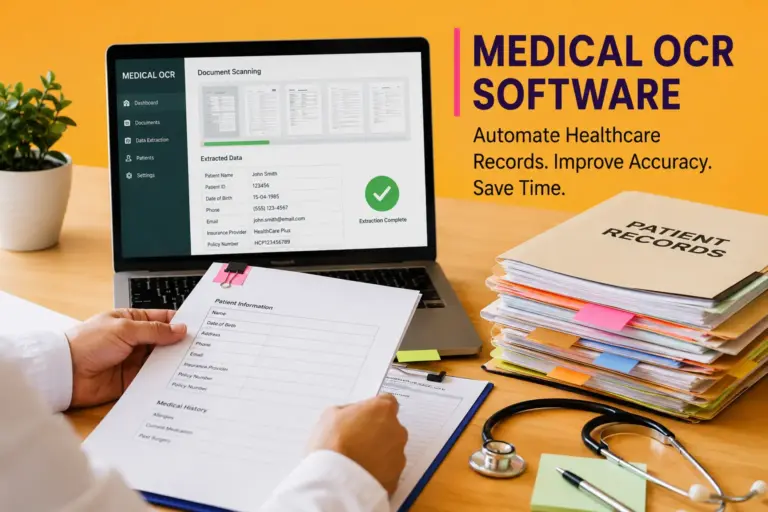
Modern OCR systems no longer just “scan text from paper.” Today’s platforms use AI, machine learning, natural language processing, and workflow automation to extract, classify, validate, and route logistics documents automatically. The result is faster freight processing, fewer data entry errors, improved warehouse coordination, and better supply chain visibility.
For logistics firms, warehouse operators, freight brokers, distributors, and enterprise supply chain teams, document automation is shifting from a productivity upgrade into a competitive necessity.
And frankly, the companies that still rely heavily on manual document handling are starting to lose operational efficiency at scale.
This guide breaks down how logistics OCR software works, where it delivers the highest ROI, and what decision-makers should evaluate before investing in a document automation platform.
What Is Logistics OCR Software?
Logistics OCR software uses optical character recognition technology to convert physical or digital logistics documents into structured, searchable, machine-readable data.
In practical terms, the software can:
- Read shipping paperwork automatically
- Extract key shipment information
- Populate transportation systems
- Validate freight data
- Reduce manual entry work
- Trigger downstream workflows
Older OCR tools struggled with inconsistent document layouts, handwritten notes, damaged scans, and low-quality PDFs.
Modern shipping document AI platforms are much more advanced.
They can now identify:
- Shipment numbers
- Carrier details
- Purchase order references
- Delivery dates
- SKU information
- Freight charges
- Container IDs
- Warehouse receiving data
Even when documents vary between vendors, carriers, or regions.
That flexibility matters because supply chains rarely operate with standardized paperwork across every stakeholder.
How OCR Works in Modern Supply Chain Operations
A modern logistics OCR workflow typically follows five stages.
1. Document Ingestion
Documents enter the system through:
- Email attachments
- Mobile scanning apps
- Warehouse scanners
- Multi-function printers
- EDI feeds
- API uploads
- Customer portals
Some enterprise systems also monitor inboxes automatically and classify documents in real time.
2. Image Enhancement
The platform improves document readability using AI-assisted preprocessing:
- Noise reduction
- Skew correction
- Contrast balancing
- Edge detection
- Character sharpening
This step dramatically improves extraction accuracy for older freight paperwork.
3. OCR Data Extraction
The engine identifies text and extracts structured fields such as:
- BOL number
- Carrier name
- Shipment weight
- Delivery location
- Pallet count
- Freight charges
- Product descriptions
AI models trained specifically on logistics documents generally outperform generic OCR engines.
4. Validation and Matching
The extracted data is validated against:
- ERP systems
- Warehouse management systems
- Purchase orders
- Shipment databases
- Carrier records
This reduces duplicate records and mismatch issues.
5. Workflow Automation
The final step routes information automatically into operational systems.
That may include:
- Triggering invoice approval
- Updating shipment tracking
- Creating warehouse tasks
- Alerting operations managers
- Updating inventory systems
At this point, OCR becomes part of a broader supply chain automation strategy rather than a standalone scanning tool.
Key Logistics Documents That Benefit From OCR Automation
Not every document creates equal operational friction.
Some paperwork categories generate significantly more delays, labor costs, and data inconsistencies.
Bill of Lading OCR
Bill of lading OCR is one of the highest-value automation opportunities in logistics.
A bill of lading contains critical shipment data including:
- Shipper information
- Consignee details
- Freight class
- Commodity descriptions
- Routing instructions
- Carrier information
- Delivery terms
Manual BOL processing creates problems because formats vary between carriers and many documents still arrive as scans or photos.
AI-powered OCR systems can extract BOL data automatically and synchronize it with TMS or ERP platforms.
For high-volume freight operators, this alone can eliminate thousands of manual processing hours annually.
Freight Invoice Processing
Freight invoice discrepancies are common across transportation networks.
OCR automation helps teams:
- Match invoices against contracts
- Detect duplicate charges
- Validate shipment references
- Automate accounts payable workflows
This reduces payment delays and audit overhead.
Proof of Delivery Documents
POD processing is often fragmented.
Drivers may submit:
- Paper receipts
- Mobile photos
- Signed PDFs
- Scanned forms
OCR systems centralize and digitize these records automatically.
That improves customer service responsiveness and accelerates dispute resolution.
Warehouse Receiving Documents
Inbound warehouse operations rely heavily on receiving paperwork.
OCR software helps warehouse teams:
- Verify inbound shipments
- Compare packing lists
- Update inventory counts
- Trigger putaway workflows
This reduces receiving delays and inventory mismatches.
Customs and Compliance Documents
International logistics operations involve significant documentation complexity.
OCR automation supports:
- Customs declaration processing
- HS code extraction
- Trade compliance checks
- Cross-border documentation workflows
For global supply chains, this becomes particularly valuable at scale.
OCR vs Manual Data Entry in Logistics
Manual logistics document processing has hidden costs many organizations underestimate.
Manual Processing Problems
Common operational issues include:
- Human data entry errors
- Delayed shipment updates
- Lost paperwork
- Slow invoice approvals
- Inventory mismatches
- Compliance risks
- Labor-intensive workflows
These problems compound quickly during peak shipping periods.
OCR Automation Advantages
By contrast, logistics OCR software delivers:
| Capability | Manual Workflow | OCR Automation |
|---|---|---|
| Processing speed | Slow | Near real time |
| Error rates | High | Lower |
| Scalability | Labor dependent | System scalable |
| Searchability | Limited | Fully searchable |
| Data consistency | Variable | Standardized |
| Workflow integration | Fragmented | Automated |
| Reporting visibility | Delayed | Immediate |
The operational impact becomes even more significant in multi-site warehouse networks.
Core Features to Look for in Logistics OCR Software
Not all OCR platforms are built for logistics environments.
Generic document scanners often fail when exposed to real-world freight operations.
Here are the features that matter most.
AI-Based Document Classification
The system should automatically identify document types without manual sorting.
That includes distinguishing between:
- Bills of lading
- Commercial invoices
- Packing slips
- POD documents
- Customs forms
Multi-Format Support
Logistics teams deal with messy input sources.
The platform should support:
- PDFs
- Scanned images
- Smartphone photos
- Fax documents
- Handwritten notes
- Email attachments
ERP and TMS Integration
Strong integrations are critical.
Look for compatibility with:
- SAP
- Oracle
- Microsoft Dynamics
- Manhattan Associates
- Blue Yonder
- Transportation management systems
- Warehouse management systems
Disconnected OCR tools create more operational complexity than they solve.
Validation Rules
Advanced freight document processing systems validate extracted data automatically.
For example:
- Shipment totals
- Carrier IDs
- Delivery dates
- PO matching
- Duplicate invoice detection
Workflow Automation
The best systems go beyond extraction.
They also automate:
- Approvals
- Notifications
- Escalations
- Shipment updates
- Exception handling
How AI Improves Freight Document Processing
Traditional OCR relied mostly on pattern recognition.
Modern shipping document AI platforms use machine learning models trained specifically on logistics documents.
That distinction matters.
AI-enhanced systems can:
- Interpret inconsistent layouts
- Recognize contextual relationships
- Detect anomalies
- Improve extraction accuracy over time
- Handle semi-structured documents
For example, two carriers may structure bills of lading differently.
Older OCR engines often required rigid templates.
AI systems adapt dynamically.
This dramatically reduces setup complexity for logistics firms managing multiple vendors and transportation partners.
Bill of Lading OCR: The Biggest Operational Bottleneck
If there’s one document category causing persistent friction across freight operations, it’s the bill of lading.
Why?
Because BOLs are:
- Highly variable
- Operationally critical
- Frequently scanned
- Shared across multiple stakeholders
- Often manually processed
A single typo in a BOL can trigger:
- Shipment delays
- Invoice disputes
- Customs holds
- Delivery failures
- Inventory inaccuracies
That’s why bill of lading OCR has become a major investment category within logistics SaaS.
Modern platforms can:
- Extract line-item freight details
- Match shipment references
- Detect missing fields
- Validate consignee data
- Sync with TMS platforms automatically
Some systems even flag suspicious inconsistencies before shipments move downstream.
For enterprise logistics operations, that creates measurable risk reduction.
Warehouse Workflow Software and OCR Integration
Warehouse environments generate enormous operational data volumes.
OCR integration improves warehouse workflow software by eliminating manual intake steps.
Common Warehouse OCR Use Cases
Receiving Automation
Warehouse staff scan inbound paperwork and inventory systems update automatically.
Label Verification
OCR validates pallet labels and shipment references against expected records.
Exception Management
Damaged or mismatched shipments trigger alerts automatically.
Inventory Synchronization
OCR updates stock levels directly inside warehouse systems.
The operational benefit is cumulative.
Even saving 30 seconds per shipment becomes substantial at scale.
Real-World Logistics OCR Use Cases
Third-Party Logistics Providers (3PLs)
3PL operators handle massive document diversity across customers.
OCR helps standardize:
- Carrier intake
- Customer onboarding
- Freight billing
- Shipment visibility
Freight Brokers
Freight brokers use OCR to automate:
- Carrier packet processing
- Rate confirmations
- Invoice matching
- BOL indexing
Retail Distribution Networks
Retail supply chains rely on OCR for:
- Vendor compliance
- ASN matching
- Warehouse receiving
- Cross-docking operations
Manufacturing Supply Chains
Manufacturers use OCR automation to improve:
- Procurement workflows
- Supplier documentation
- Shipment traceability
- Compliance reporting
Benefits of OCR Automation for Logistics Firms
The business case for logistics OCR software extends beyond labor reduction.
Faster Shipment Processing
Automation reduces document handling delays.
That improves freight velocity and warehouse throughput.
Improved Data Accuracy
OCR systems reduce manual entry mistakes that cause operational disruptions.
Better Customer Visibility
Faster data synchronization improves shipment tracking accuracy.
Lower Administrative Costs
Teams spend less time processing repetitive paperwork.
Scalability
Growing shipment volumes no longer require proportional increases in administrative staffing.
Stronger Compliance
Digital document trails improve audit readiness and regulatory reporting.
Common OCR Challenges in Supply Chain Environments
Despite the benefits, implementation challenges still exist.
Poor Scan Quality
Low-resolution documents reduce extraction accuracy.
Inconsistent Carrier Formats
Different carriers structure documents differently.
Handwritten Notes
Handwriting recognition still varies in reliability.
Legacy System Integration
Older ERP systems may require middleware support.
Change Management
Employees sometimes resist automation initiatives.
Successful implementations usually include operational training and phased deployment strategies.
How to Choose the Right Logistics OCR Platform
Choosing an OCR vendor requires more than comparing extraction accuracy claims.
Evaluate Industry Specialization
Logistics-specific OCR platforms generally outperform generic enterprise OCR tools.
Review Integration Capabilities
Integration quality matters as much as OCR accuracy.
Assess AI Training Models
Ask vendors whether their AI models are trained specifically on freight and shipping documents.
Measure Exception Handling
No OCR system achieves 100% automation.
Evaluate how the platform handles uncertain extractions.
Understand Pricing Models
Common pricing structures include:
- Per document
- Per page
- Usage tiers
- Enterprise licensing
- API consumption pricing
The total cost of ownership should include implementation and integration expenses.
Integration With ERP, TMS, WMS, and EDI Systems
OCR becomes dramatically more valuable when integrated into the broader logistics technology stack.
ERP Integration
Supports:
- Financial reconciliation
- Procurement workflows
- Accounts payable automation
Transportation Management System Integration
Enables:
- Shipment tracking updates
- Carrier management
- Freight audit workflows
Warehouse Management System Integration
Improves:
- Inventory visibility
- Receiving workflows
- Dock scheduling
EDI Workflow Enhancement
OCR can complement traditional EDI by digitizing non-standard documents still arriving outside structured channels.
This hybrid approach is increasingly common in modern supply chain operations.
Security, Compliance, and Data Governance
Logistics documentation often includes sensitive operational and financial data.
OCR platforms should support:
- Role-based access controls
- Encryption
- Audit trails
- Data retention policies
- SOC 2 compliance
- GDPR compliance
- Secure API frameworks
Security becomes particularly important when processing international freight records and customer contracts.
ROI of Shipping Document AI
Many logistics firms initially evaluate OCR purely as a labor-saving initiative.
That’s only part of the ROI picture.
Direct Savings
- Reduced manual entry labor
- Lower processing times
- Fewer invoice disputes
Indirect Operational Gains
- Faster shipment cycles
- Better customer service
- Improved inventory accuracy
- Reduced detention costs
- Better freight visibility
Strategic Advantages
Over time, OCR-generated structured data becomes a valuable operational intelligence asset.
That data supports:
- Predictive analytics
- Carrier performance analysis
- Shipment forecasting
- Supply chain optimization
In many organizations, document automation becomes the first step toward broader AI-driven supply chain modernization.
Future Trends in Supply Chain Automation
The next generation of logistics OCR software is moving beyond document extraction.
Several trends are reshaping the market.
Generative AI-Assisted Workflows
AI copilots are beginning to summarize shipment issues, identify anomalies, and assist operations teams directly.
Real-Time Mobile OCR
Drivers and warehouse teams increasingly capture documents directly from mobile devices.
Intelligent Exception Resolution
AI systems are becoming better at resolving discrepancies automatically.
Predictive Supply Chain Analytics
OCR-generated operational data feeds forecasting and optimization systems.
Autonomous Logistics Operations
Document automation is gradually becoming part of larger autonomous supply chain ecosystems.
FAQ
What is logistics OCR software?
Logistics OCR software extracts data from shipping and freight documents using optical character recognition and AI technologies. It automates document handling workflows across transportation, warehousing, and supply chain operations.
How accurate is bill of lading OCR?
Modern AI-powered bill of lading OCR systems can achieve very high accuracy rates when documents are clear and workflows are properly configured. Accuracy depends on scan quality, document consistency, and model training.
Can OCR integrate with warehouse management systems?
Yes. Most enterprise OCR platforms integrate with warehouse management systems, transportation management systems, and ERP platforms through APIs or middleware connectors.
Is OCR useful for small logistics companies?
Absolutely. Smaller logistics operators often benefit significantly because automation reduces administrative overhead without requiring large operational teams.
What documents can shipping document AI process?
Common document types include:
Bills of lading
Freight invoices
Proof of delivery forms
Packing lists
Customs documentation
Carrier confirmations
Warehouse receiving forms
Does OCR replace EDI?
Not entirely. OCR and EDI often work together. OCR handles semi-structured or non-standard documents while EDI manages structured electronic transactions.
Conclusion
Logistics operations still depend heavily on documents, despite years of digital transformation initiatives.
That creates friction.
Manual freight paperwork slows operations, introduces costly errors, limits visibility, and increases administrative overhead across the supply chain.
Modern logistics OCR software changes that equation.
AI-powered document automation now enables logistics firms, warehouse operators, freight brokers, and enterprise supply chain teams to process shipping documents faster, with greater accuracy and significantly less operational friction.
And the strategic value goes beyond efficiency.
The structured data generated through OCR automation supports analytics, visibility, forecasting, compliance, and broader supply chain modernization initiatives.
For organizations handling growing shipment volumes, document automation is quickly becoming foundational infrastructure rather than an optional optimization layer.