5 HR Tips That Veteran People Managers Live & Breathe

HR tips come in all shapes and sizes, but the ones worth keeping are the habits seasoned people managers actually use every day. These are the HR tips that veteran people managers live and breathe: hard-won practices that keep teams engaged, communication honest, and processes running without constant firefighting.
Some of those practices are written down. Many are not. When I worked in a Japanese company, one unwritten rule was that you often work in near silence; my personal record was eleven hours without saying a word to anyone. You pick up the documented processes quickly, but the abstract, unwritten rules of a workplace take far longer to learn.
As I progressed in that office, I kept discovering new unwritten rules. Here I want to share five of them, drawn from experienced HR experts, that any people manager can put to work today.
Here are the 5 HR tips you need to know:
HR tip #1: Excellent communication comes from good relationships
Building relationships with other departments and the people in them is the quickest way to build good communication. If you’re looking for a way to improve how your team talks to each other, the easiest starting point is to treat everyone as a colleague you genuinely want to work with.
“Remember, you work with people, not robots; treat them as such.”
– Matthew Kirby, Board Member, Honest Human Resources Consulting, LLC
The best communication is quick, honest, and easy. Shared platforms such as Slack let everyone stay well-connected in one place, so you save time on endless meetings and can make your point clearly.
Comments that are productive
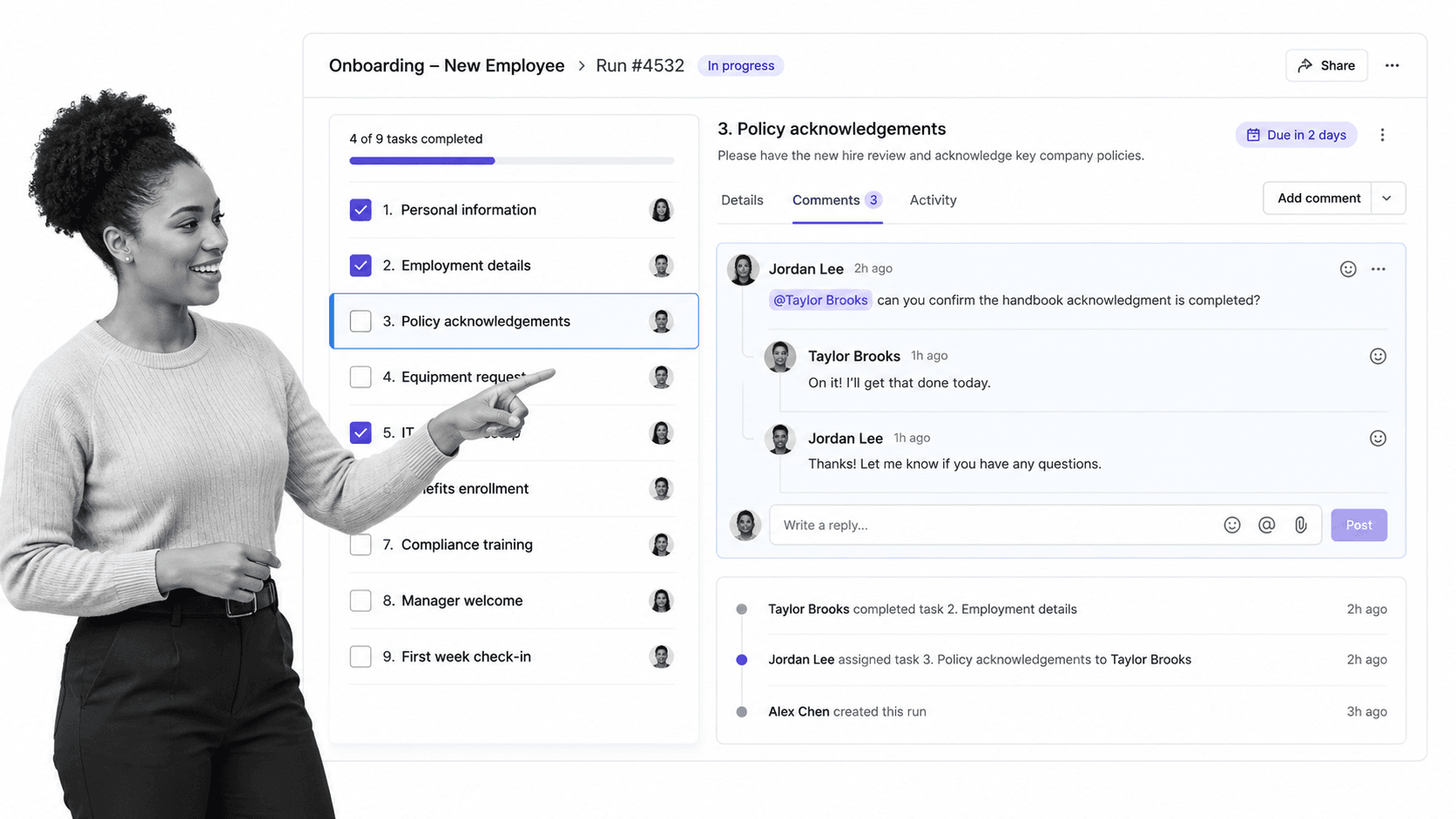
At Process Street, we lean on that same in-context communication. Our workflows let employees add comments to every task in a workflow run, from ideas for improvements to details of any blockers. Keeping the conversation attached to the work itself has made our teams more productive and more effective.
Being open to comments and criticism fosters a real relationship between employees and managers.
“You want meetings that make progress, that challenge our perspectives, that bring us closer together, and where we choose to tackle the most important questions, such as how do I help my staff do their most vibrant work?”
– Jeff Harry, Workplace Consultant, Rediscover Your Play
Colleagues and friends
Most employees cite relationships as the reason to stay with an organization. Employees who become close friends with colleagues in the workplace are happier and more engaged. Nearly all of us, especially when new in a role, rely on other employees to help and guide us. HR best practices such as assigning a buddy are old school, but still crucially important.
“The research shows that 70% of an employee’s satisfaction comes down to the relationship with their direct leader.”
– Ben Eubanks, Chief Research Officer, Lighthouse Research & Advisory
Great relationships are what put the human back into human resources. They help staff feel appreciated, give them a sense of belonging, and let them know their contribution is seen.
Mary Schaefer, a consultant specializing in talent development, offers her views on how to make employees feel appreciated:
HR tip #2: Be an active listener to employee feedback
An active listener encourages employee feedback and, more importantly, is willing to hear it.
Active listening is an in-demand soft skill. In fact, having a leader with strong soft skills can increase a team’s performance by 30%. By actively listening, you build honest connections with your employees.
Active listening involves:
HR managers must work at being active listeners. An excellent way to start is by making your processes transparent and open to employee feedback.
“HR Managers are integral to the effectiveness and collaboration between an organization and its employees – they are the listeners.”
– Traci Rubin, Director of Employee Engagement at Legion Technologies and the host of Bringing the Human back to Human Resources Podcast
Make everything crystal clear
You can make your documents transparent and available to every employee using an online knowledge base. As well as storing your employee handbook online, you could also add your:
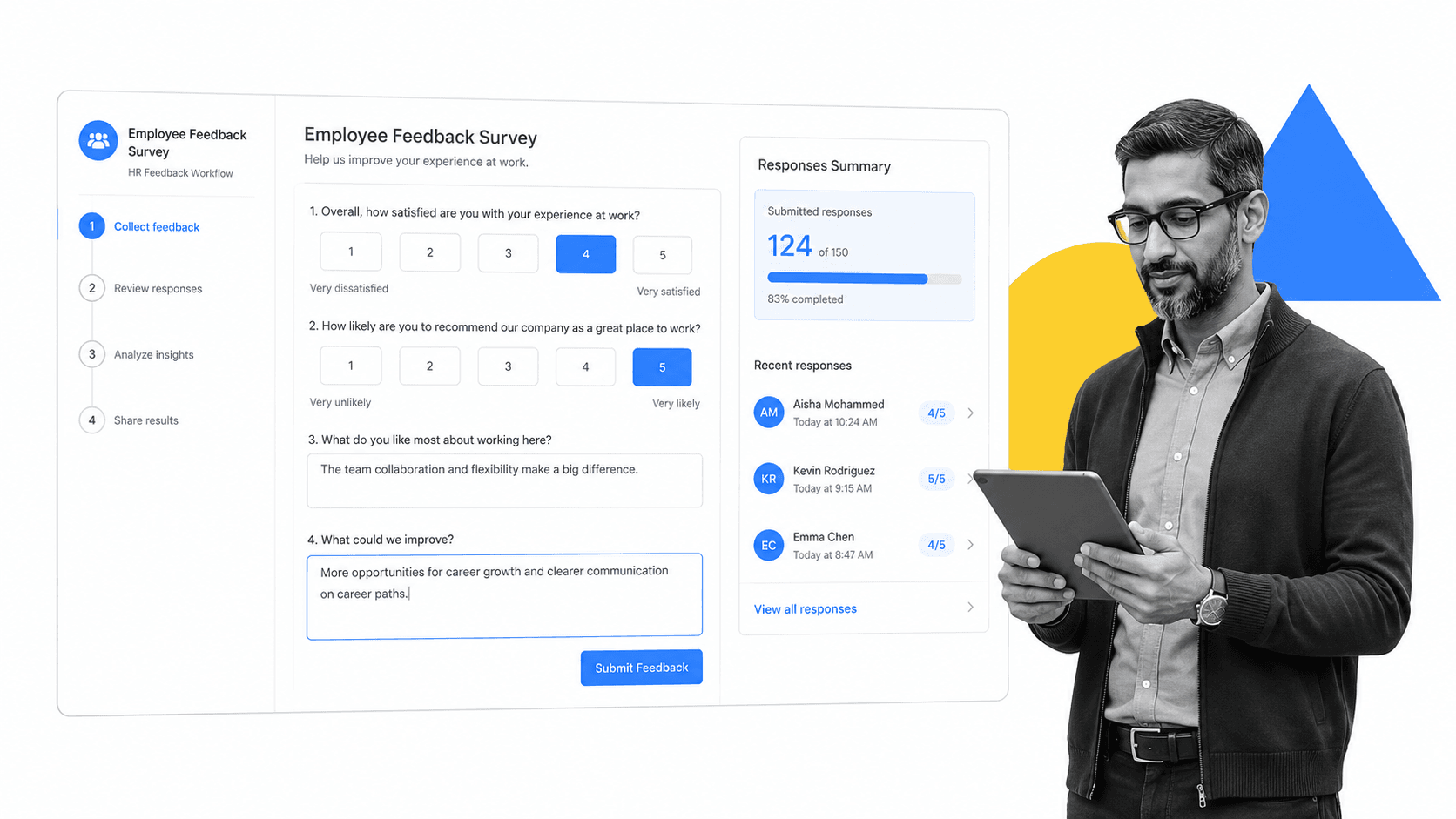
With transparent documentation comes employee feedback. Employees who feel listened to are five times more likely to produce their best work. One of the best human resources tips is to run anonymous employee satisfaction surveys to capture honest feedback.
“Feedback is the driving force behind the successful development of the employees you support.”
– Matthew Kirby, Board Member, Honest Human Resources Consulting, LLC
Giving and receiving feedback well is something we all have to learn.
LeeAnn Renninger, a cognitive psychologist, explains the secret to giving great feedback:
HR tip #3: Make employee onboarding personal
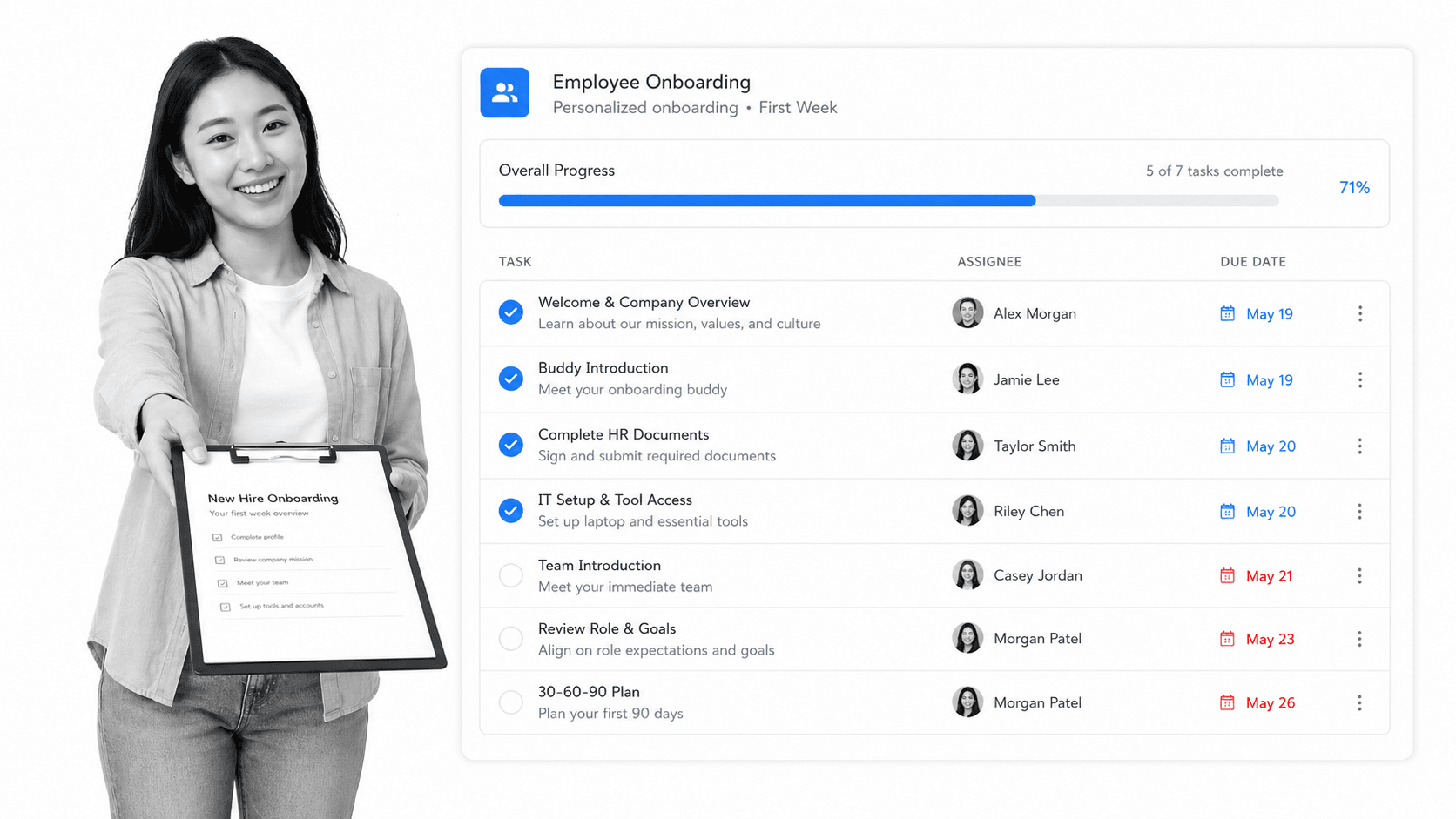
To make employee onboarding personal, use feedback to make your new hire feel listened to from their first day. It shows their opinion is valued and makes them far more likely to stay for the long term. Getting new hire input on the onboarding process is a great way to begin someone’s career and not something they are likely to forget.
“The key thing we see missing in onboarding is letting the employee know how they participate and add value to your purpose, mission, and values. Don’t forget! Onboarding is not training, don’t confuse the two.”
– Ron Lovett, Founder & Chief Alignment Officer, on recruiting and aligning frontline staff
The personal touch makes a long journey easier
The onboarding process can be a long one. Even if a company allocates 90 days for employee onboarding, it can take new hires twelve months to reach their full capability in a new position.
But nearly 70% of employees are likely to stay for three years if they experience great onboarding.
“Nothing beats that personal touch to the onboarding process, such as getting the team to share their favorite foods or sending personal welcoming messages to the new employee before they arrive.
Asking the new employee to share a few things about themselves before they arrive helps the team get an insight into who they are. These things add a personal touch to your onboarding process.”
– Julie Turney, Founder & CEO of HR@Heart Consulting
One of the most reliable human resources rules is to make onboarding the most important thing on your daily checklist.
“Prioritize employee onboarding, and make sure it’s intentional for each new employee.
Not only because first impressions are important, but also because a great employee onboarding process will set your new employees up for success, show them how excited you are to have them there, and set the tone for their entire time working with your organization.”
– Ashley Chain, Director of People & Operations at Process Street
HR tip #4: Simplify your process
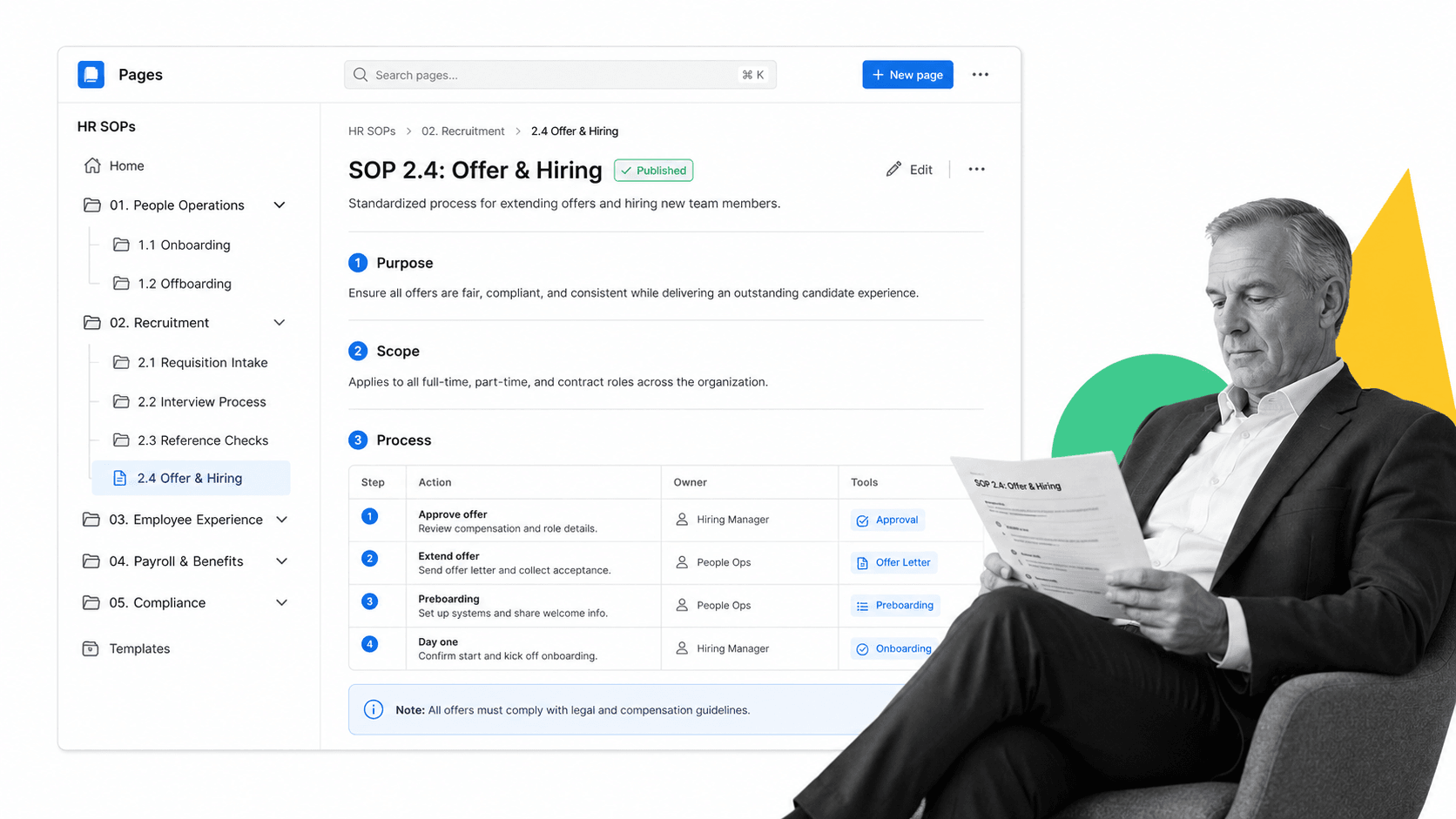
A process needs to be simplified to make it more effective and accessible. As organizations grow, they face an increasingly complicated marketplace, and they can look to project or business process management to get work done.
Project management is the ability to deliver a project successfully according to its goals and limitations. It completes a project by using:
Simple, but effective
BPM (business process management) is the study of a process to improve it and make it more efficient, using steps such as:
Onboarding is most effective when run through business process management. As an ongoing process, onboarding is subject to constant improvement. Project management, by contrast, is a one-off event: a completed project is not usually improved, unlike human resources.
Using BPM, onboarding can be analyzed and simplified. With process improvement, onboarding becomes faster and simpler.
“The simple and genuine is natural. Decentralizing leadership, in a way that each person is the leader of a part of the whole, also allowing the generation of confidence between people and increasing the value of teams, to naturally accelerate the flow of processes.”
– David Hernan Tardini, Head of Agile, Capgemini Invent
Enjoy the benefits of simplicity
Simplifying work has become one of people operations best practices. More than 50% of companies are simplifying work to capture the benefits.
The surest way to simplify a topic is to make it transparent. You can simplify your processes by storing your onboarding documents in a knowledge base such as Pages, where every SOP lives right next to the work it governs.
“Take the time to document processes and policies and make them readily accessible.”
– Ashley Chain, Director of People & Operations at Process Street
HR tip #5: Let automation do the work for you
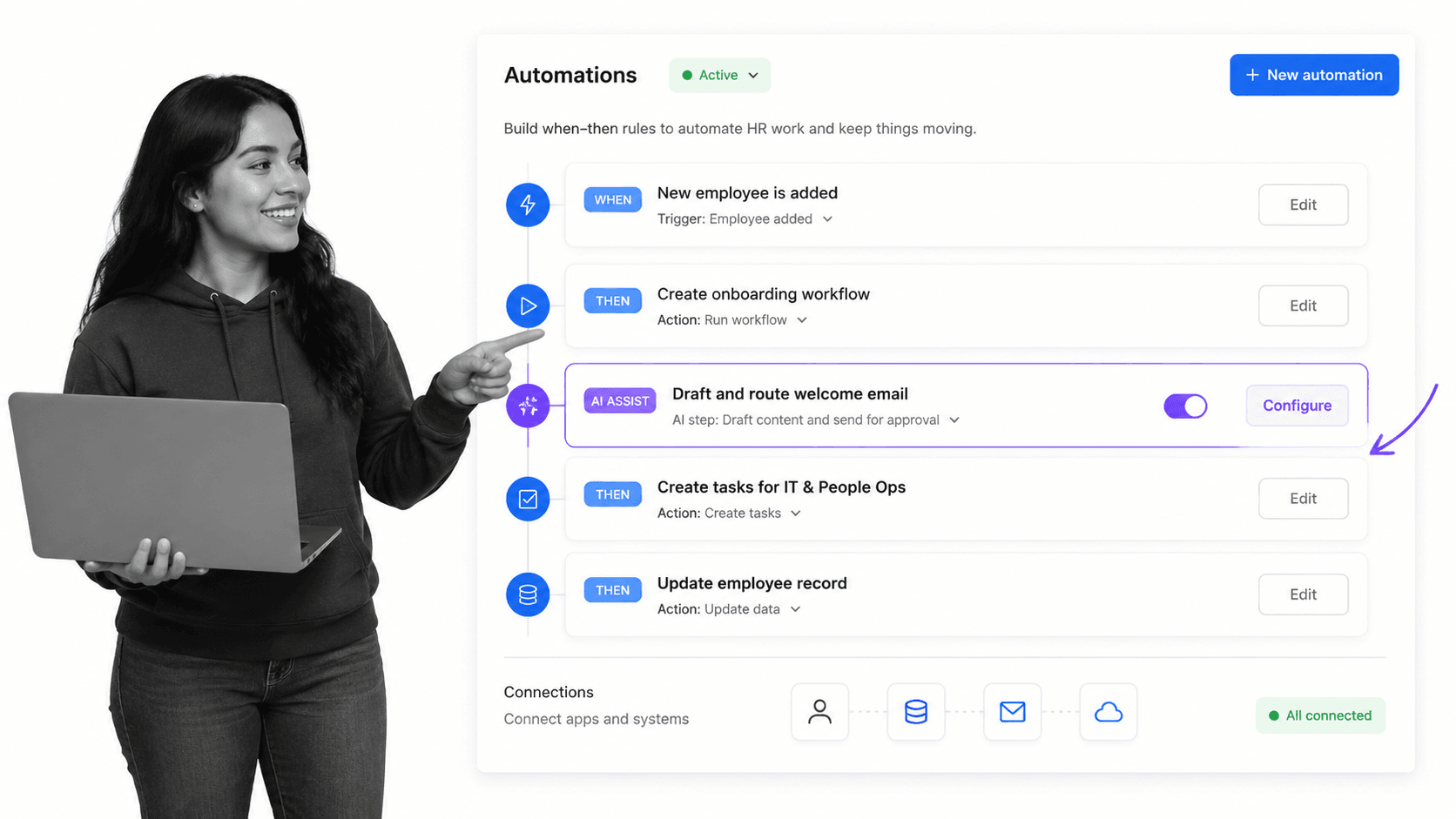
Out of all the HR manager tips, automation carries the heaviest load and frees up time for the work that actually needs a human, such as employee engagement.
“Using automation and AI (like chatbots) to streamline simple questions and answers, schedule interviews, send reminders, and so on can help reduce time spent on responding to frequently asked questions from candidates and employees.
This technology has already moved from a “nice to have” to a “must have” for recruiters and HR teams so they can spend more time on high-touch tasks.”
– Jessica Miller-Merrell, founder of Workology.com and recognized by Forbes as a top 50 social media influencer
HR automation brings a long list of benefits, yet many companies are still only in the early stages of adopting it.
Don’t follow the paper trail
If you’re drowning in paper, it might be time to move to workflow software to reduce your recurring tasks.
“Automate as much as possible. In a lean company and department like ours, it’s so important that we aren’t relying on our memory to know the ins and outs of all the processes we’re in charge of.”
– Ashley Chain, Director of People & Operations at Process Street
Automate to reduce work
Wondering what HR automation actually is? In short, it’s using software to automate recurring tasks such as a leave of absence or employee onboarding. With Process Street’s built-in AI, you can go further still, drafting workflows, routing approvals, and handling the busywork so your team doesn’t have to.
The benefits of HR automation can boost efficiency and also:
- Cut down data entry;
- Give you a paperless office;
- Reduce human error.
Automation is only as good as the systems it can reach. Process Street connects directly to thousands of the tools HR teams already run on, and when you need a connection that doesn’t exist yet, an AI agent can build it on the fly, so your onboarding, offboarding, and approval workflows stay in sync with the rest of your stack.
“Using Process Street to not only document the different tasks that need to be completed, but to also automate as many of those tasks as possible, saves us so much time that we can spend doing something a computer can’t do!”
– Ashley Chain, Director of People & Operations at Process Street
If you’d like to look at HR automation in more detail, you can run workflows in your free Process Street account. You can also request a demo and browse the gallery of templates, where tasks such as background checks, onboarding, and employee surveys are ready to use.
Rules not written on paper
Oh, and the Japanese office rules I mentioned at the beginning of this article?
To elaborate, the people I worked with let me off whenever I accidentally made an etiquette mistake. I learned from experience, and below is a short list you can refer to if you ever find yourself in the same position.
The five unwritten rules of a Japanese office
1. Excellent communication comes from good relationships
I met the company owner on my first day and accepted his business card. Without knowing the Japanese formality, I took the card with both hands and placed it on the table rather than shoving it in my wallet.
I later discovered I’d accepted the card with perfect etiquette. I didn’t realize I’d done it correctly until reading about it afterward.
2. To be an active listener, you need to know what “Ano” means
This Japanese word serves as a pause and roughly means “Excuse me.” In the United Kingdom, people say “Er.”
In my first few office meetings, I thought Ano was the name of someone at the company.
3. Silence around you isn’t personal
Silence is often a gesture to show that someone feels comfortable in your presence or is happy with something you have done.
I once managed to get a last-minute reservation at a great restaurant. My companion was so silent during the meal that I started chatting about egg-fried rice with the waitress. If you’re new and still onboarding in a Japanese office, take silence as a great compliment.
4. Simplify your body language
The Japanese often read broad hand gestures as threatening. Even when waving someone politely through a door first, it’s better to use a simple head movement. When nodding to someone in a more senior position, make your bow a little deeper.
Body language also applies to where you sit. I was seated near a window, far from the entrance of my office. I later learned the significance of the arrangement from a Japanese colleague: people of lesser status sit closer to the door, and more senior people further away from it. I tried to keep my ego in check, though I’ll admit that in McDonald’s I still gravitate to a window seat far from the entrance.
5. A quiet nod of respect as a colleague passes
The fifth rule was the subtlest: a brief, warm acknowledgment as someone walks by, a small signal of respect that keeps the office feeling human.
“On the path in the desolate field, the shadows overlapped and parted.”
Let us know your own unwritten rules in the comments below. We’d also love to hear your thoughts on our 5 HR tips.