Reshaping American Finance in July 2026
Trump Accounts and the Start of a New Savings Habit
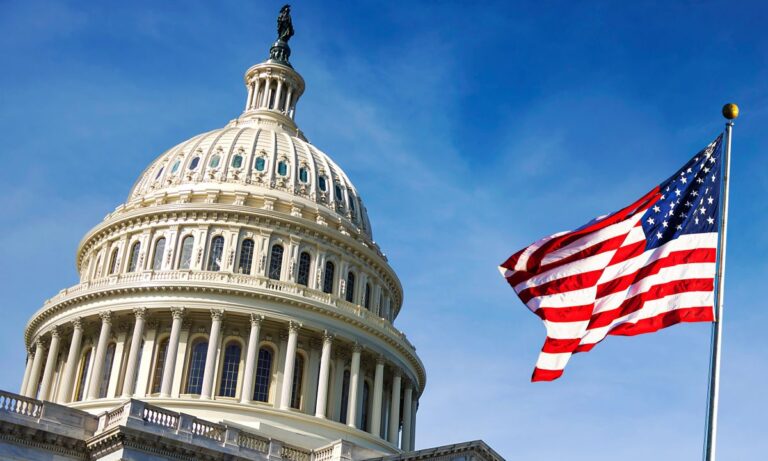
On 4 July, the U.S. government did something no previous administration had done it opened millions of investment accounts for children who can’t yet spell “investment”.
Trump Accounts, officially known as 530A accounts, launched on the nation’s 250th birthday. Every U.S. citizen child born between 1 January 2025 and 31 December 2028 is eligible for a $1,000 seed deposit from the Treasury, invested automatically in low-cost funds tracking the S&P 500. Families can add up to $5,000 a year. Employers can kick in another $2,500, tax-free. The money is generally locked until the child turns 18, at which point the account converts into a traditional IRA.
The number is a headline. The backing behind it is the real story.
The Michael & Susan Dell Foundation has pledged $6.25 billion, extending an extra $250 to roughly 25 million children age 10 and under in lower- and middle-income ZIP codes. In New York City alone, that’s 754,200 eligible children and $188.5 million in Dell contributions. JPMorgan Chase, Intel, and Steak ‘n Shake are among the companies matching the government’s $1,000 for employees’ newborns. Treasury Secretary Scott Bessent has called it the most significant benefit for young Americans since the GI Bill.
This isn’t really a savings program. It’s a bet on compounding.
The administration’s own projection: a single untouched $1,000 seed deposit could grow to roughly half a million dollars by retirement. Critics note there’s no automatic enrolment, which means the biggest beneficiaries may end up being the families already equipped to open an account and keep contributing. Unlike a 529 plan, withdrawals aren’t tax-free either.
Still, something has shifted. For the first time, millions of American children will begin their financial lives already holding equity, not just a birth certificate.
Plaid’s IPO Math Is Starting to Work
Plaid doesn’t have a product problem. It has a timing problem and that problem may be solving itself.
The company, whose APIs quietly connect more than 7,000 apps to over 12,000 financial institutions, has held preliminary talks with banks about a U.S. listing. The trigger a funding round earlier this year that pushed its valuation to roughly $8 billion, up 31% from $6.1 billion in April 2025. That’s real progress, but it’s still well short of the $13.4 billion peak Plaid hit in 2021, the same year regulators blocked Visa’s
proposed $5.3 billion acquisition of the company.
Three things are converging at once.
The IPO window has reopened. Chime and Klarna both went public in 2025, and while their stocks have cooled since debut, they proved consumer fintech can still find public buyers. Plaid’s own CFO has said an IPO is “absolutely on our path”, while being careful not to promise a date. And regulatory clarity is finally taking shape: the CFPB’s open banking rules under Section 1033 govern how freely Plaid can access bank data, even as large banks like JPMorgan push to start charging aggregators for that access.
No S-1 has been filed. No date is set. But Plaid is no longer acting like a company avoiding public markets it’s acting like one getting ready for them.
Axos Buys Arc: When Banks Can’t Build AI Fast Enough, They Buy It
Axos Financial just answered a question every regional bank is quietly asking itself: build the AI, or buy it
The roughly $29 billion-asset digital bank has agreed to acquire Arc Technologies, an AI-native fintech that bundles cash management, debt financing, and “agentic finance” software for startups and growth companies. Founded in 2021 and backed by Y Combinator, Bain Capital Ventures, Accel, and Andreessen Horowitz, Arc had raised about $182 million before the deal. Neither side disclosed a price.
The logic here isn’t complicated. Fintechs win customers with slick software, then hit a wall the moment they need a balance sheet, a charter, or cheap deposits. Banks have all three they just don’t move fast on software. Put the two together, and the wall disappears.
For Axos, the prize is distribution: millions of U.S. small businesses that CEO Greg Garrabrants says remain underserved by traditional banks, now reachable through Arc’s existing customer base and AI tooling. It’s part of a broader pattern across the sector rather than build agentic AI from scratch, incumbents are increasingly buying their way in.
Klarna and Southwest: Buy Now, Fly Later
Klarna doesn’t have a brand problem. It has a checkout problem, and airlines are the next checkout it wants to own.
The company has struck a long-term partnership with Southwest Airlines, which flew more than 134 million passengers in 2025. Starting later this year, Southwest customers booking online or through the app can pay in full, split the cost into four interest free instalments, or finance the trip over a longer period all through Klarna.
The stakes are bigger than one airline. Klarna cites data showing more than one in four Americans say they’re more likely to book when flexible payment options exist at checkout, and the company already serves 119 million active users across 26 countries, processing 3.4 million transactions a day. The Southwest deal lands just days after Klarna filed for a U.S. banking charter, seeking FDIC insurance through a Utah industrial loan company license a step that would let it bring more lending inhouse instead of routing through partner banks.
Sceptics point out that airline loyalty and credit cards are deeply intertwined, and that habit won’t break easily. But Klarna isn’t betting on one deal changing behaviour overnight. It’s betting that travel one of the last major categories still dominated by cards is where flexible payments make their next real push.