Top 10 Trending AI GitHub Repositories in July 2026
If you’ve spent any time on GitHub Trending this month, you’ve probably noticed a pattern: it isn’t research papers turning into repositories anymore, it’s agents. Coding agents, pentesting agents, trading agents, and the infrastructure that ties them all together.
We tracked star growth, momentum, and real-world impact to identify the ten repositories that mattered most this month. Rather than ranking projects by stars alone, we considered both their influence on the AI ecosystem and how quickly they’re gaining traction. In this article, we’ll break down each repository, what it does, why it’s trending, and why it’s worth adding to your watchlist.
1. usestrix/strix (~42K stars)

Strix is an open-source AI penetration testing tool that behaves like a real security researcher instead of a static scanner. It dynamically tests applications, validates vulnerabilities with proof-of-concept exploits, and includes features like an HTTP proxy, browser exploitation, a Python sandbox, and CI/CD integration. Its rapid growth, adding around 7,000 stars a week, suggests it’s seeing genuine adoption among security teams rather than attracting stars as a passing trend.
Best For:
- Security teams that want continuous, AI-driven penetration testing in CI/CD
- Developers who need proof-of-concept validation instead of noisy static-analysis alerts
- Engineers exploring how agentic AI applies to offensive security
2. xai-org/grok-build (~9.3K stars)
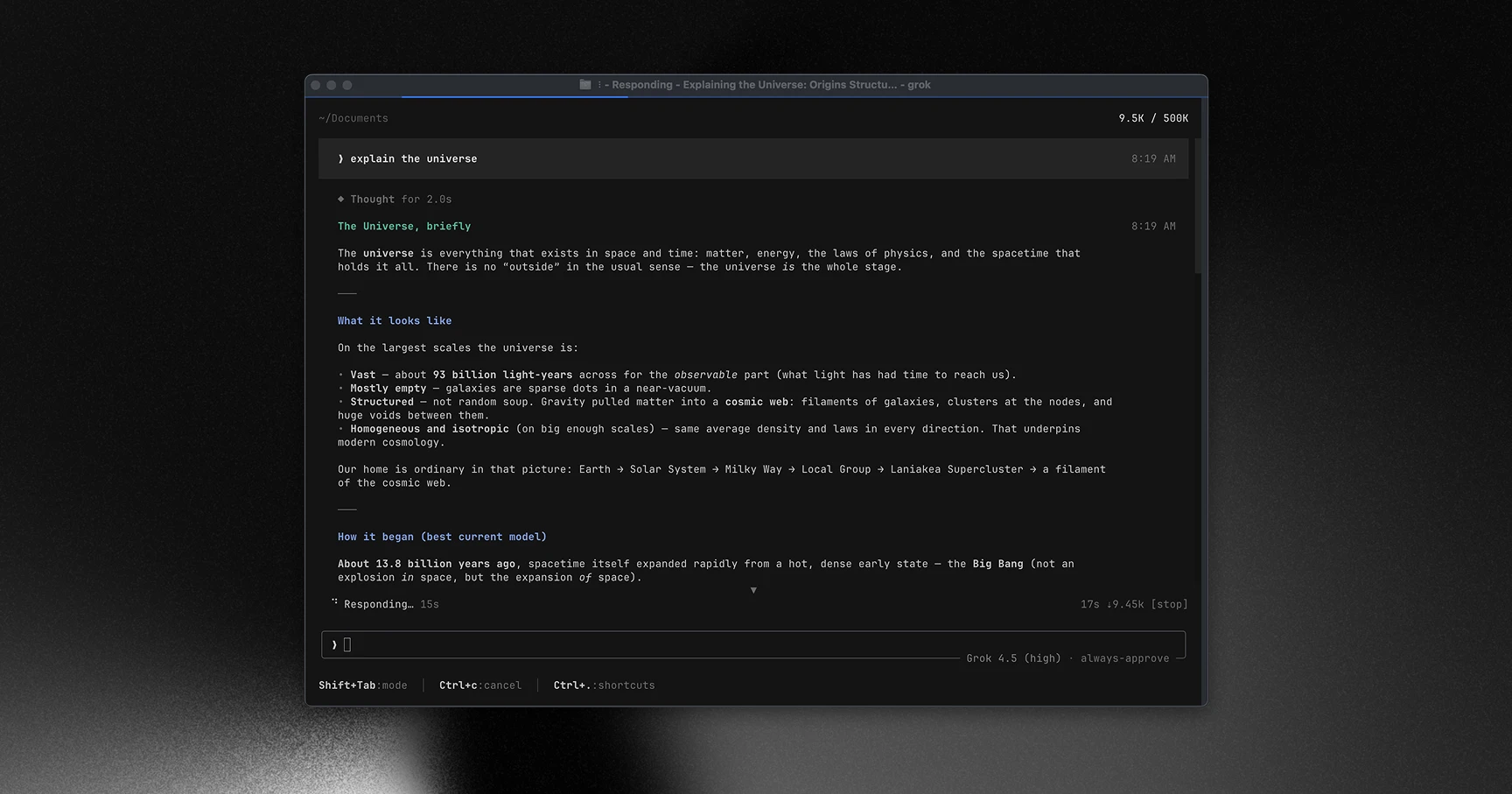
Grok Build is xAI’s open-source coding agent CLI and terminal UI, powering the same agent loop behind Grok’s coding stack. Released under the Apache 2.0 license, it offers complete source transparency into context handling, tool execution, plugins, skills, and MCP integration. While xAI doesn’t accept external contributions, developers can study, compile, and run the agent locally, making it one of the most significant open-source AI releases of the month.
Best For:
- Engineers who want to study a production-grade coding-agent harness line by line
- Teams building their own agent tooling and looking for a battle-tested reference architecture
- Anyone tracking how frontier labs are approaching open, local-first agent infrastructure
3. HKUDS/Vibe-Trading (~24K stars)

Built by the University of Hong Kong’s Data Science Lab, Vibe-Trading converts natural language prompts into backtests, alpha benchmarks, and optional live trades through supported brokers. It includes 452 pre-built alpha factors, point-in-time data handling to prevent lookahead bias, and rigorous validation techniques that set it apart from typical AI trading bots.
One important caveat: the maintainers have warned about a fake token falsely claiming association with the project. Avoid any unofficial “Vibe-Trading token” or wallet connection, as the repository has no affiliation with those scams.
Best For:
- Quant-curious developers who want a research-grade backtesting and alpha framework
- Traders exploring natural-language-driven strategy research before going live
- Anyone studying how academic labs are approaching agentic finance tooling
4. DeusData/codebase-memory-mcp (~32K stars)
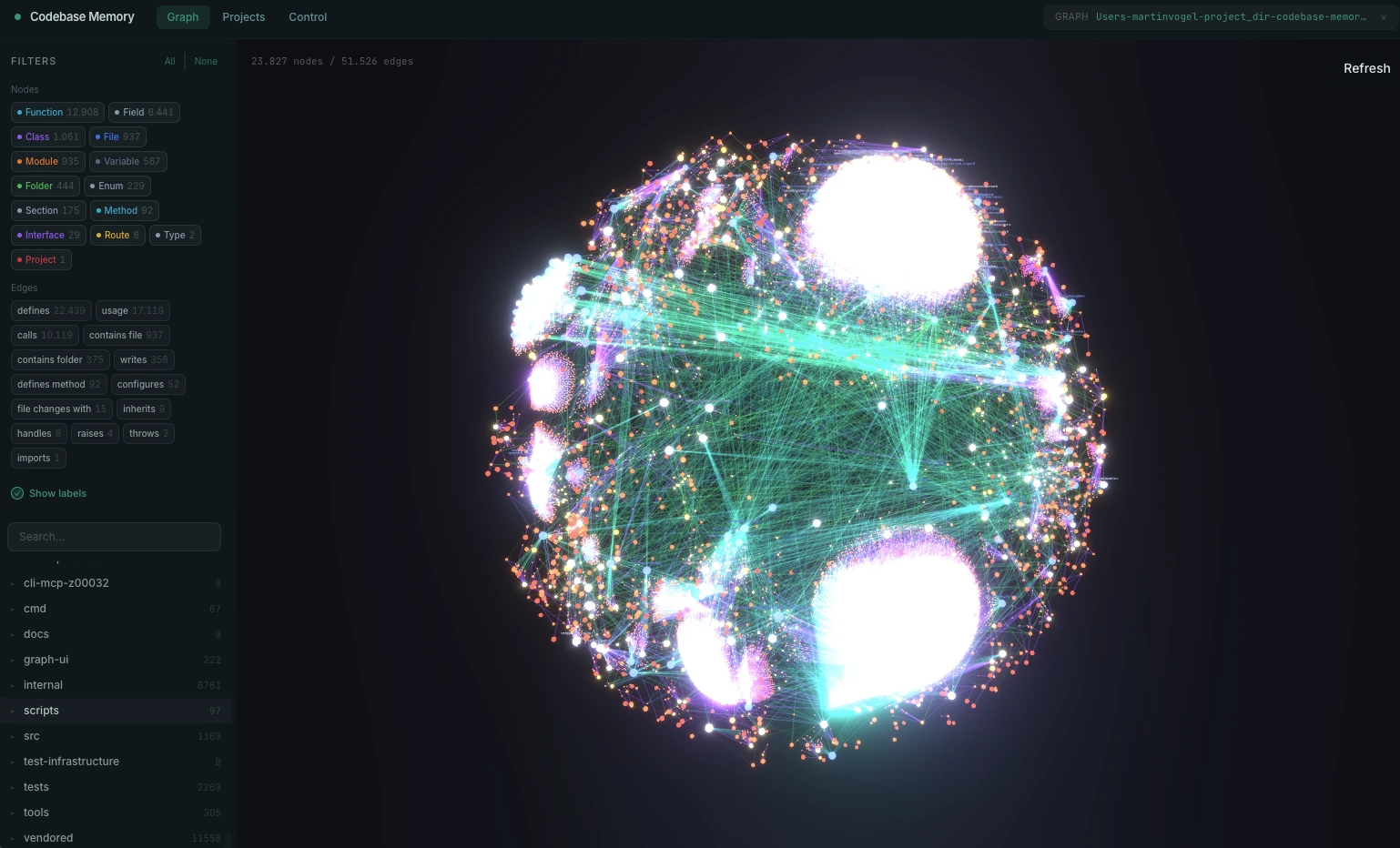
codebase-memory-mcp is an MCP (Model Context Protocol) server that helps AI coding agents understand large codebases without repeatedly scanning files. It builds a persistent knowledge graph of functions, classes, call chains, and routes using tree-sitter across 158 languages, reducing token usage for structural queries by up to 99%. Distributed as a single static C binary with no dependencies, it runs entirely locally and can index even massive repositories, including the Linux kernel, in just a few minutes.
Best For:
- Anyone whose AI coding agent burns excessive tokens exploring large codebases
- Teams standardizing on MCP-based tooling for Claude Code, Cursor, or similar agents
- Engineers who want structural code intelligence without running an LLM for every query
5. langchain-ai/openwiki (~11.8K stars)
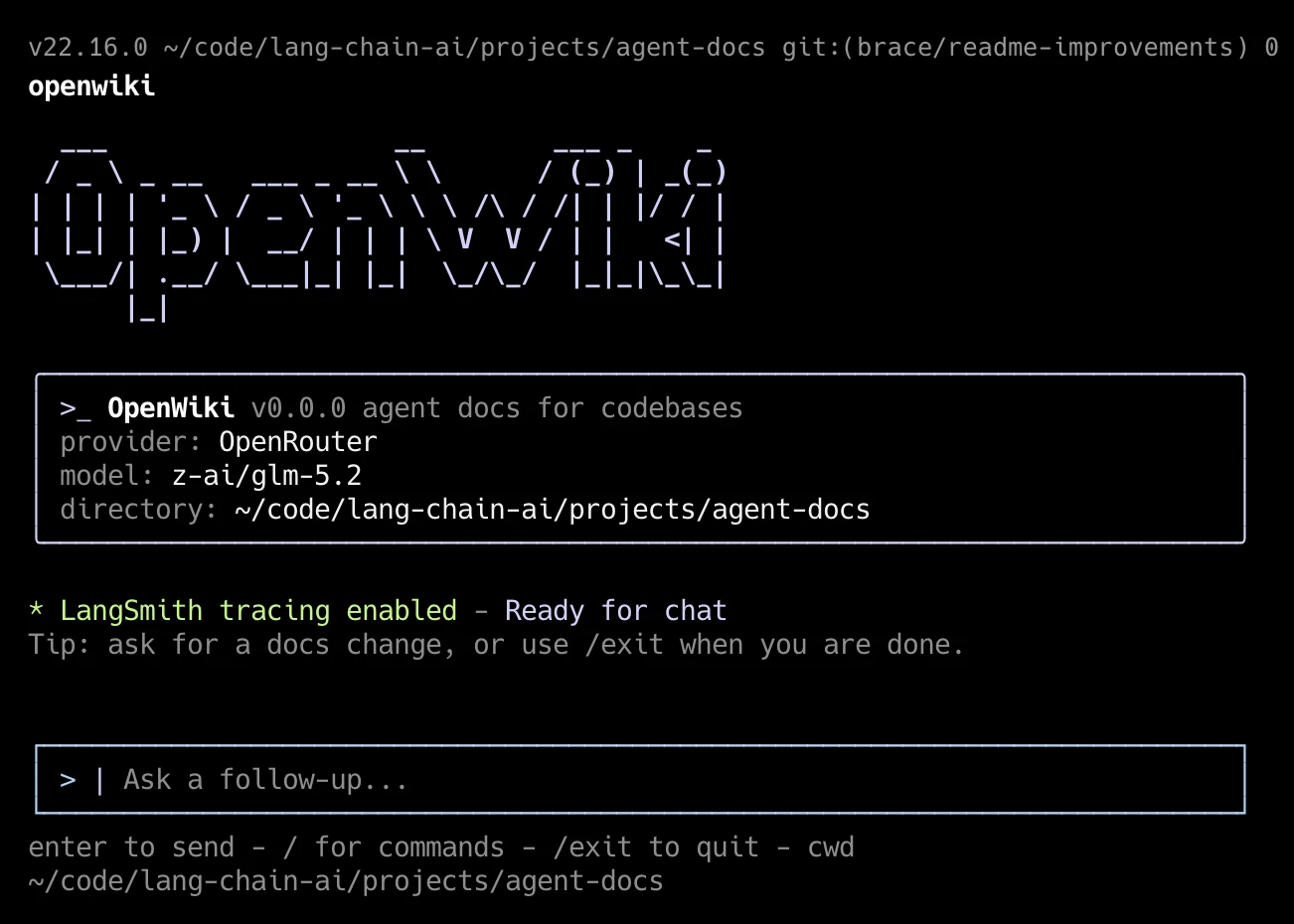
OpenWiki is a CLI from the LangChain team that automatically generates and maintains AI-friendly documentation for your codebase. While it has fewer stars than some projects on this list, LangChain’s influence in the GenAI ecosystem makes it a noteworthy release. OpenWiki helps keep projects understandable for AI agents, making codebases easier to navigate, maintain, and work with over time.
Best For:
- Teams that want documentation an AI agent can reliably consume and act on
- Engineers standardizing on LangChain broader agent-tooling ecosystem
- Anyone maintaining a large codebase where docs routinely fall out of date
6. MadsLorentzen/ai-job-search (~23K stars)

Built on top of Claude Code, this framework automates the job application process by evaluating job postings, tailoring resumes, generating cover letters, and preparing candidates for interviews. Although it’s a solo-developer project, it gained rapid popularity by solving a common real-world problem. More than anything, it reflects this month’s broader trend: AI agents are increasingly being built to handle practical, everyday workflows rather than simply showcasing new models.
Best For:
- Job seekers who want to automate the repetitive parts of applications
- Developers curious how Claude Code can be forked into a personal-use agent
- Anyone looking for a practical, everyday example of agentic AI in action
7. iOfficeAI/OfficeCLI (~18K stars)
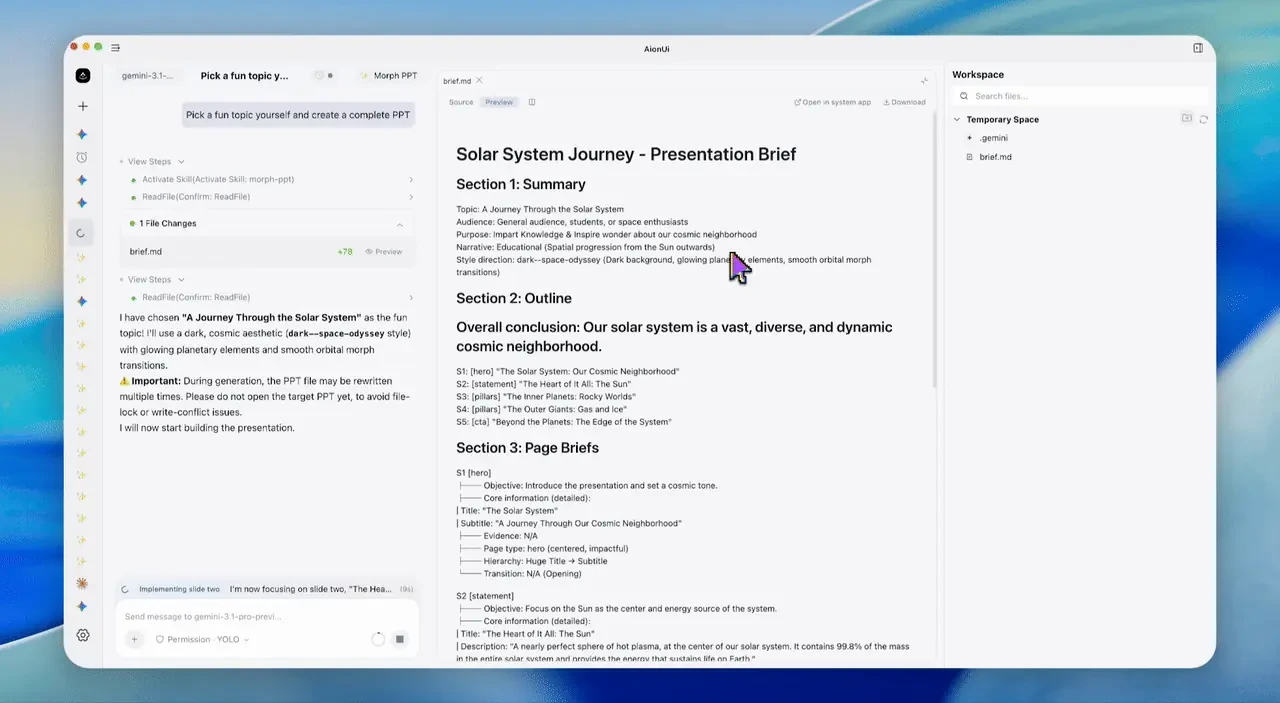
OfficeCLI is a free, open-source Office suite purpose-built for AI agents to read, edit, and automate Word, Excel, and PowerPoint files, shipped as a single binary with no Office installation required. It rides the same wave as the MCP-server tooling elsewhere on this list: making everyday file formats natively legible and editable by AI agents rather than requiring a human-shaped GUI in the loop. It is not flashy, but it is the kind of infrastructure repo that quietly ends up embedded in a lot of automated workflows.
Best For:
- Teams automating document generation and editing through AI agents
- Developers who need Office file support without installing Office itself
- Anyone building MCP-based agent workflows around everyday business documents
8. diegosouzapw/OmniRoute (~17.9K stars)
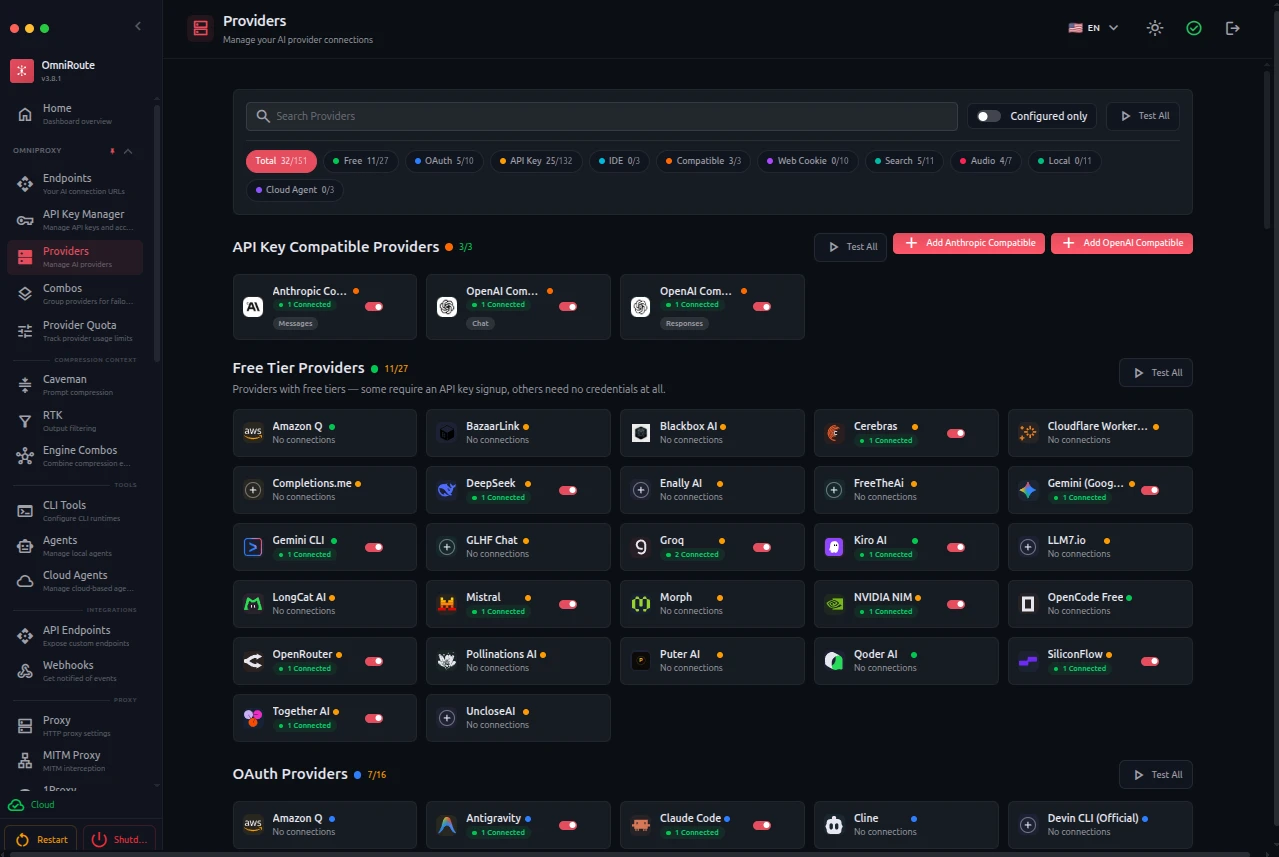
OmniRoute is a free AI gateway that gives you a single endpoint to route requests across more than 231 providers, over 50 of them free, letting you connect tools such as Claude Code, Codex, Cursor, and Copilot to a wide pool of large language models. It layers in token compression, smart automatic fallback, and multimodal API support on top. It is a genuinely convenient piece of infrastructure, though it sits more in the useful-utility category than the breakthrough category: the kind of repo you star because it saves real setup time, not because it changes how you think about AI.
Best For:
- Developers who want one endpoint instead of juggling multiple provider API keys
- Teams looking to cut token costs with compression and smart fallback
- Anyone wiring several coding agents to a shared pool of free and paid models
9. JustVugg/colibri (~14.7K stars)

Colibri is a tiny, pure-C inference engine with zero dependencies that lets you run GLM-5.2, a 744-billion-parameter mixture-of-experts model, on a consumer machine with roughly 25GB of RAM, by streaming experts from disk as needed. It is a genuinely impressive feat of engineering packed into a small footprint. Its audience is narrower than most of this list, mainly local-LLM enthusiasts and people who care about running frontier-scale models without cloud infrastructure, but for that audience it is a big deal.
Best For:
- Local-LLM enthusiasts who want frontier-scale models on consumer hardware
- Engineers curious about disk-streamed mixture-of-experts inference
- Anyone prioritizing privacy and cost control over cloud-based inference
10. Nutlope/hallmark (~10K stars)

Hallmark is a design skill for Claude Code, Cursor, and Codex that pushes back against the generic, on-distribution UI output most large language models default to. It runs fifty-seven “slop-test” gates plus a pre-emit self-critique before handing back a design, aiming to make AI-generated interfaces feel intentional rather than templated. It is the smallest and most niche entry on this list, more a taste-and-craft layer for AI coding tools than a core AI or ML project, but it points at something real: as more UI gets AI-generated, telling “functional” apart from “good” is fast becoming its own discipline.
Best For:
- Developers tired of AI coding tools producing generic, templated UI
- Teams that want a repeatable design-quality gate in their AI coding workflow
- Anyone curious how “taste” is being encoded as a rule set for AI agents
Conclusion
The biggest takeaway from July 2026’s trending repositories is that the focus has shifted beyond building better LLMs to building better AI applications. Agent frameworks, MCP servers, AI gateways, and developer tooling now define where most innovation is happening.
As these projects evolve, today’s rankings are unlikely to stay the same for long. Explore the repositories that match your workflow, follow their progress, and revisit the list regularly. In the AI ecosystem, today’s emerging project could become tomorrow’s essential tool.
Frequently Asked Questions
A. Because the frontier-model race has partly given way to an infrastructure race. Once a handful of strong base models exist, the practical bottleneck becomes making agents reliable, efficient, and safe to run, which is exactly what MCP servers, coding-agent harnesses, and AI gateways are built to solve.
A. The project itself is a legitimate, academically backed research tool with real safeguards such as kill switches and paper-trading defaults. However, be aware that an unaffiliated token or memecoin has falsely claimed association with the project online. The maintainers have disavowed it, and you should never buy or connect a wallet to anything marketed as an official “Vibe-Trading token.”
A. In most cases, yes, but always check each repository’s license before doing so. Several here are Apache 2.0 or similarly permissive, though at least one (xai-org/grok-build) explicitly does not accept external contributions even though the source is open to read and compile.

Data Analyst with over 2 years of experience in leveraging data insights to drive informed decisions. Passionate about solving complex problems and exploring new trends in analytics. When not diving deep into data, I enjoy playing chess, singing, and writing shayari.
Login to continue reading and enjoy expert-curated content.